
£2,450.00



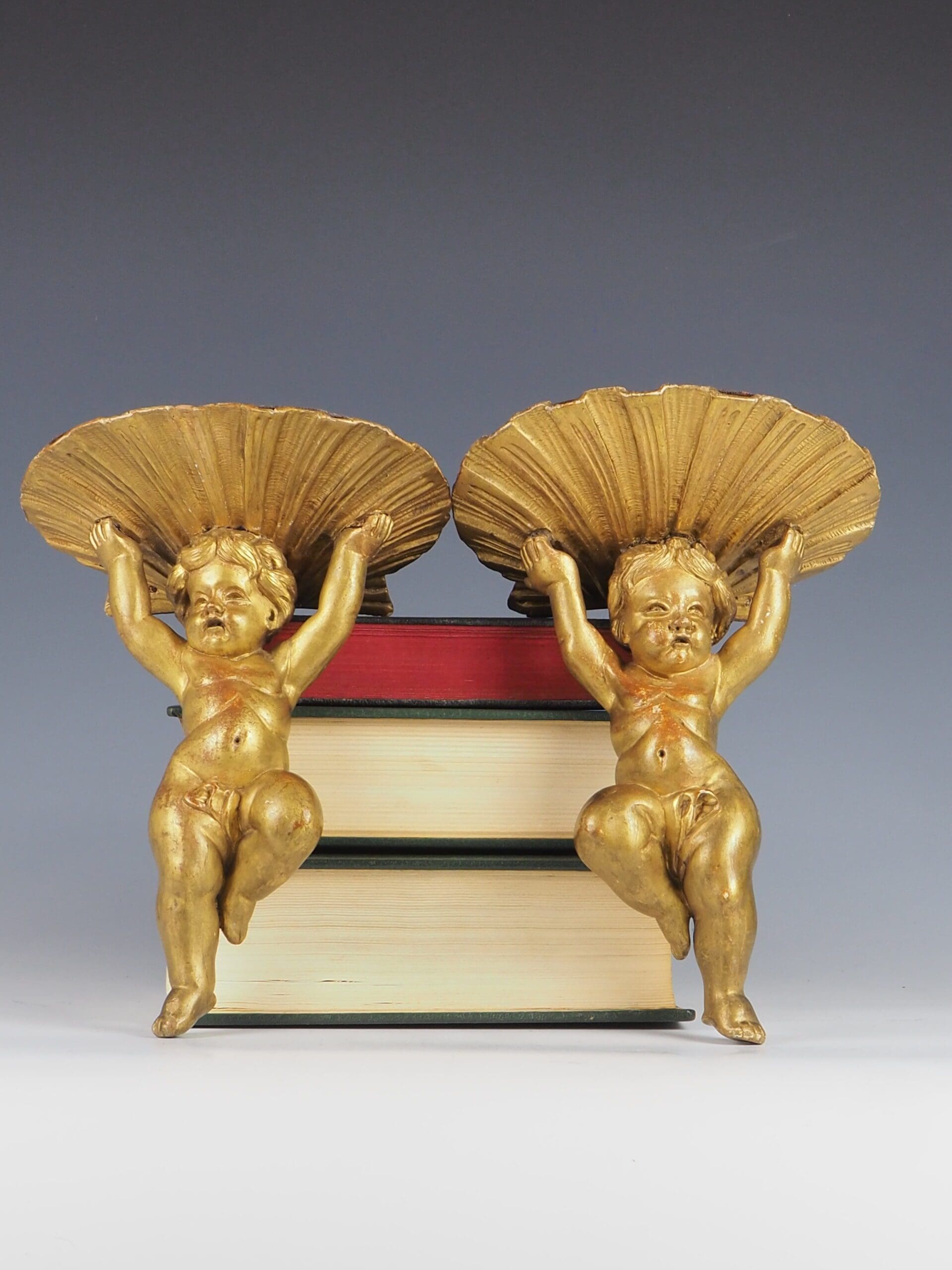
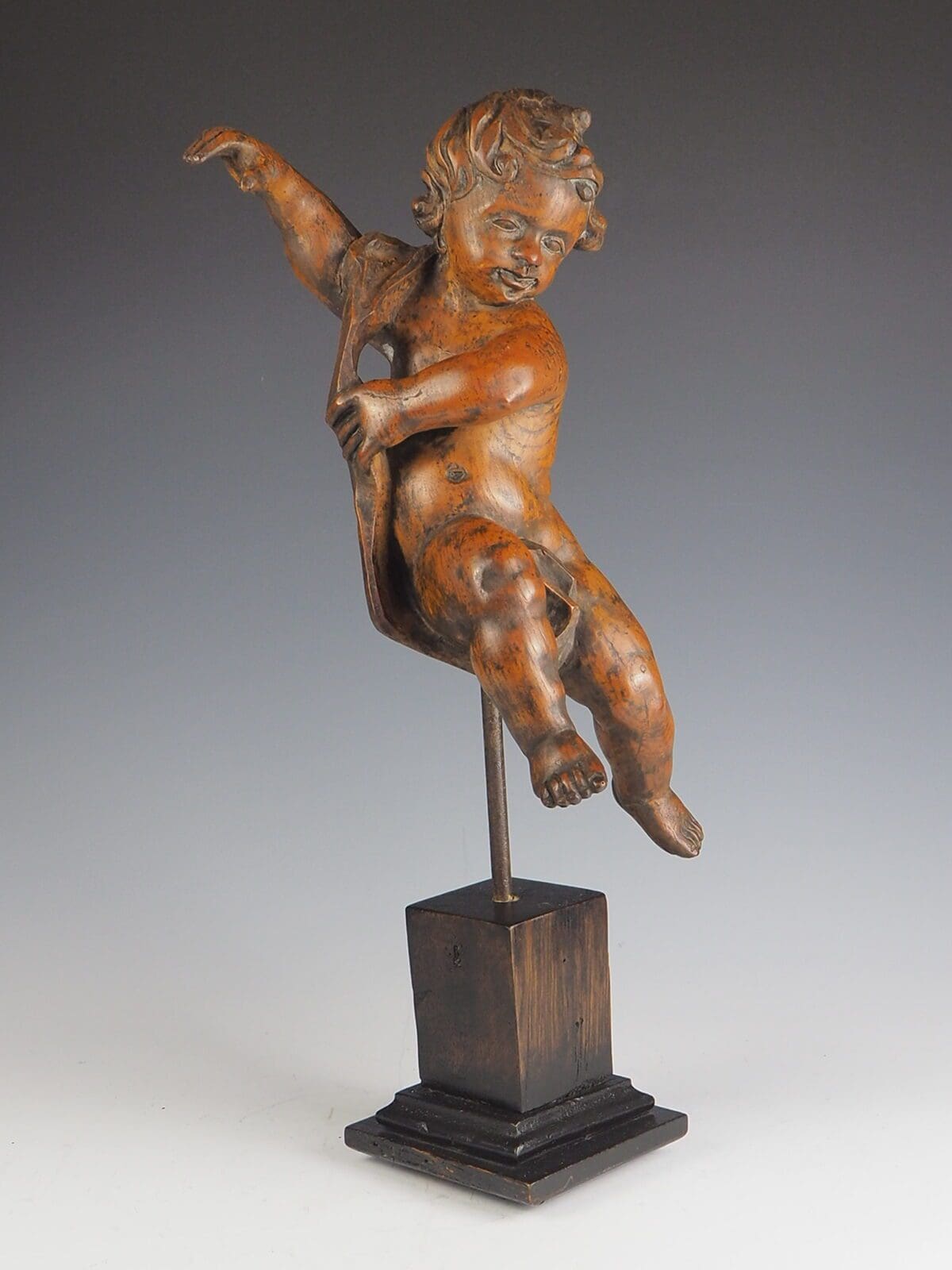
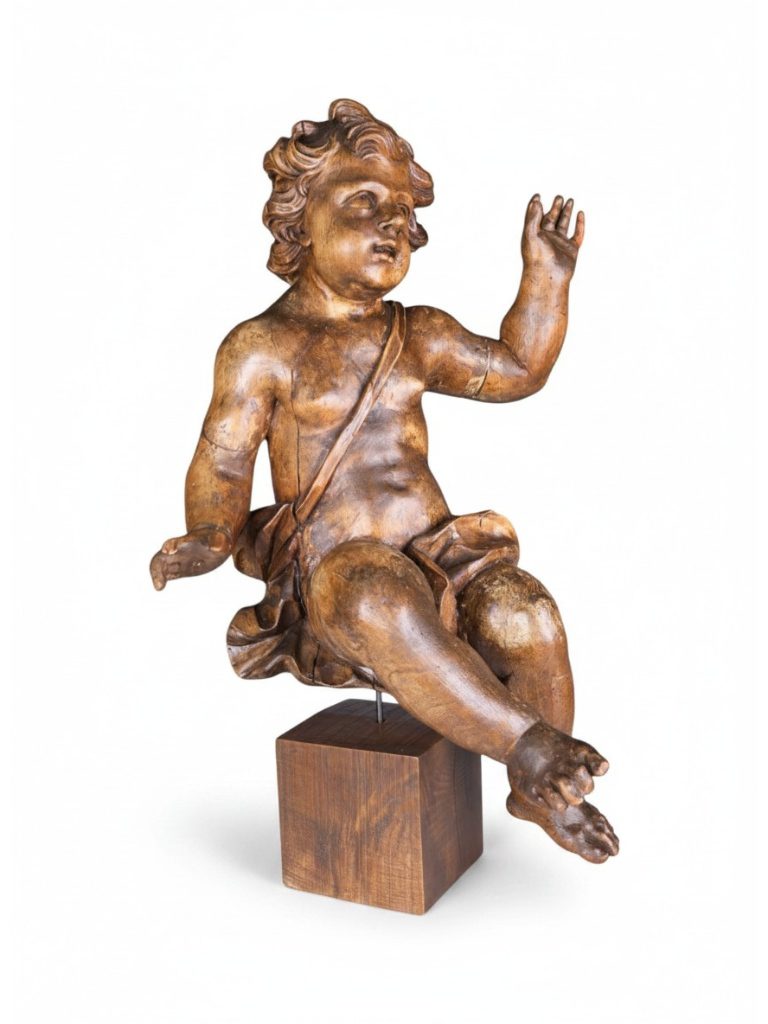
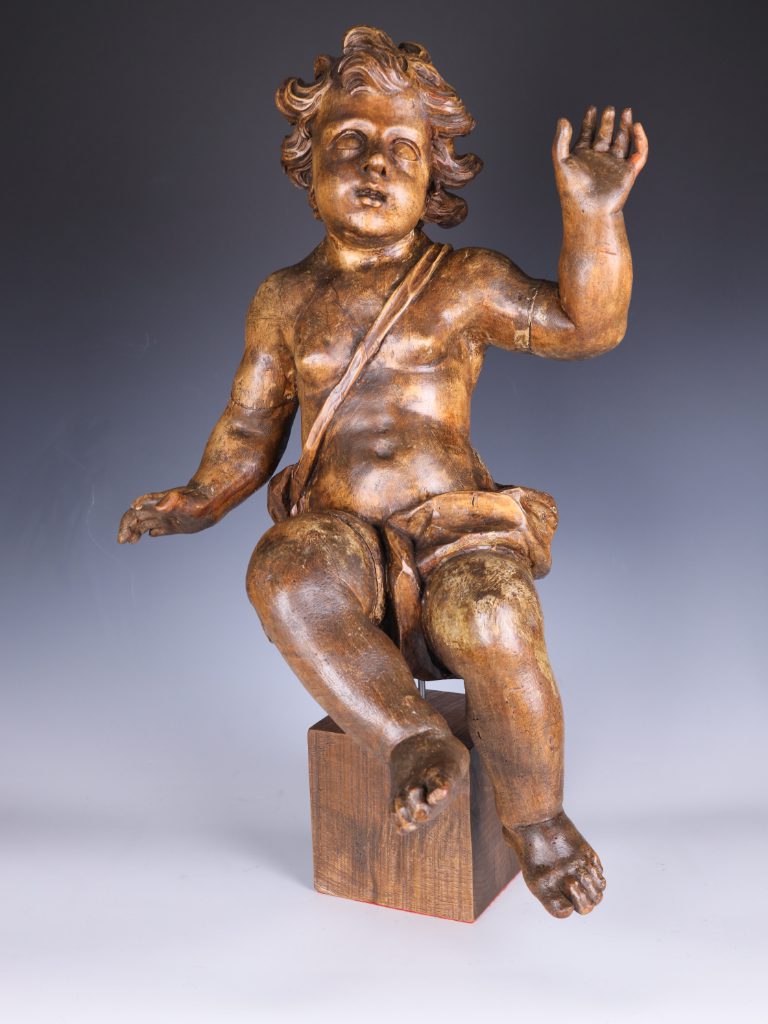
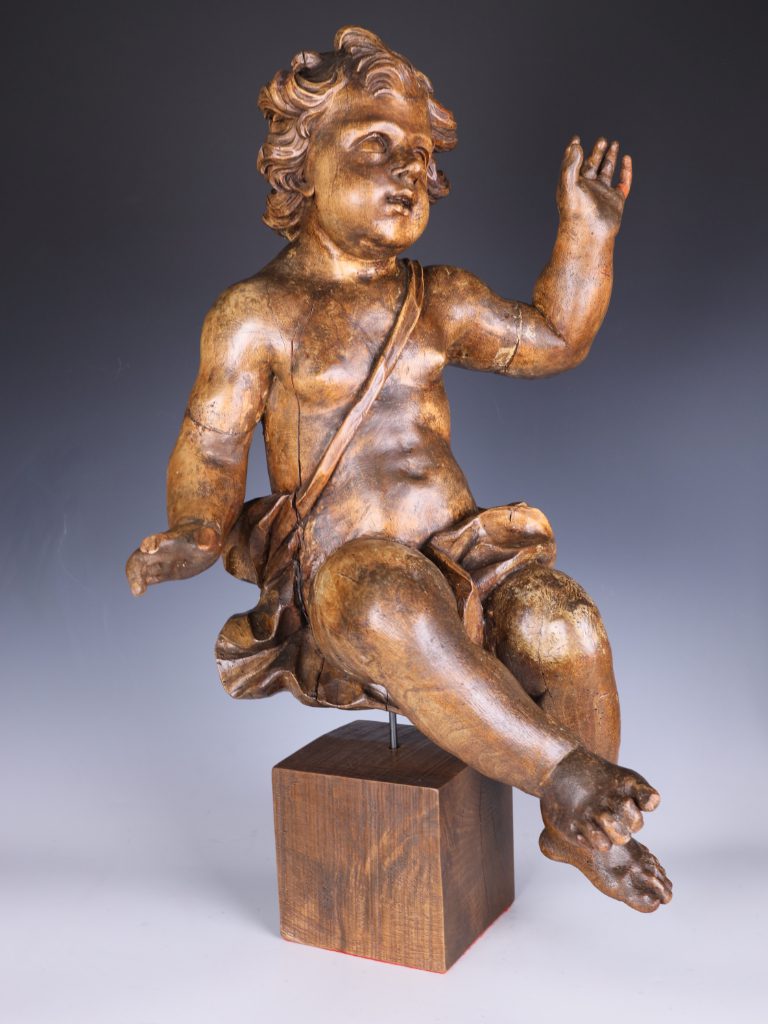
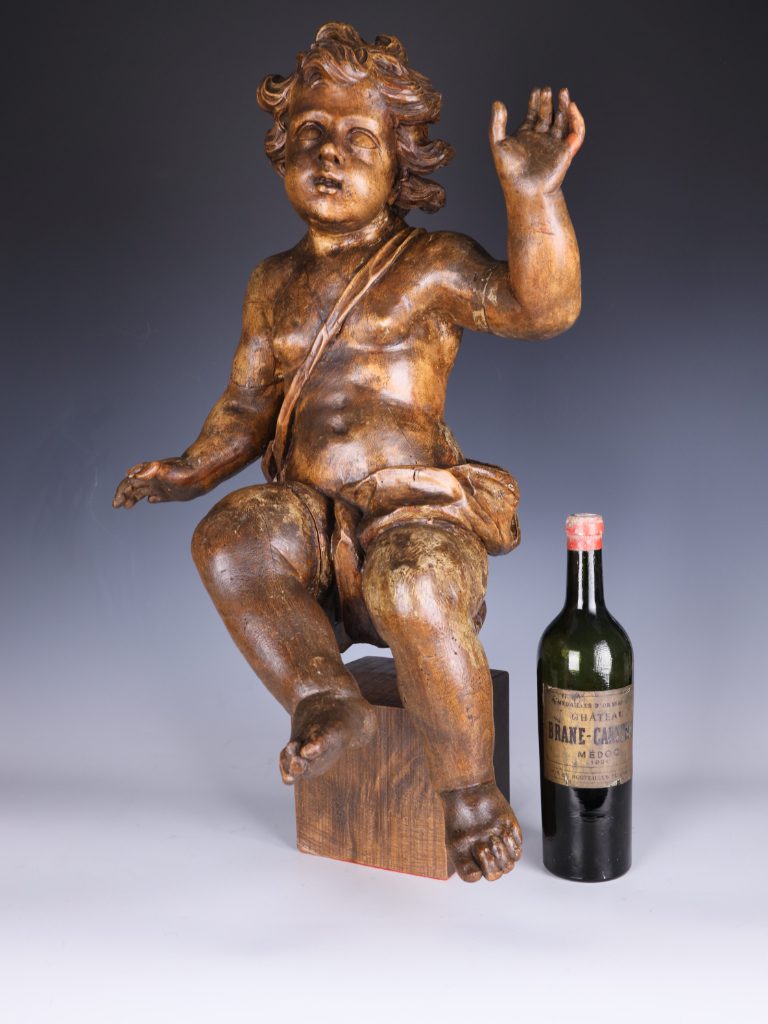
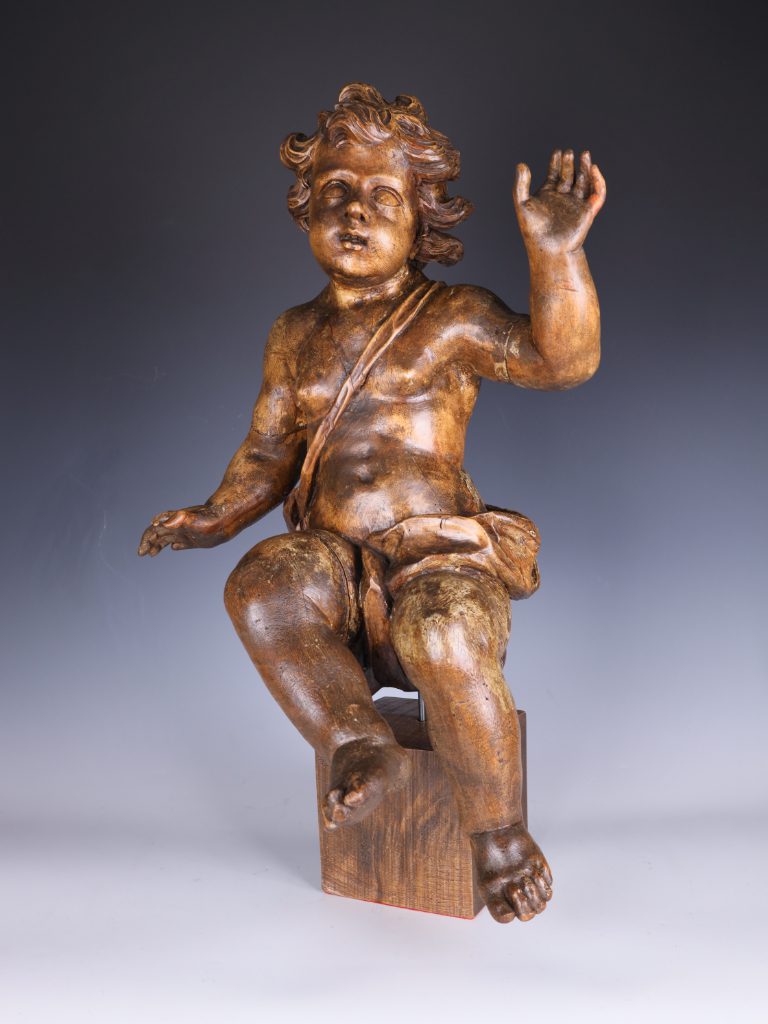
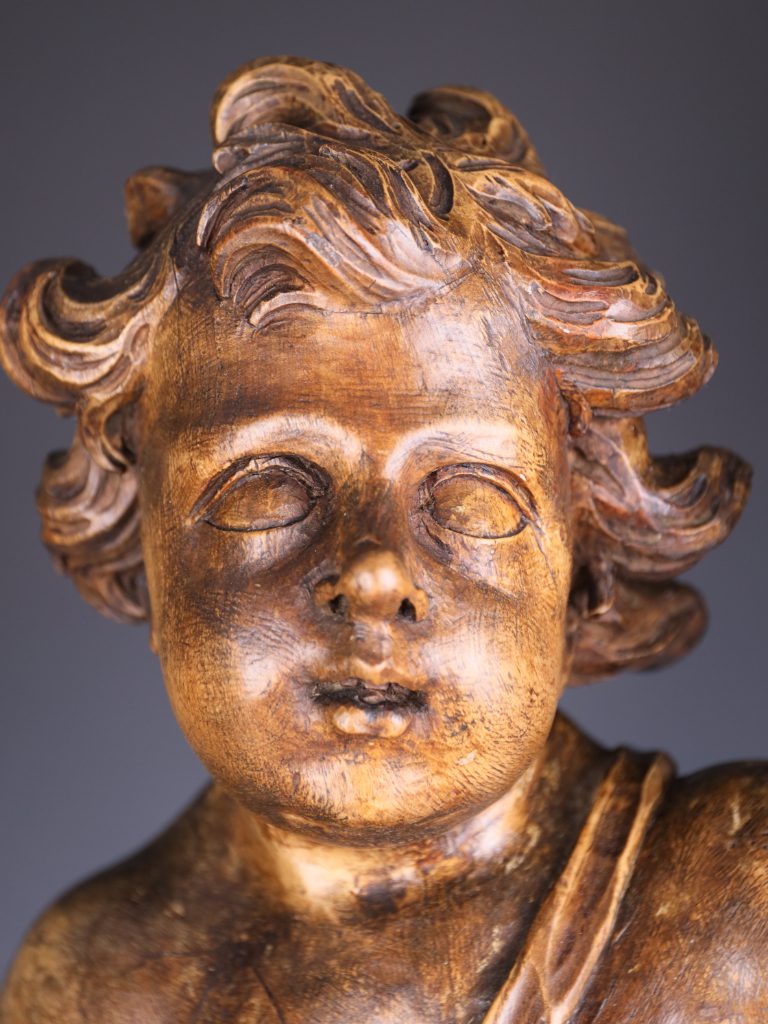
A charming and highly decorative large-scale carved limewood putto, dating from the late 18th to early 19th century, beautifully capturing the exuberance, movement, and theatricality associated with Baroque and Rococo ecclesiastical sculpture.
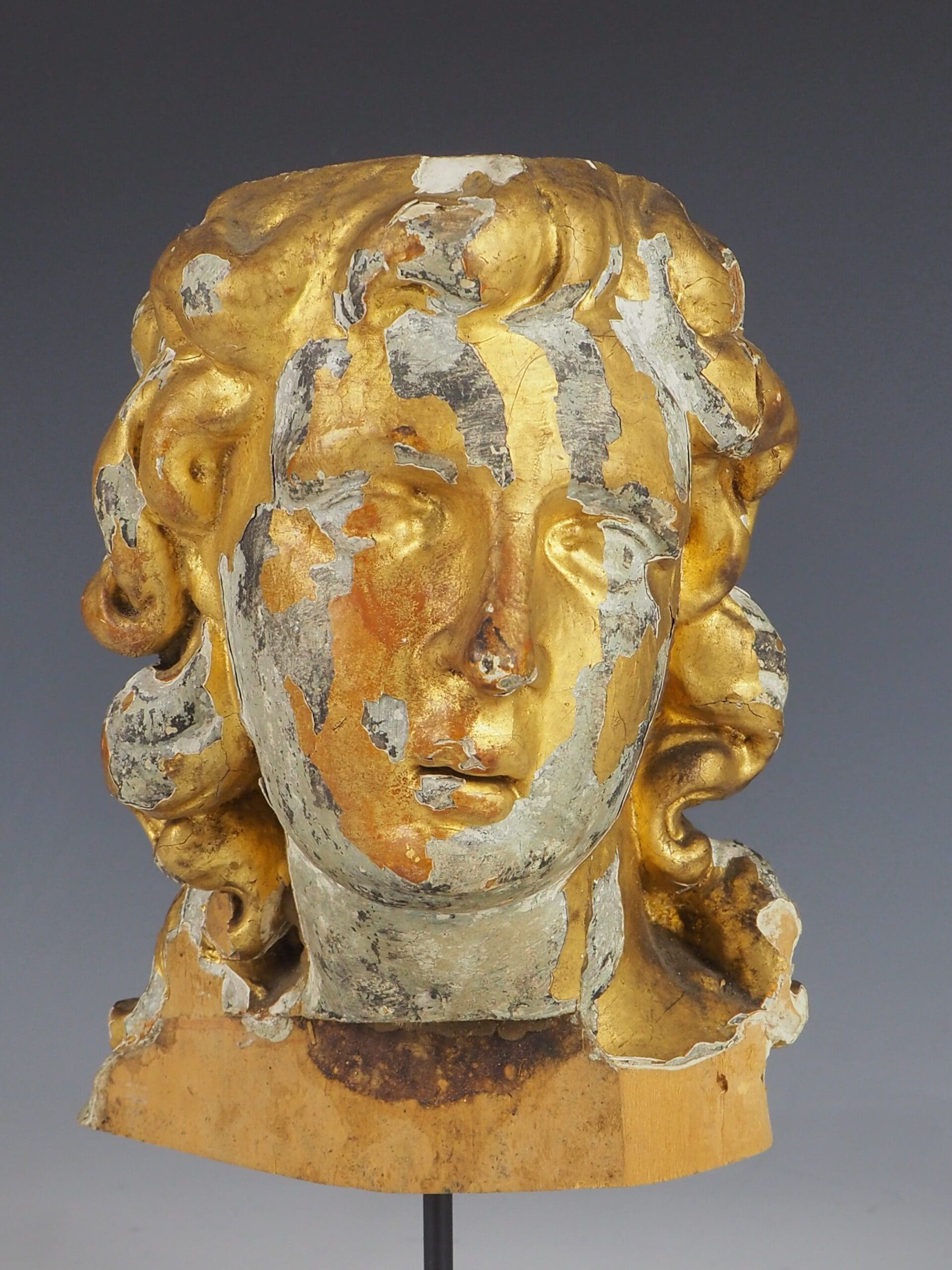
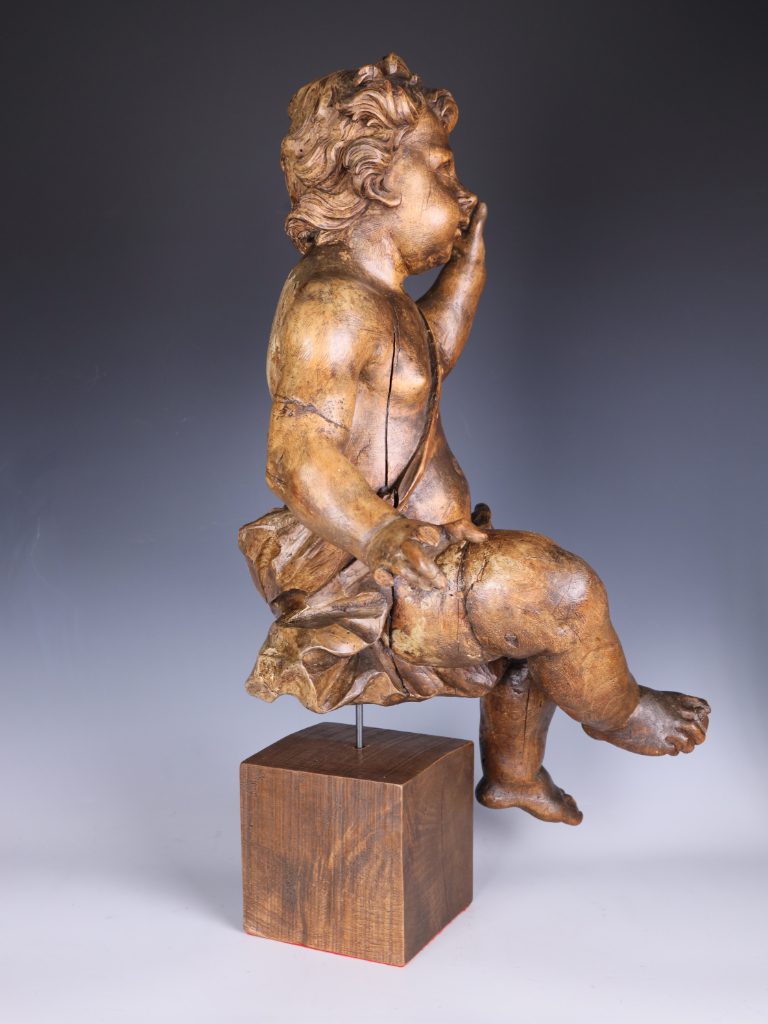
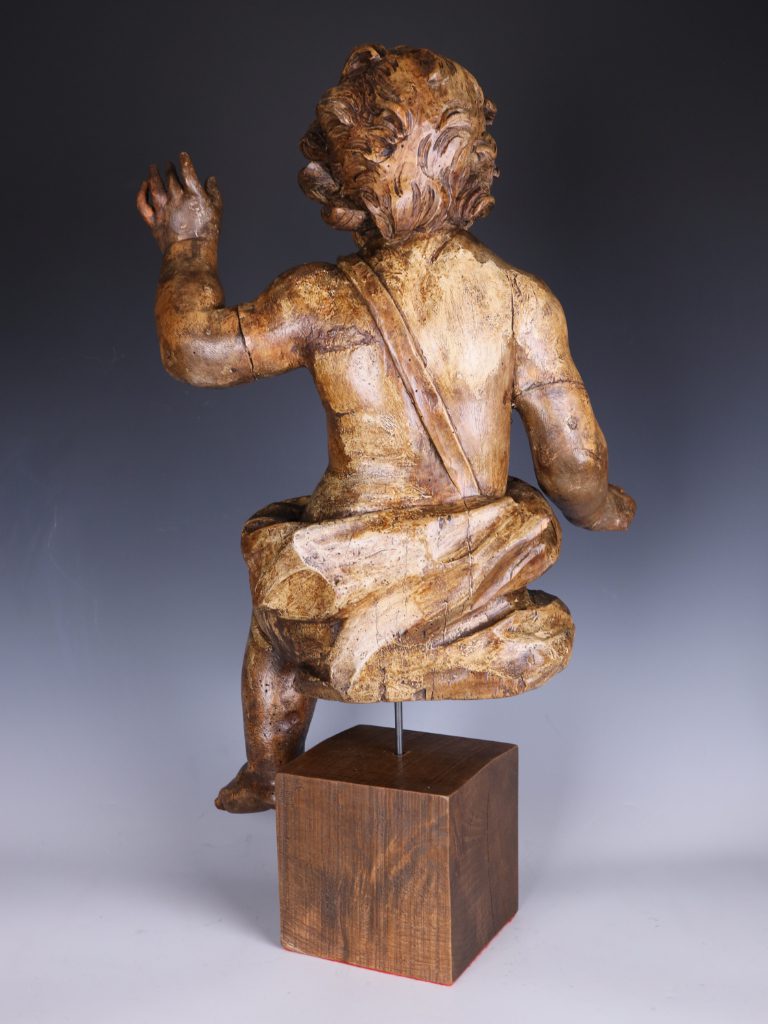
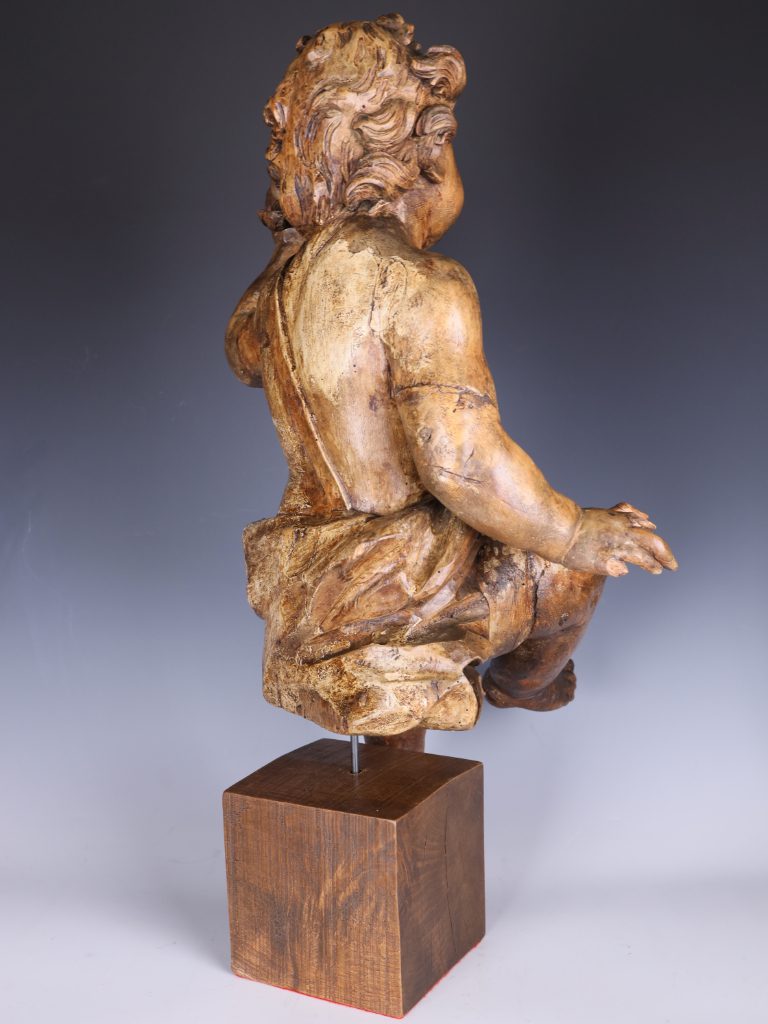
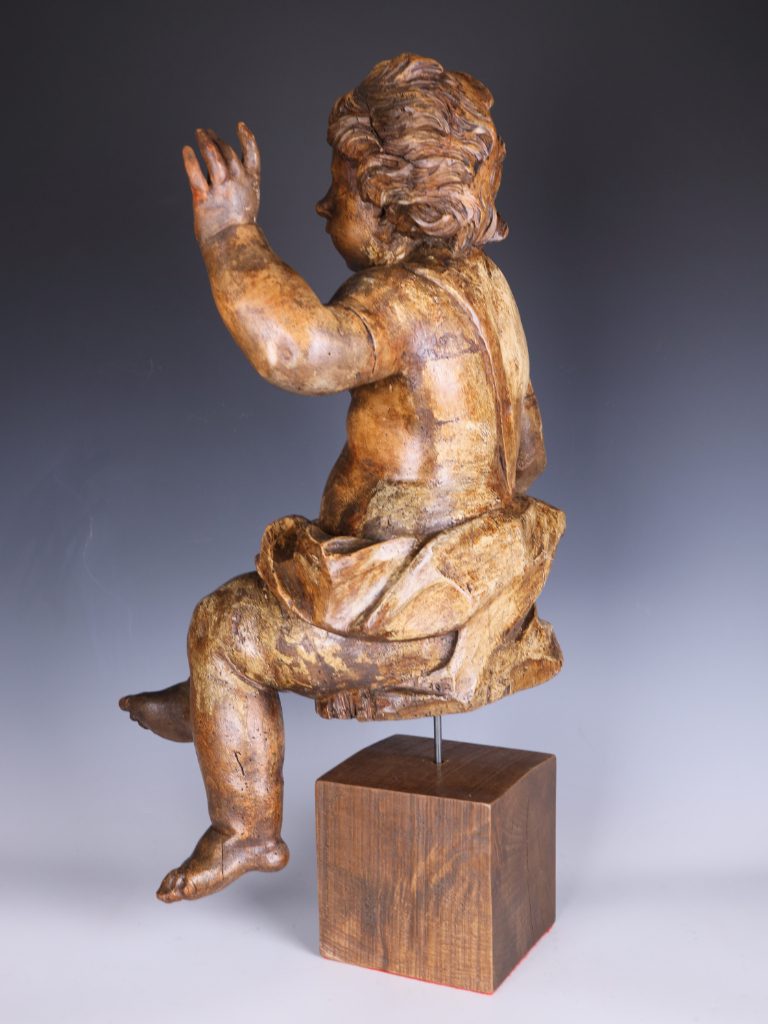
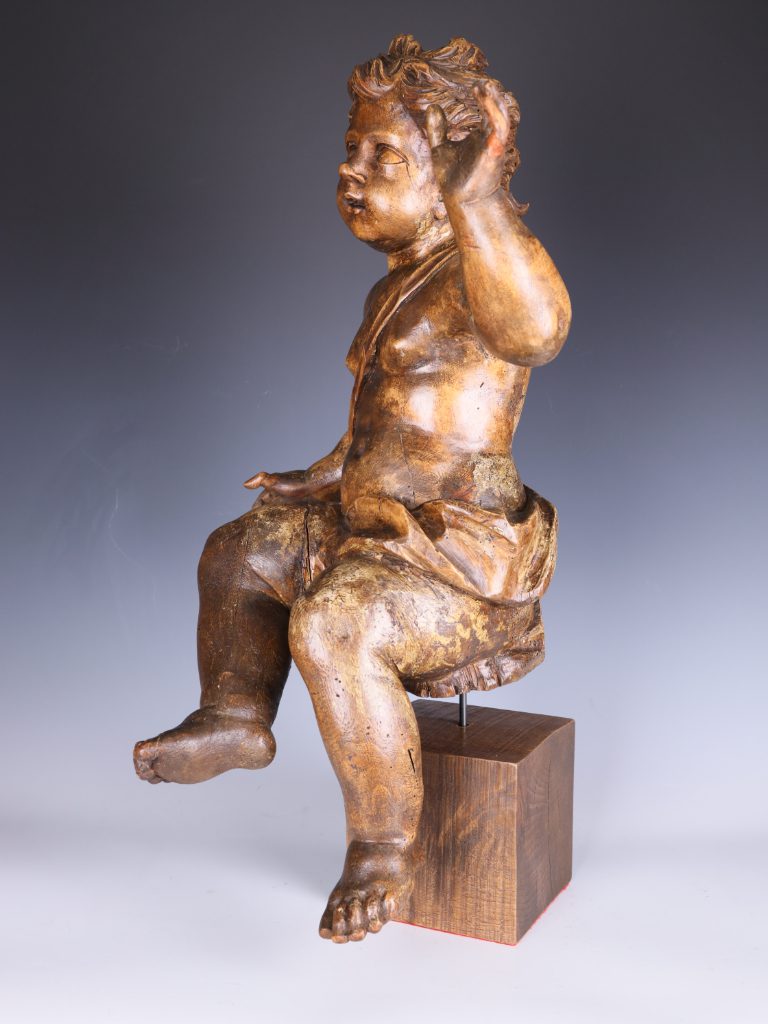
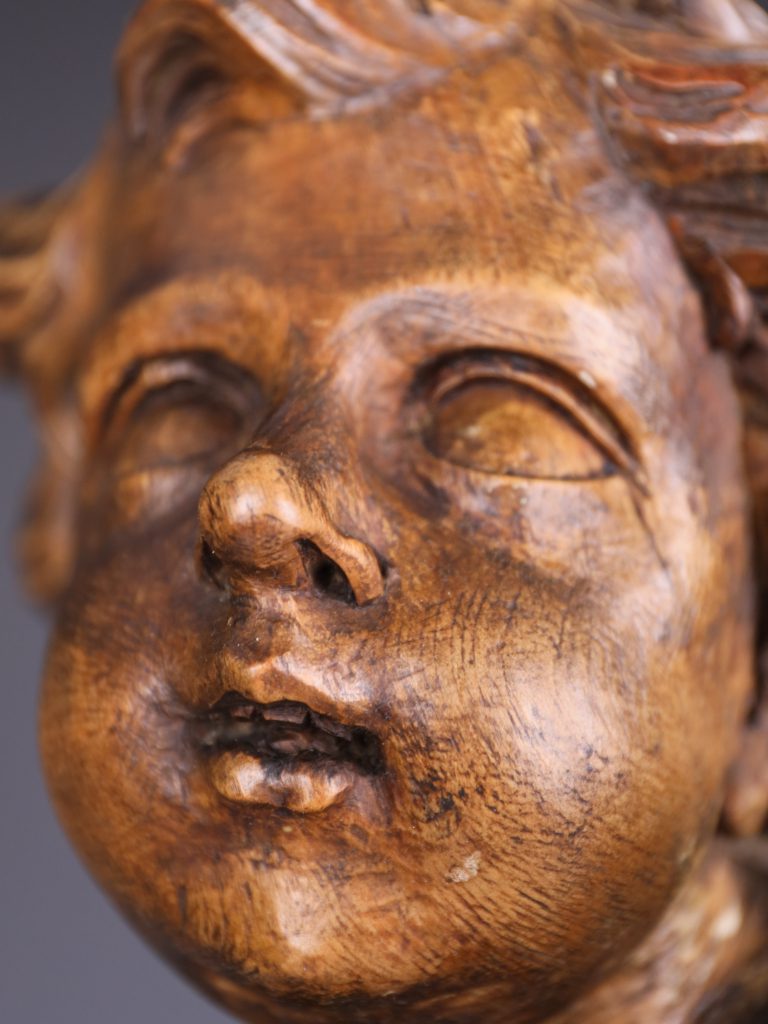
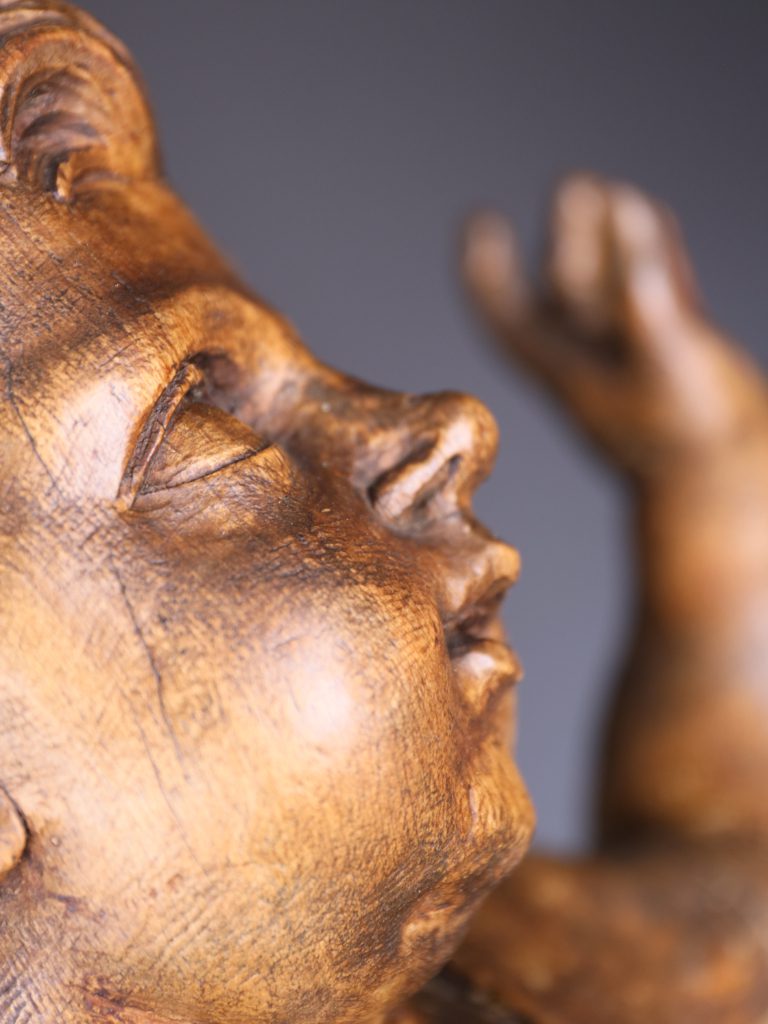
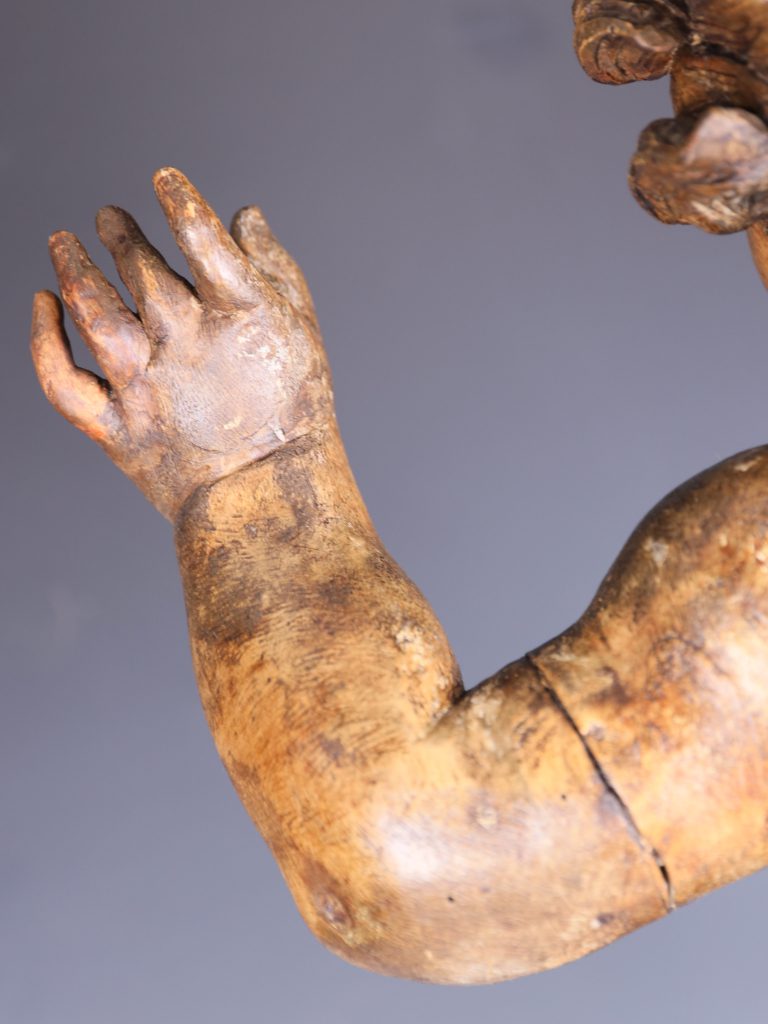
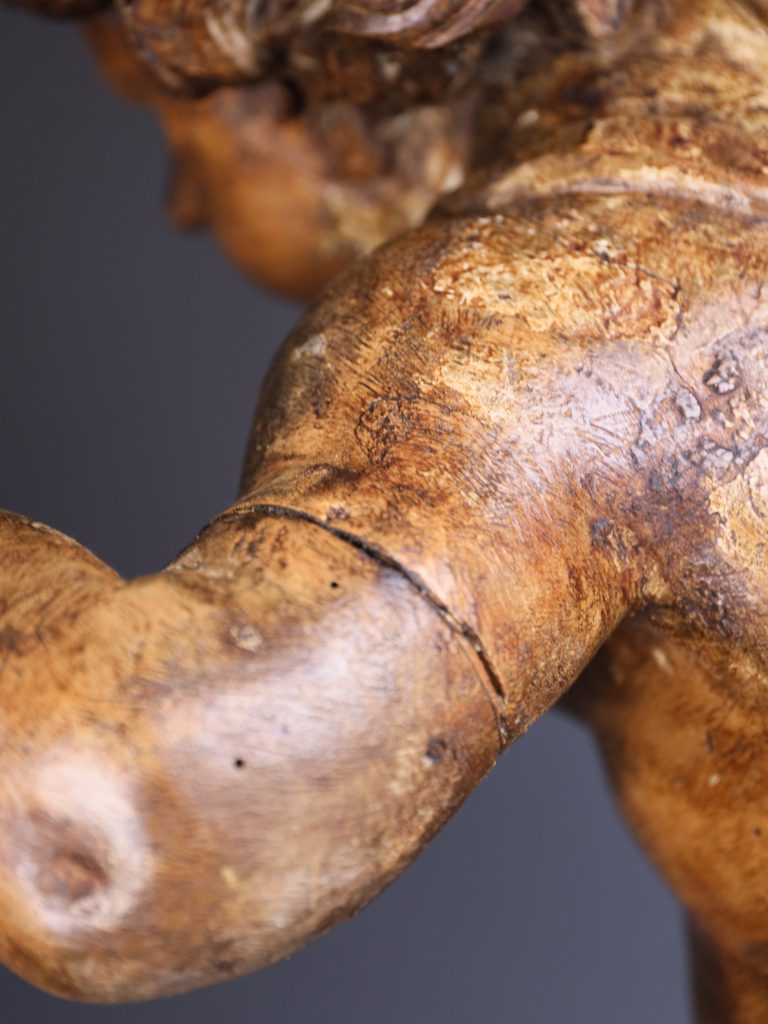
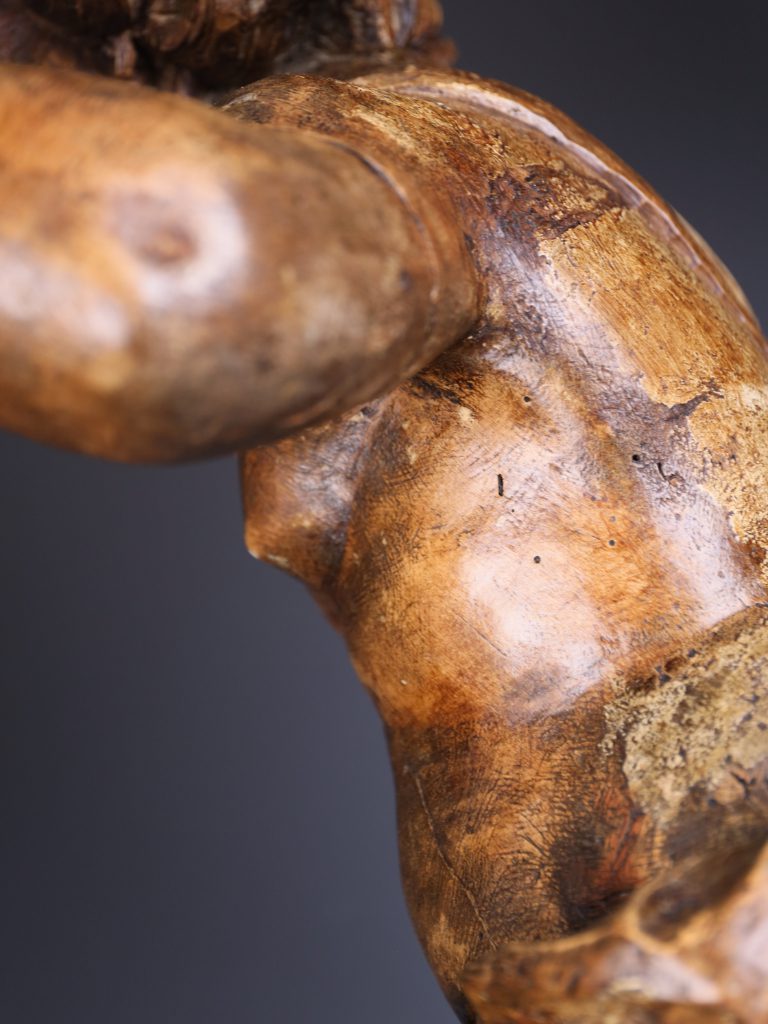
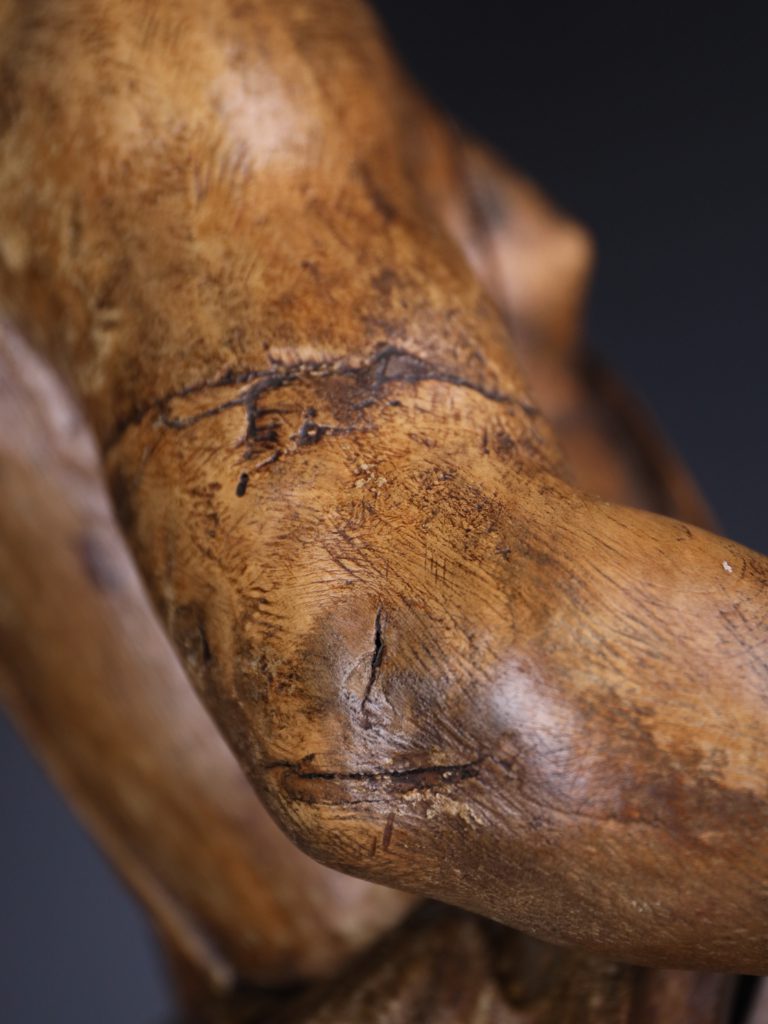
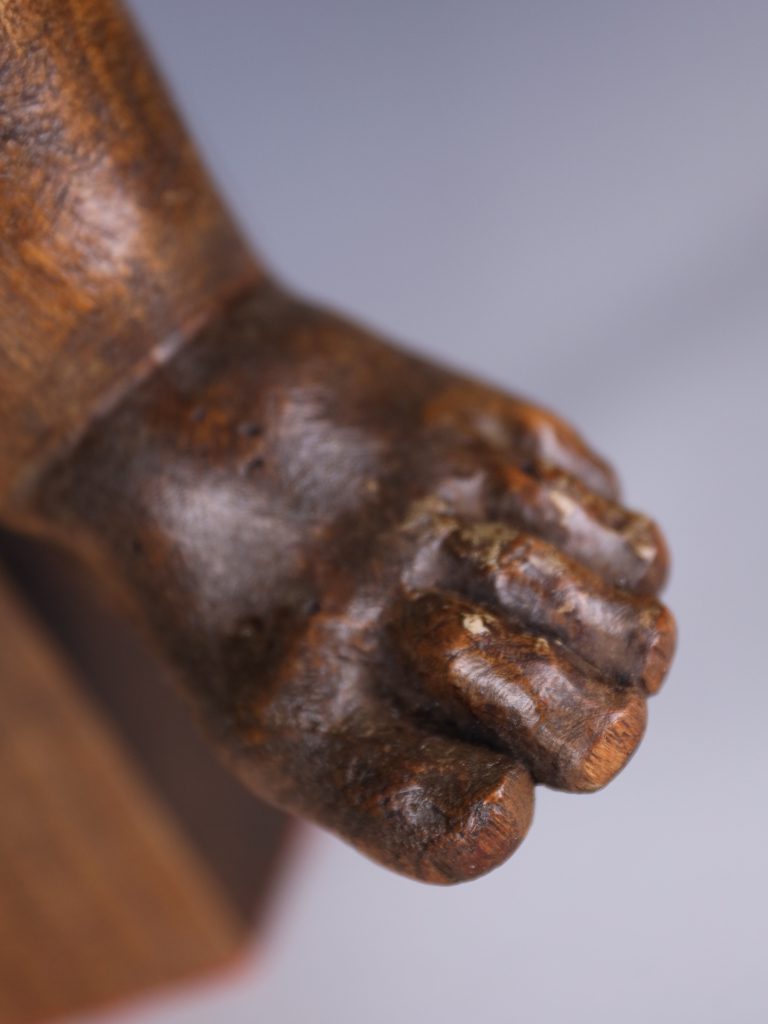
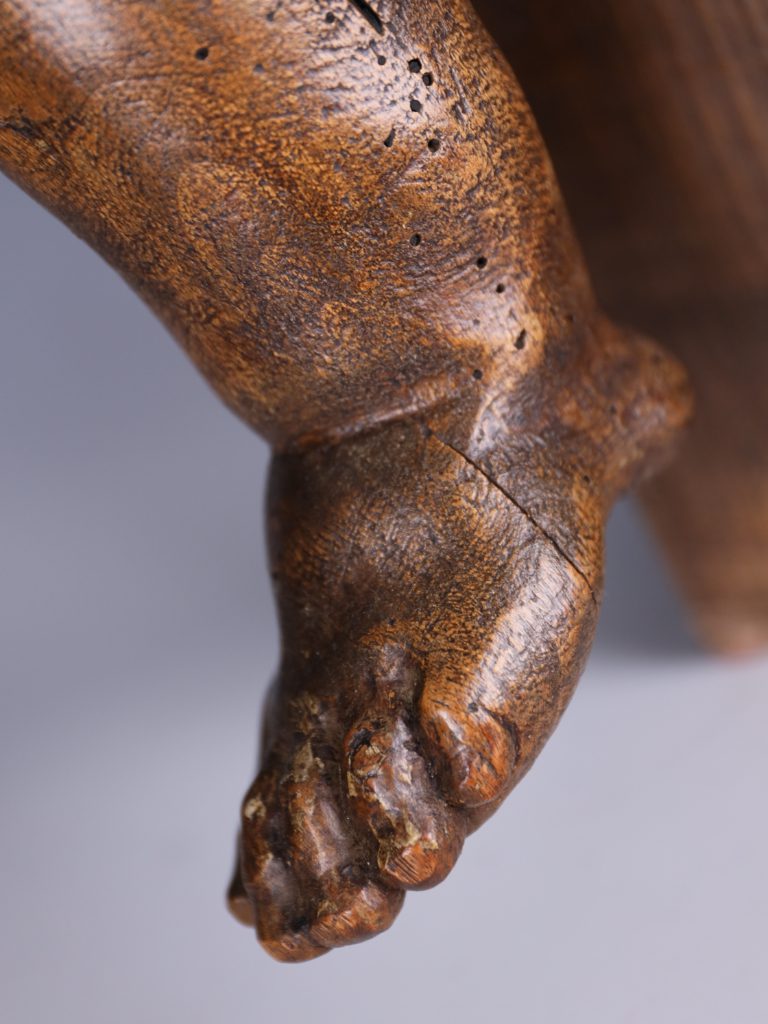
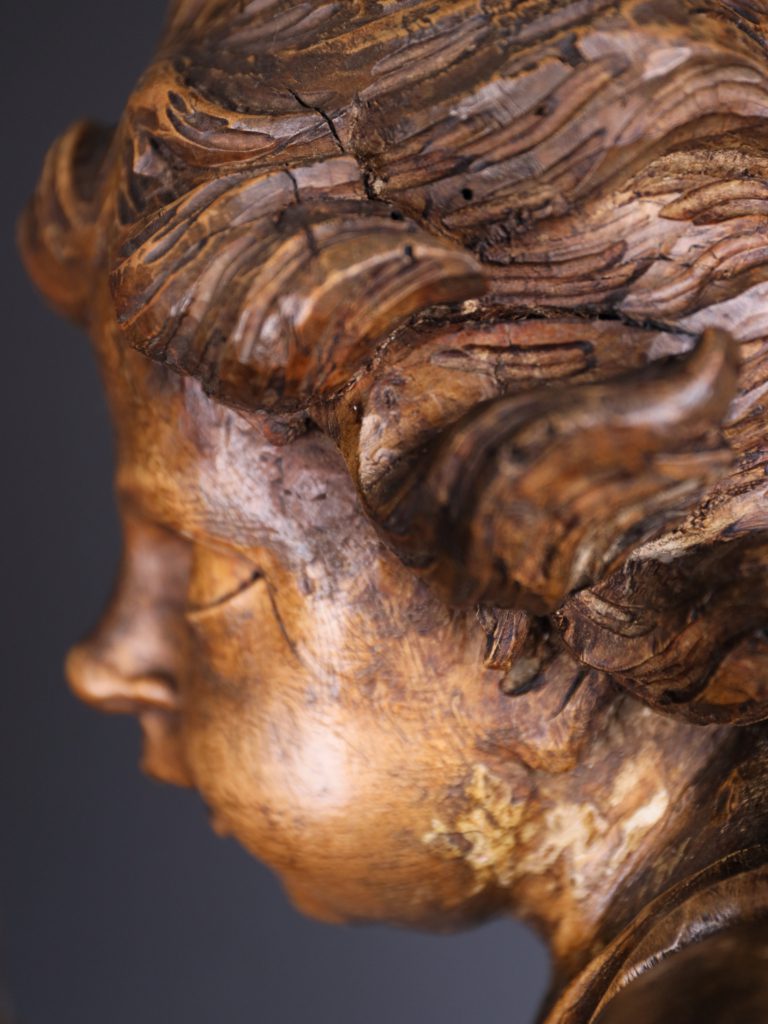
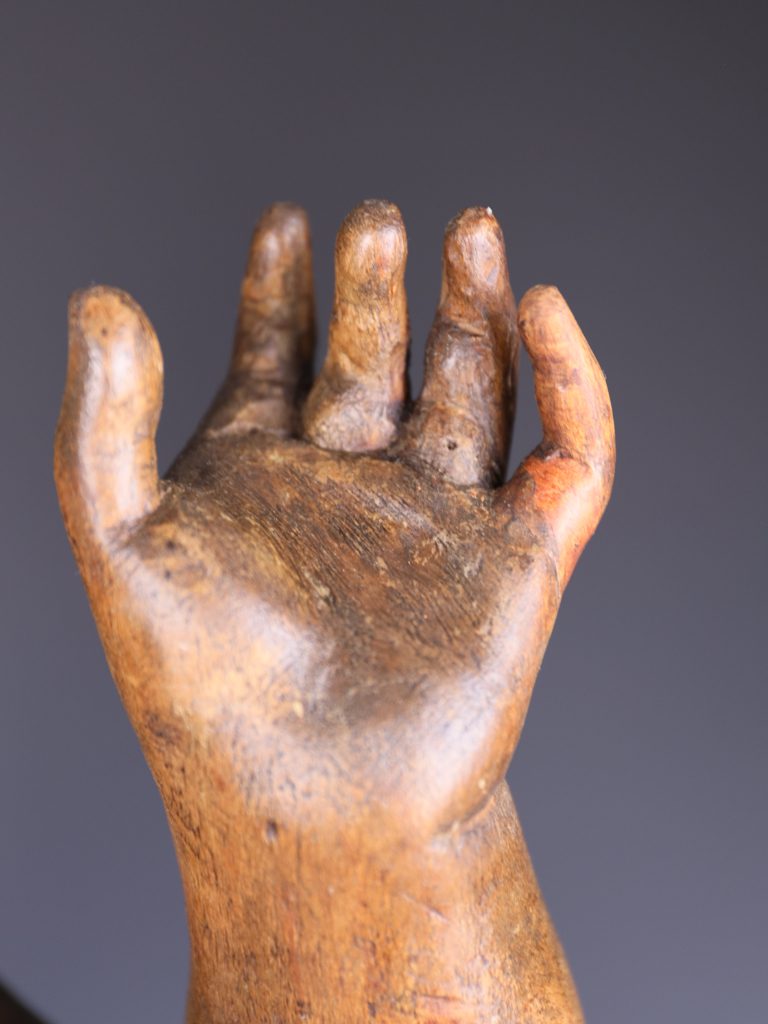
Expertly hand-carved from limewood, a timber favoured by master European sculptors for its fine grain and ability to hold intricate detail, the cherub is depicted seated with one arm raised in a gesture of blessing or proclamation. His animated pose, softly modelled features, and expressive face lend the piece a wonderful sense of vitality and character. Traces of the original polychrome decoration remain visible throughout, offering an evocative glimpse into the richly painted appearance the figure would once have possessed.
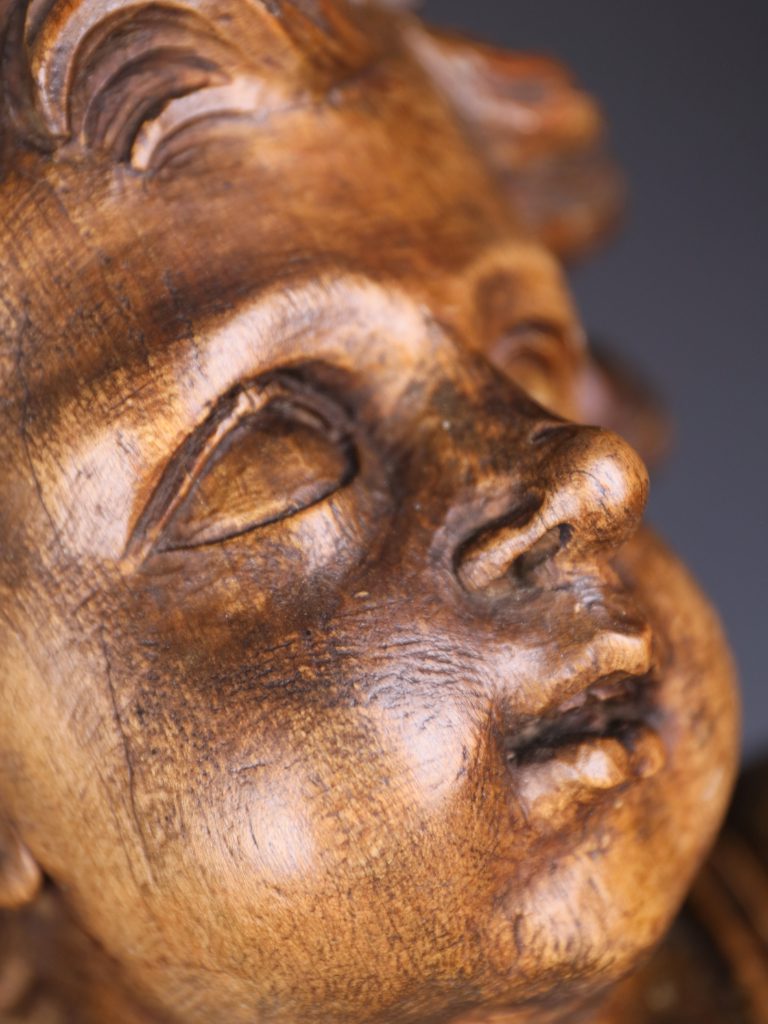
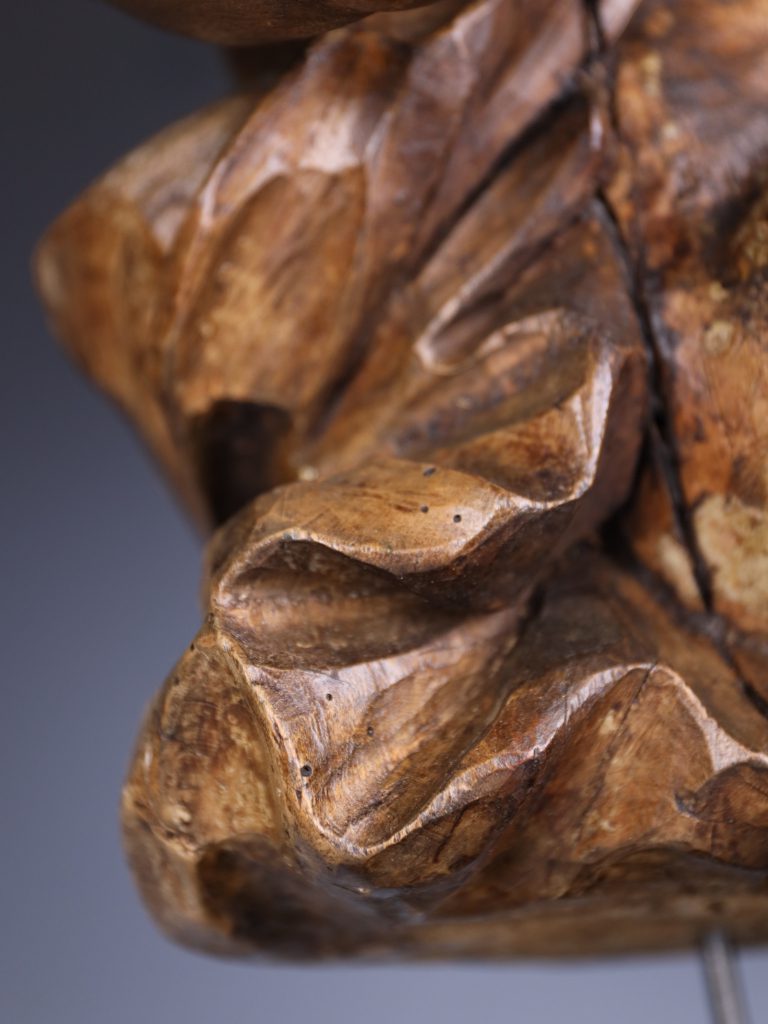
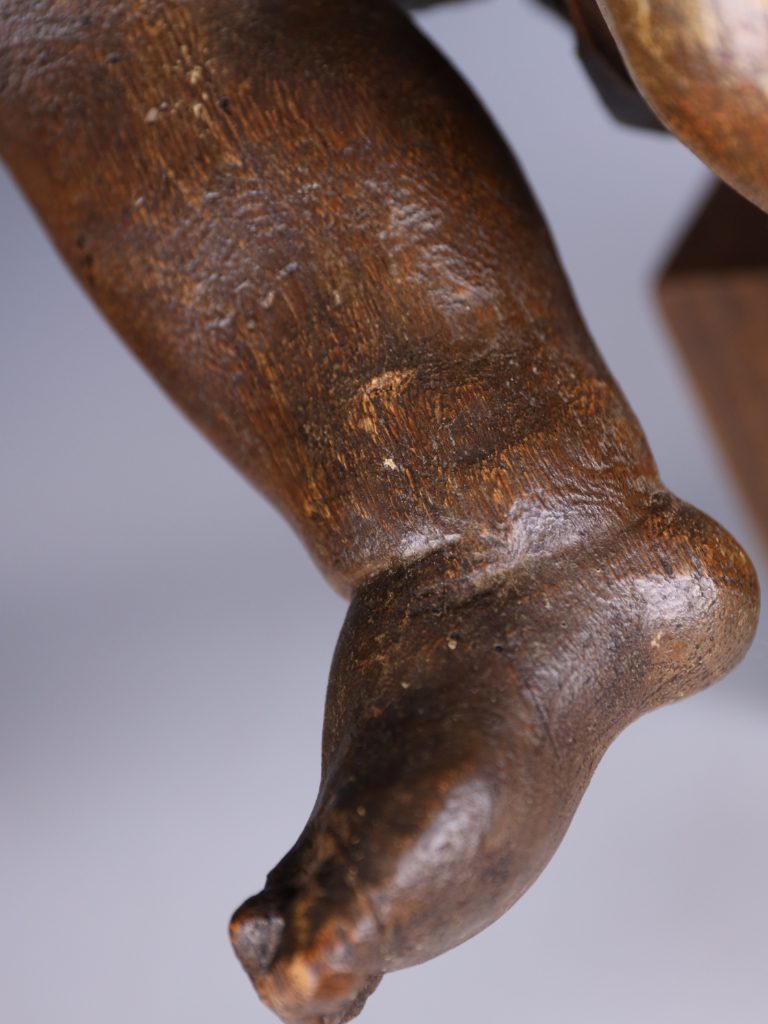
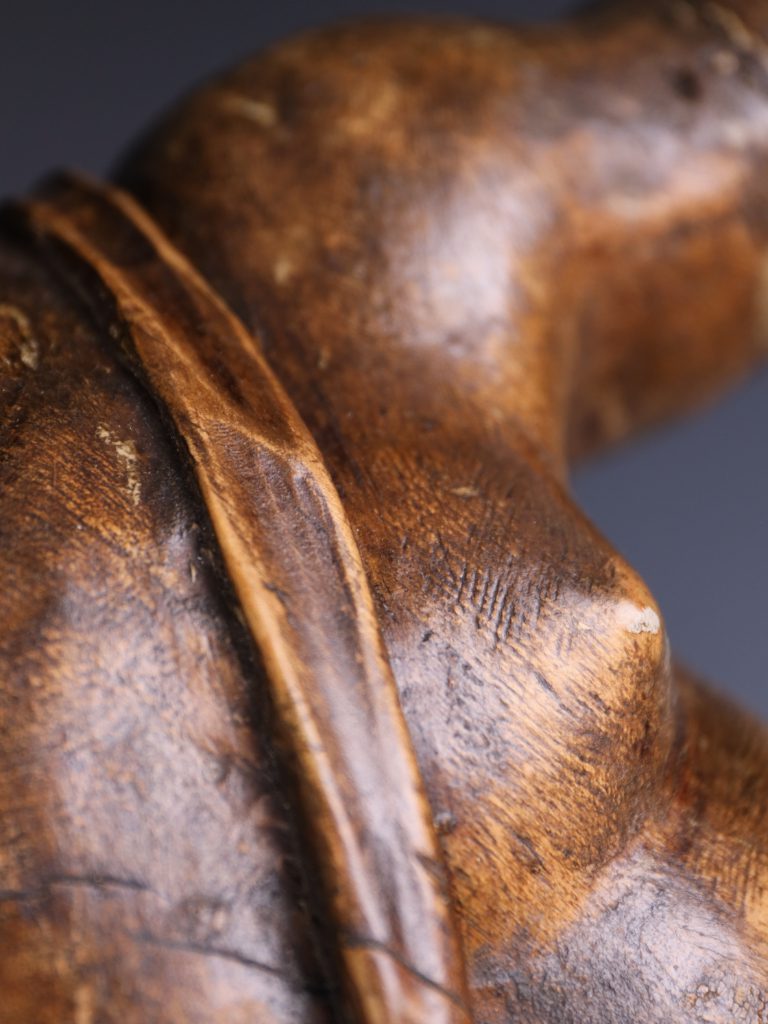
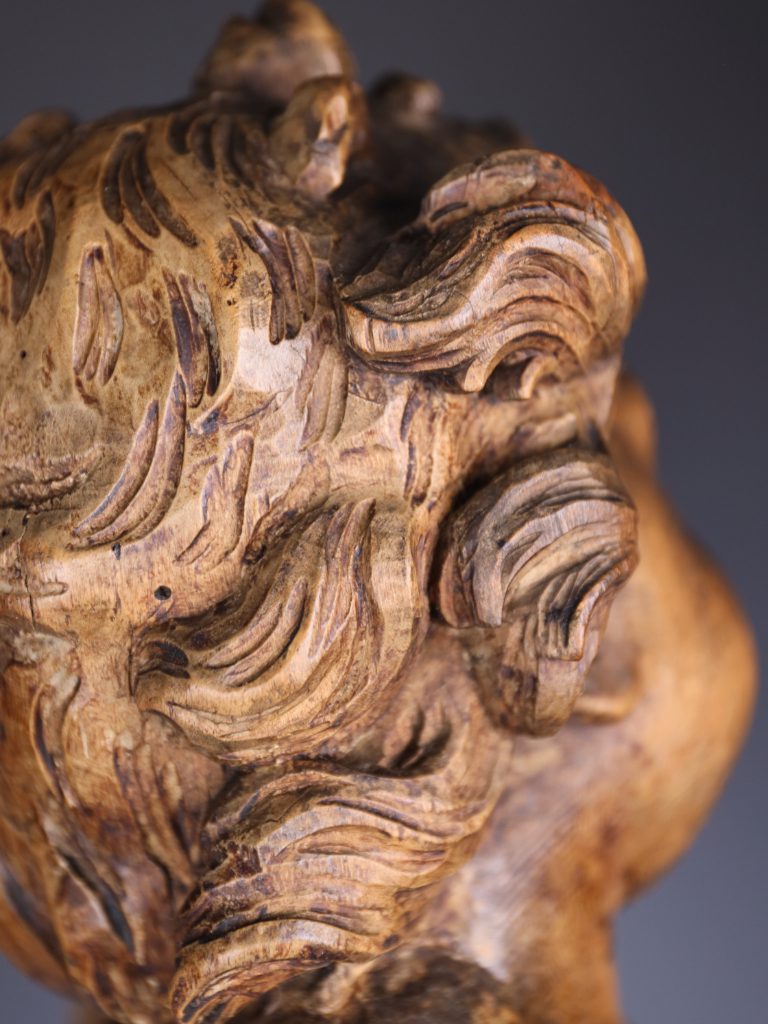
Such carvings were commonly commissioned as architectural ornaments for churches, altars, processional displays, and grand interiors, where they formed part of larger decorative schemes celebrating the drama and splendour of the Baroque period. The quality of the carving is particularly evident in the finely modelled facial features, flowing hair, and naturalistic treatment of the anatomy, demonstrating the skill of the sculptor.
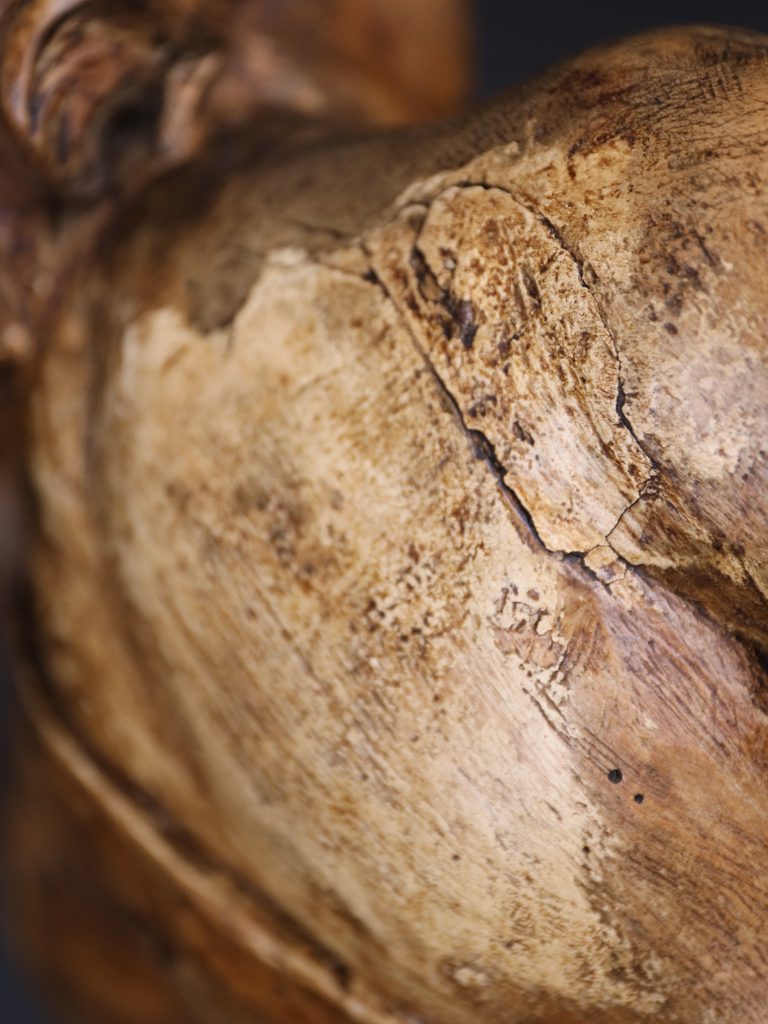
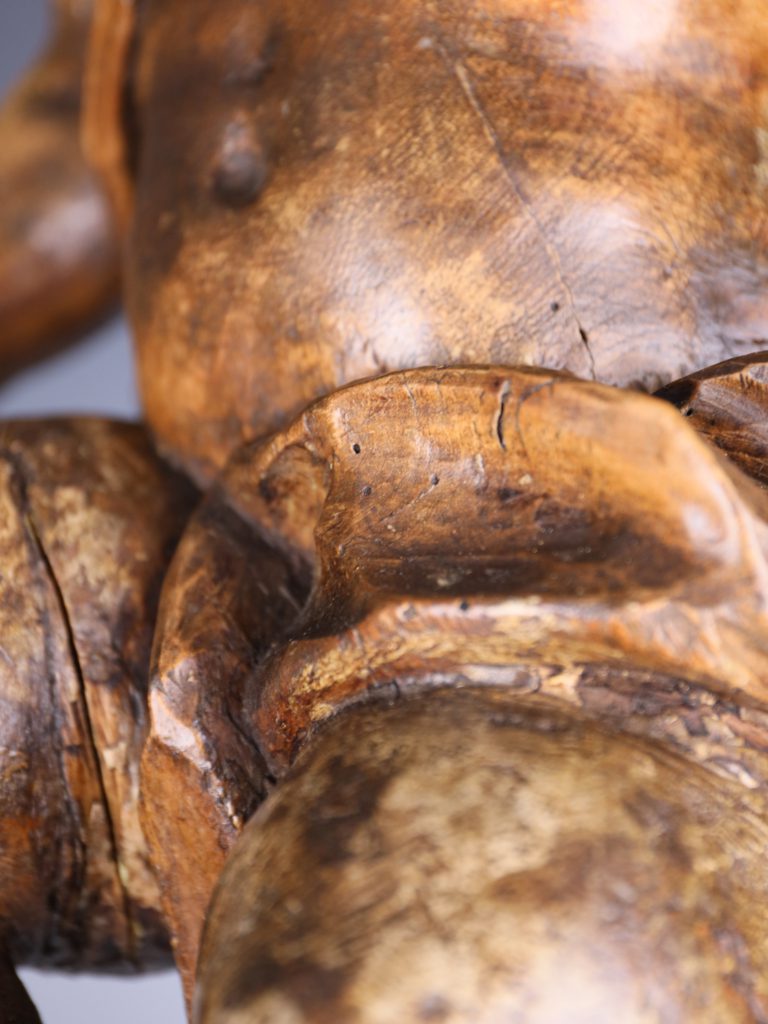
Over time, the surface has developed a beautifully mellow patina, with the surviving remnants of original paint combining harmoniously with the warm tones of the aged limewood beneath. The figure is now presented on a later bespoke oak plinth, allowing it to be displayed securely and appreciated as a sculptural work of art in its own right.
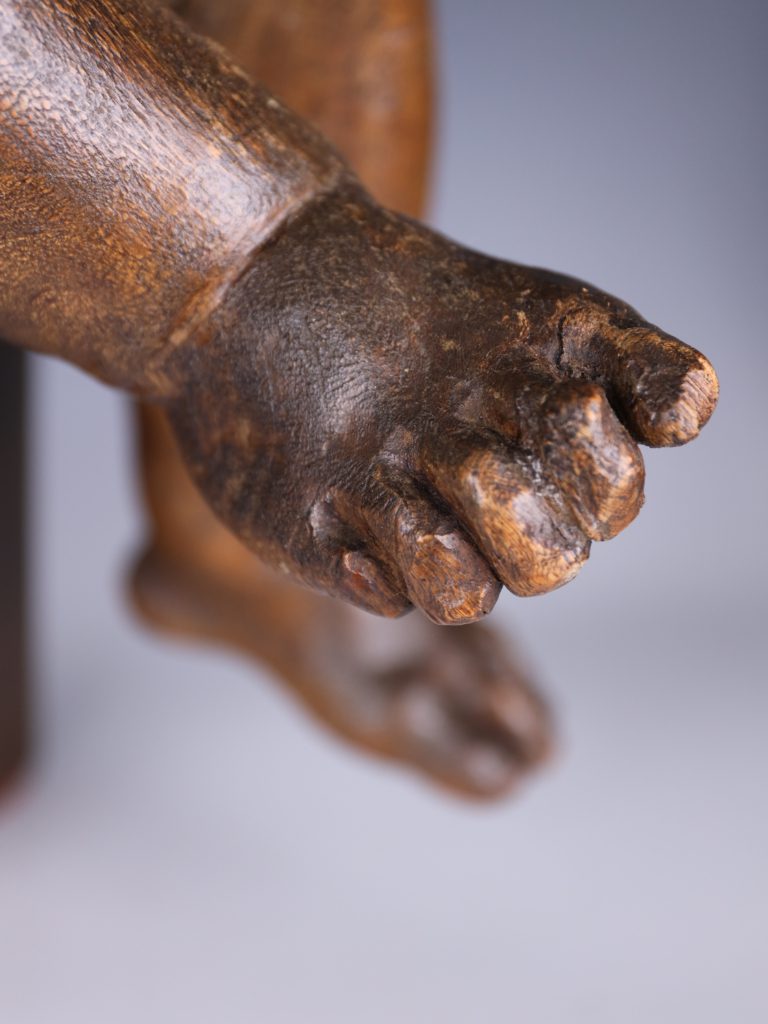
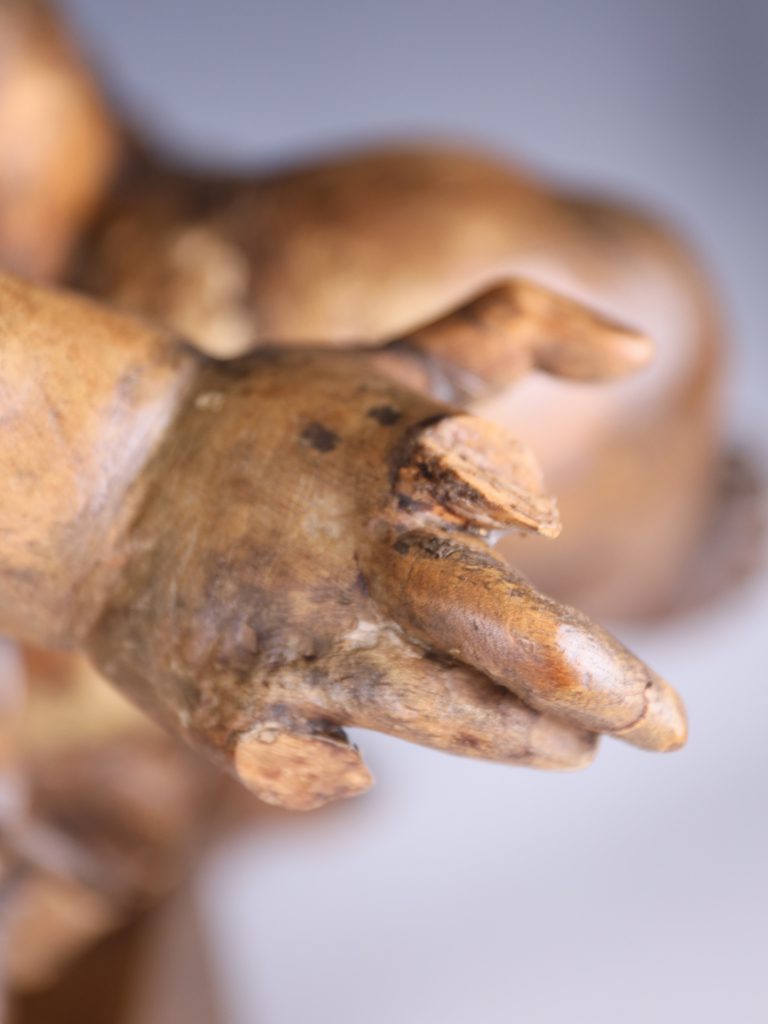
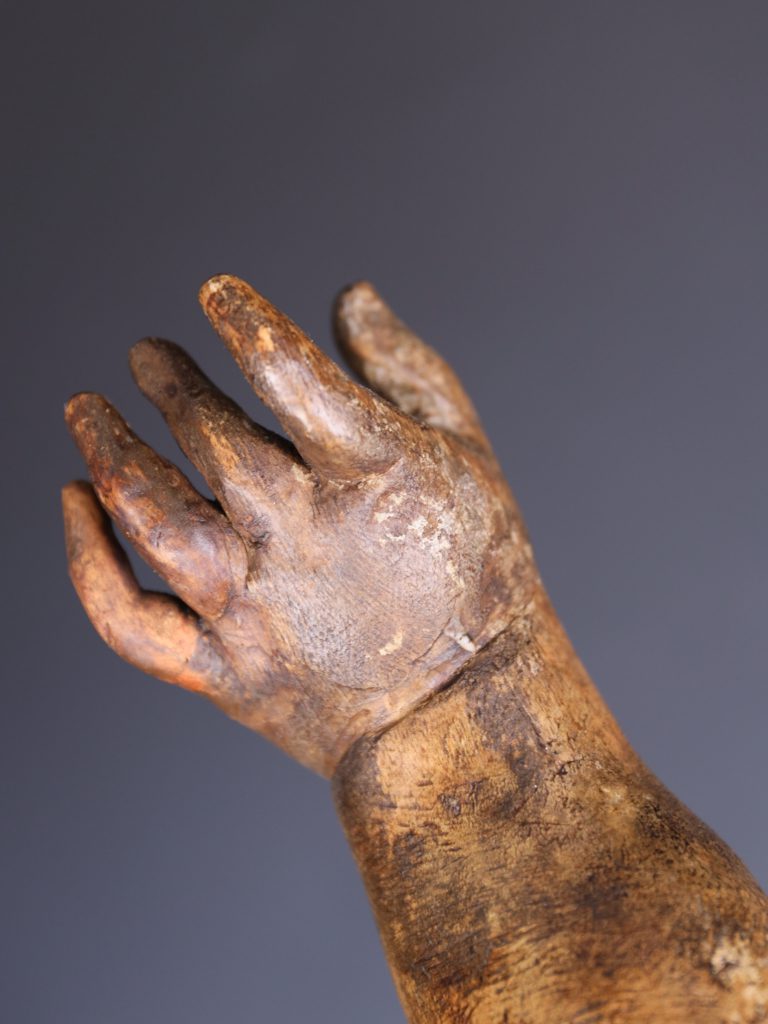
Condition is consistent with age and historical use. The putto retains excellent decorative presence, with losses to two fingers on the raised right hand and historic repairs to fingers on the left hand. These minor imperfections are reflected in the price and are typical of antique architectural carvings of this nature, adding to the authenticity and history of the piece.
A striking and characterful example of Italian religious carving, offering considerable decorative impact and equally suited to traditional, classical, or contemporary interiors.
Origin - Italy
Date - Late 18th – Early 19th Century
Material - Hand-carved limewood with remnants of original polychrome decoration
Putti have been a celebrated feature of European religious and decorative art since the Renaissance and Baroque periods. Often representing innocence, divine presence, and heavenly guardianship, antique putti were commonly used within churches, chapels, and grand aristocratic interiors. Surviving examples retaining original carving and traces of historic decoration are increasingly sought after by collectors of ecclesiastical art, architectural antiques, and period interiors.
With its impressive scale and expressive carving, this antique Italian putto works beautifully as a statement wall piece within both traditional and contemporary interiors. Whether displayed above a fireplace, within a staircase setting, or as part of a curated collection of architectural antiques, it brings warmth, texture, and centuries of history to a space.
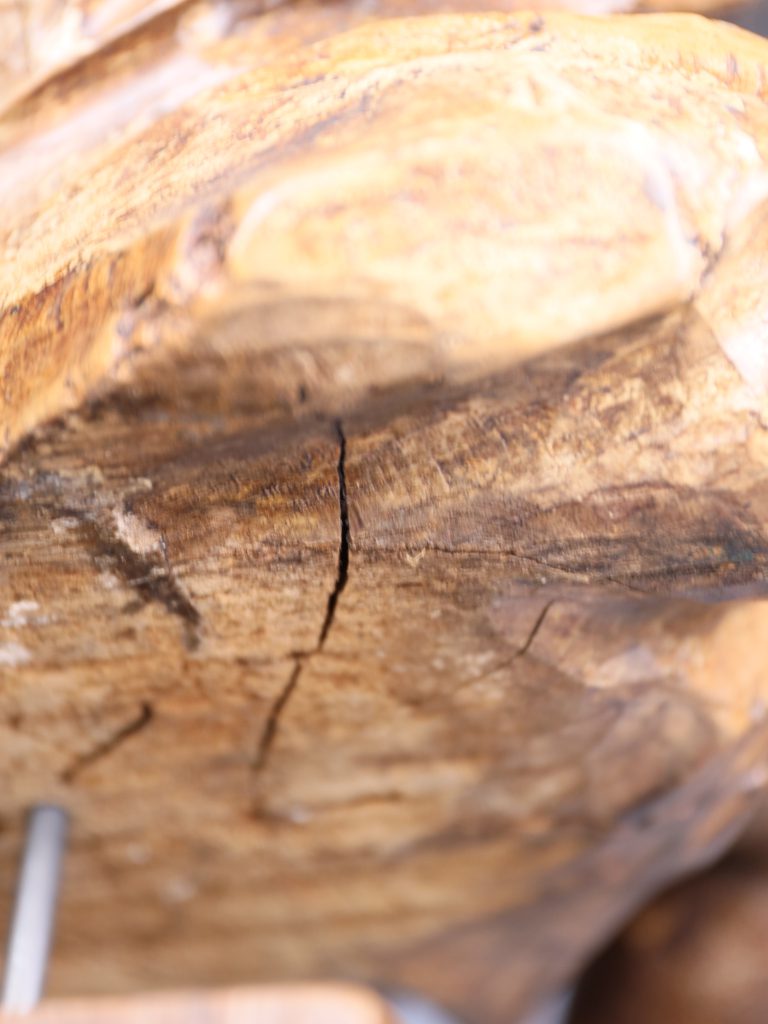
Good antique condition with age-related wear throughout. Losses to two fingers on the raised right hand and historic repairs to fingers on the left hand. Retains remnants of original painted decoration and a rich aged patina.
This figure would originally have formed part of a larger ecclesiastical decorative scheme, likely adorning an altar, chapel, or architectural niche. The surviving traces of original decoration, combined with the expressive carving and movement typical of late Baroque craftsmanship, make it a particularly desirable example for collectors of religious art and architectural antiques.
Height: 71 cm / 28 inches
Width: 46 cm / 18.1 inches
Depth: 32 cm / 12.6 inches
Weight: 8.8 kg / 19.4 lbs
Every item offered by Shackleton Fox is carefully inspected, prepared, and where necessary conserved within our workshop prior to sale.
As heritage craftsmen and antique specialists, we believe in preserving the authenticity and integrity of each piece. Original finishes, patina, wear, and signs of age are retained wherever possible, as these elements contribute to both character and historical significance.
When restoration, rewiring, repairs, or conservation work is required, it is undertaken sympathetically using traditional techniques and materials appropriate to the period of the piece. Our philosophy is one of careful stewardship rather than unnecessary restoration, ensuring antiques remain both functional and historically respectful.
The result is a collection of pieces that have been thoughtfully prepared, allowing future owners to enjoy them with confidence while preserving their unique story and character.