£750.00
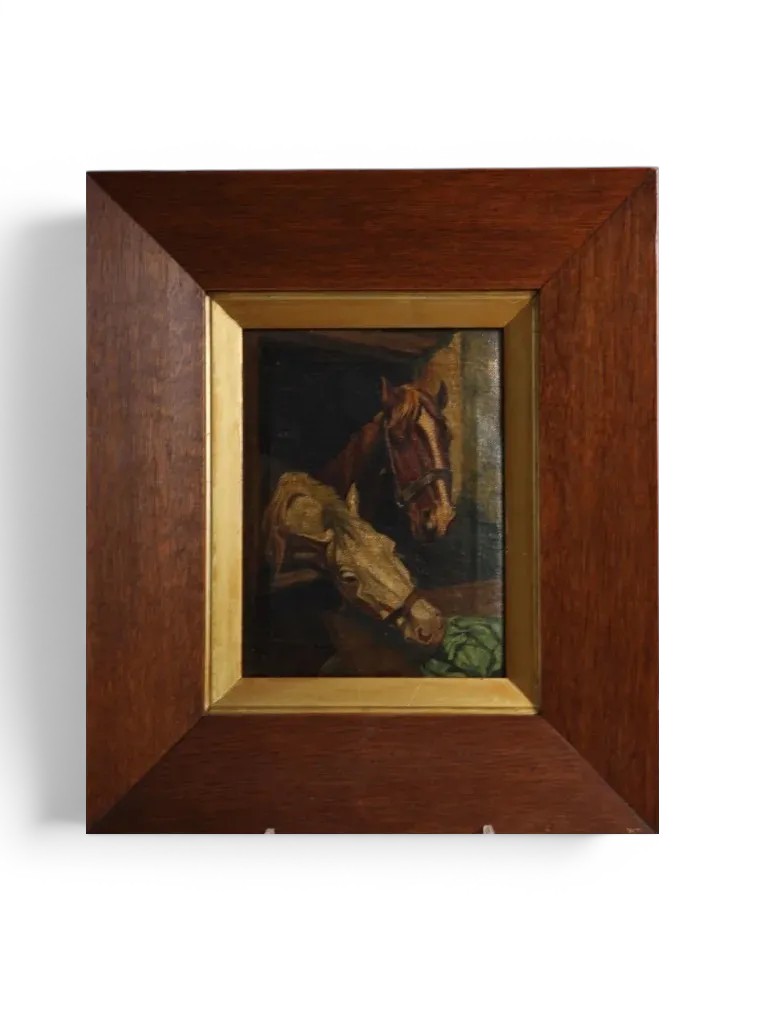
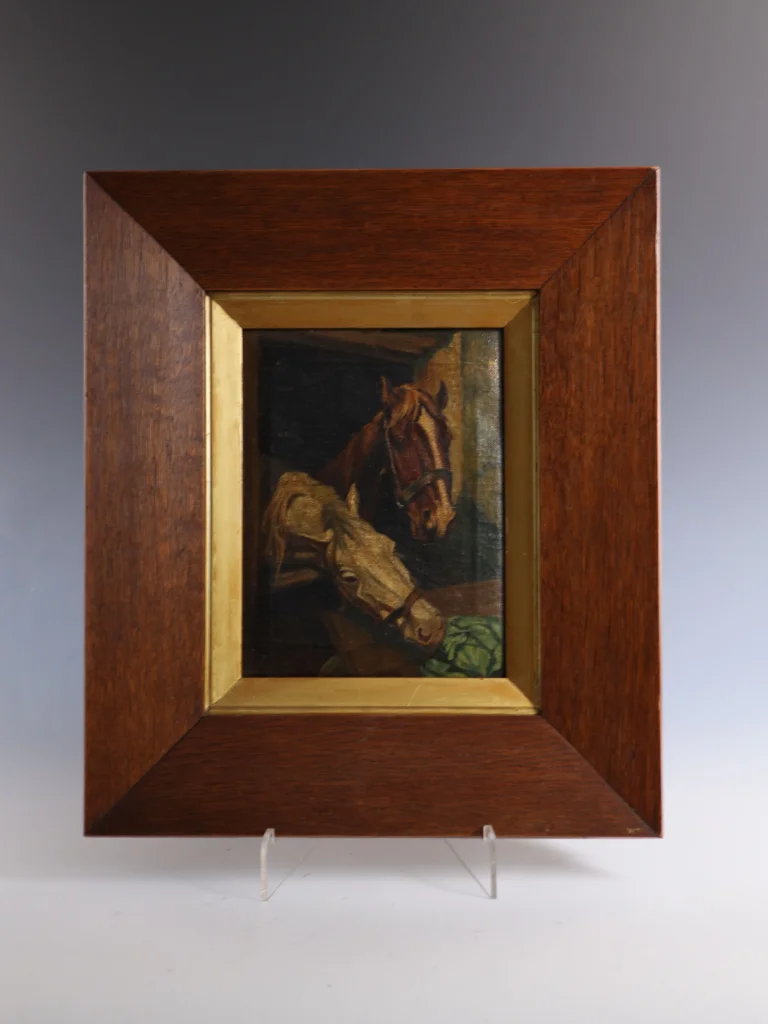
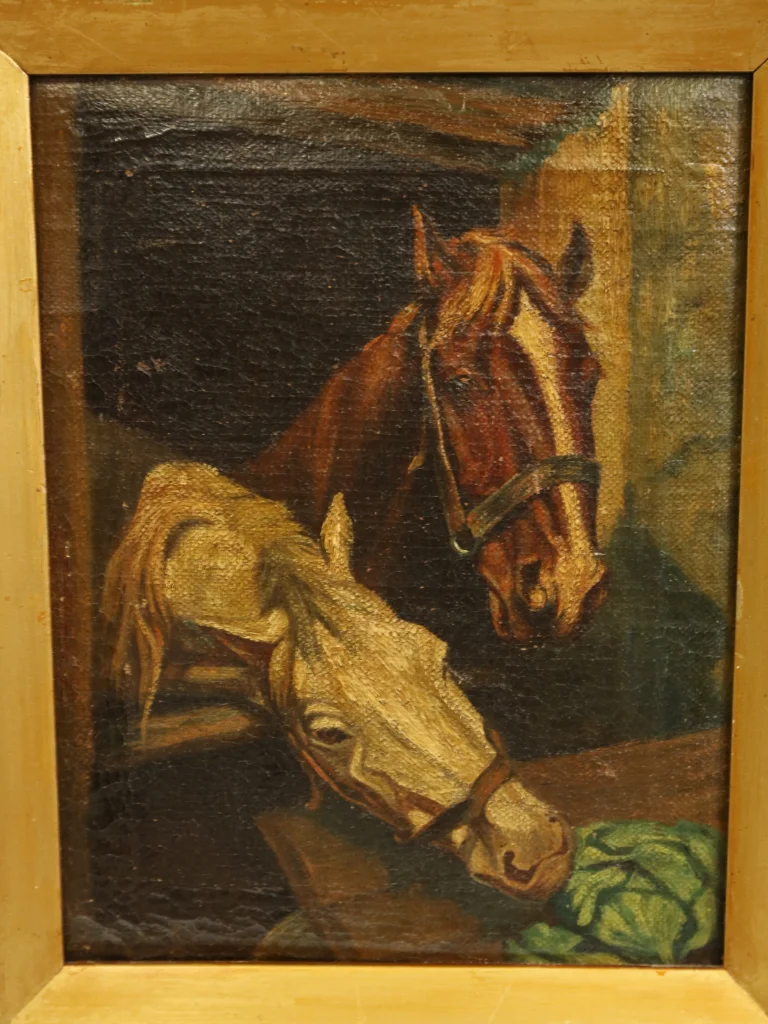
An atmospheric late 19th-century oil on canvas depicting two horses feeding within the interior of a stable, beautifully executed in warm earthy tones. The composition captures a chestnut horse standing attentively behind a pale grey companion as they feed, creating a charming and intimate rural scene.



An atmospheric late 19th-century oil on canvas depicting two horses feeding within the interior of a stable, beautifully executed in warm earthy tones. The composition captures a chestnut horse standing attentively behind a pale grey companion as they feed, creating a charming and intimate rural scene.
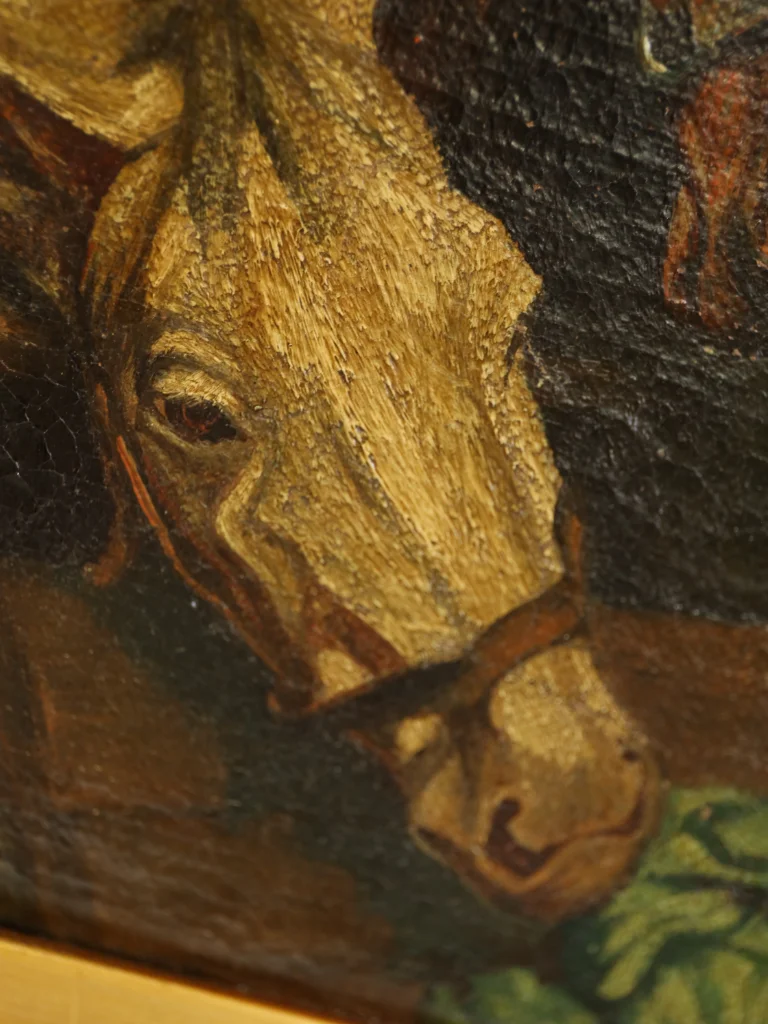
The painting demonstrates confident brushwork, subtle modelling and a pleasing use of light and shadow, drawing attention to the expressive character of the horses while maintaining the dark ambience of the stable interior.
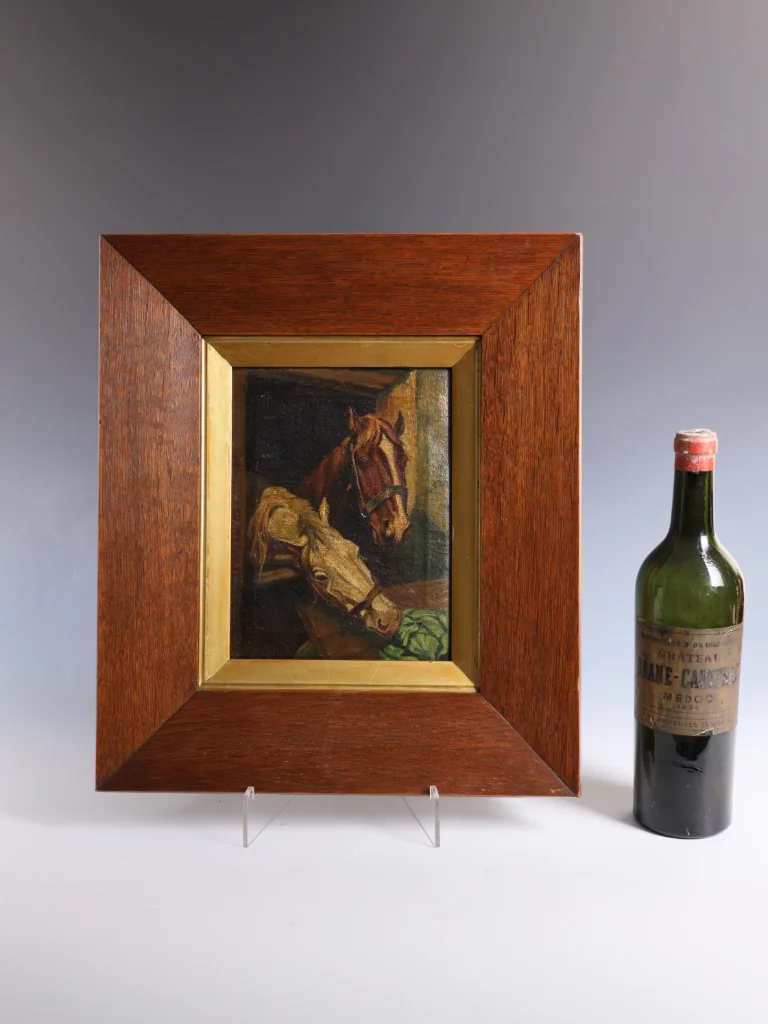
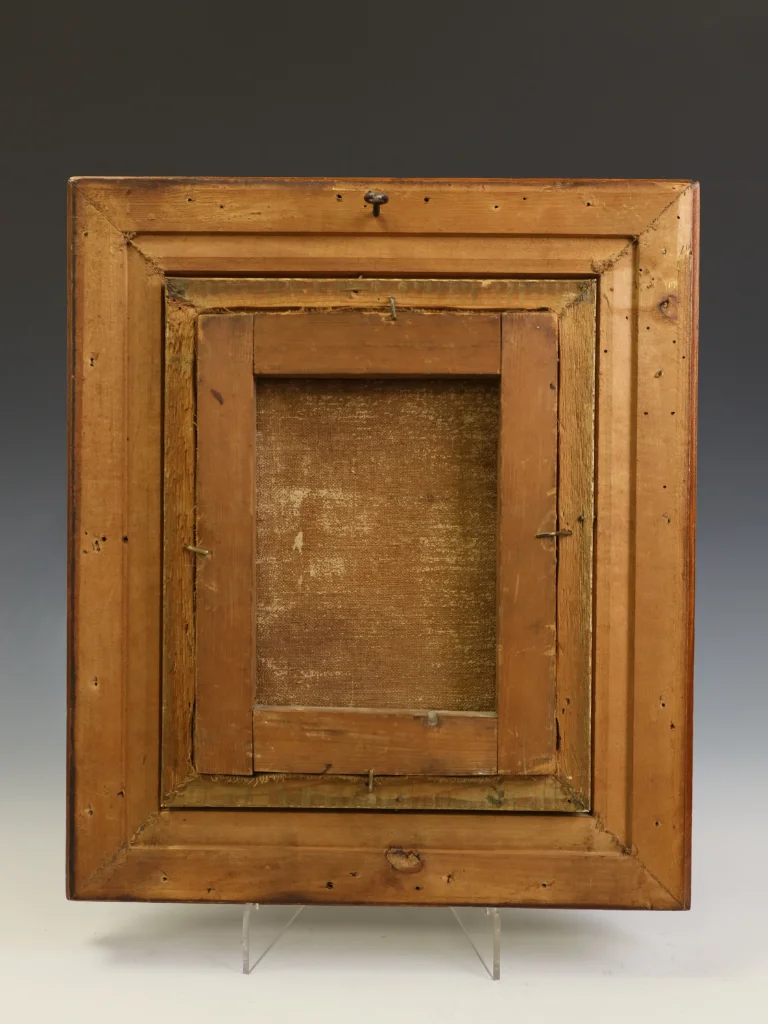
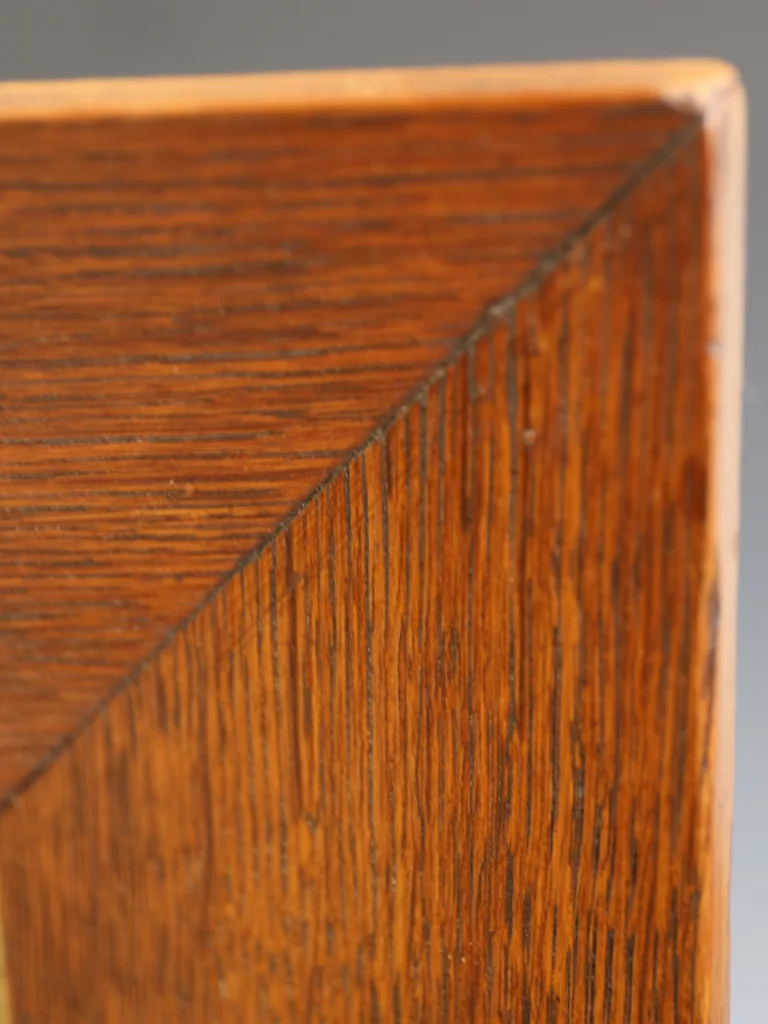
Presented in an attractive period oak frame with gilt slip, complementing the warm palette of the painting.
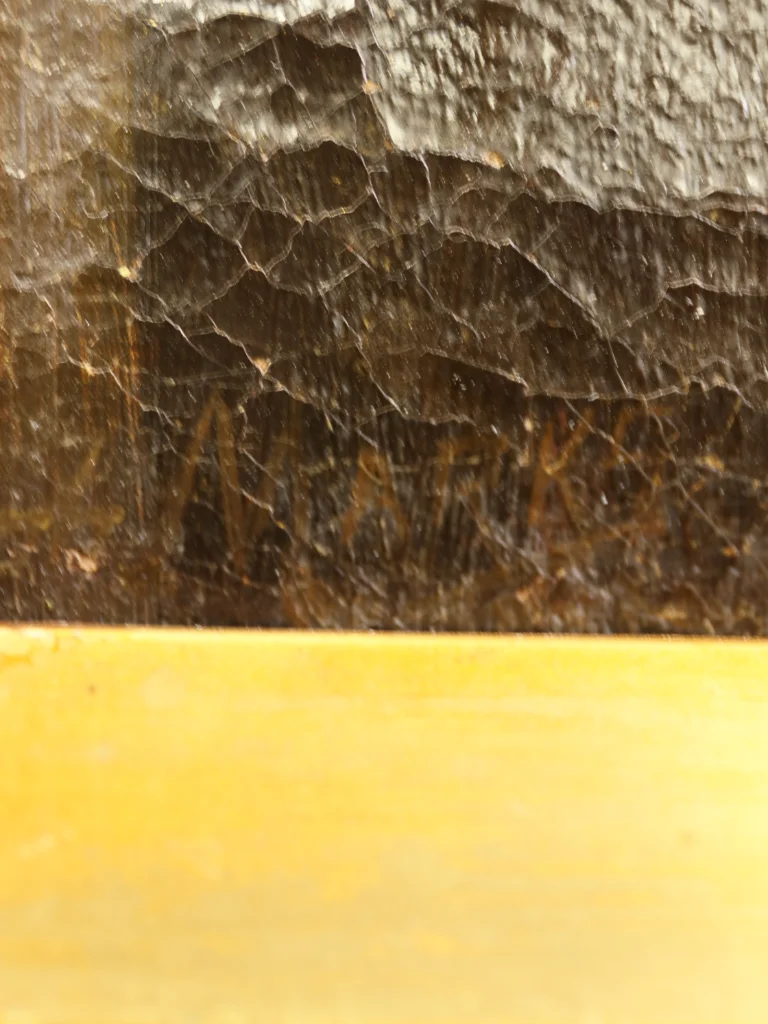
The work is signed lower right, although the signature is indistinct and appears to read "...Marek".
Circa 1880–1900
During the late nineteenth century, paintings depicting horses remained highly sought after throughout Britain and Continental Europe. While grand equestrian portraits celebrated racehorses and aristocratic estates, smaller cabinet paintings such as this offered a more intimate glimpse into everyday rural life.
Scenes of horses resting or feeding inside stables reflected the growing appreciation of working animals, combining sporting interest with genre painting. Such works became popular among country house owners, sporting enthusiasts and collectors who appreciated the quiet dignity of rural subjects.
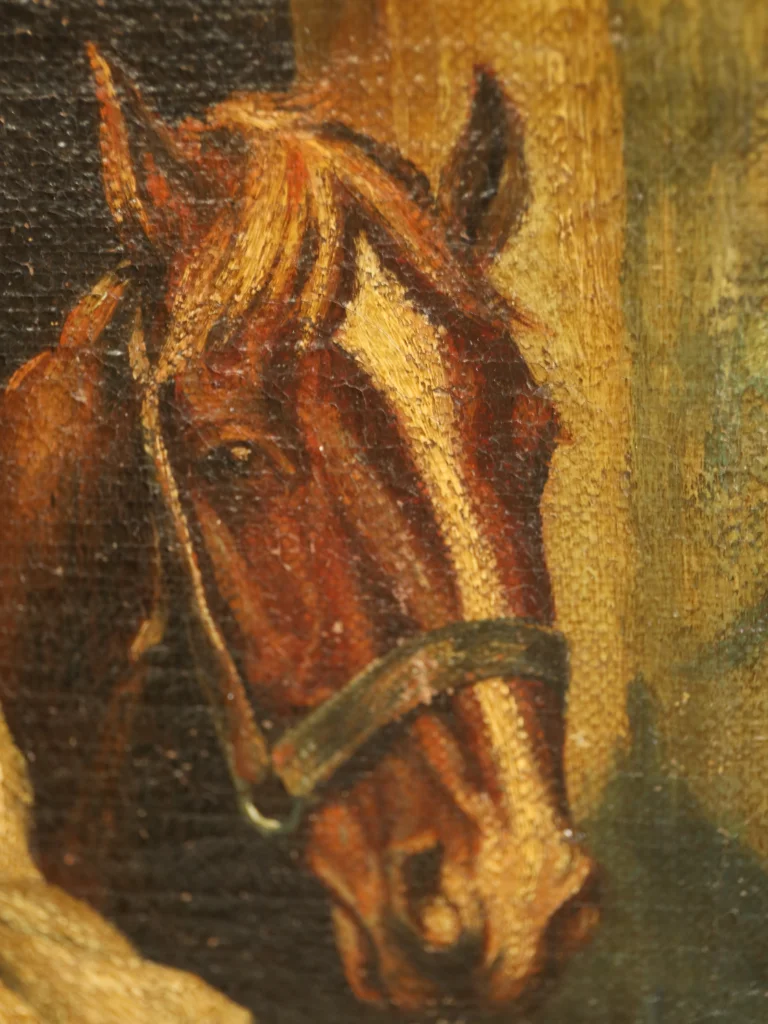
The artist demonstrates a confident understanding of equine anatomy and expression.
Rather than relying on dramatic movement, the composition focuses on subtle observation. The careful modelling of the horses' heads, together with the restrained palette and textured brushwork, creates depth and atmosphere while allowing the warm chestnut and pale grey coats to stand out against the darker stable interior.
The visible canvas texture and naturally aged craquelure further enhance the authenticity and character expected of an original nineteenth-century oil painting.
This is an exceptionally decorative painting with timeless appeal.
The intimate composition and warm palette make it particularly well suited to traditional country interiors, libraries, studies, farmhouse kitchens or equestrian homes. The contrast between the richly coloured chestnut horse and the pale grey companion immediately draws the eye, while the dark stable background creates depth and atmosphere.
The substantial oak frame provides a handsome architectural border, giving the painting presence beyond its modest canvas size.
Continental European.
Private collection.
Signed lower right (indistinct, appearing to read "...Marek").
We are always drawn to paintings that possess genuine character rather than relying purely on size or decoration, and this is one of those pieces.
The artist has captured a wonderfully natural interaction between the two horses, creating a quiet moment that feels authentic rather than staged. The warm colour palette, attractive period frame and honest age-related surface all contribute to its charm.
Whether displayed on its own or incorporated into a wider collection of sporting, rural or country house artwork, it is a painting that rewards closer inspection and has a timeless decorative quality.
Presented in good antique condition.
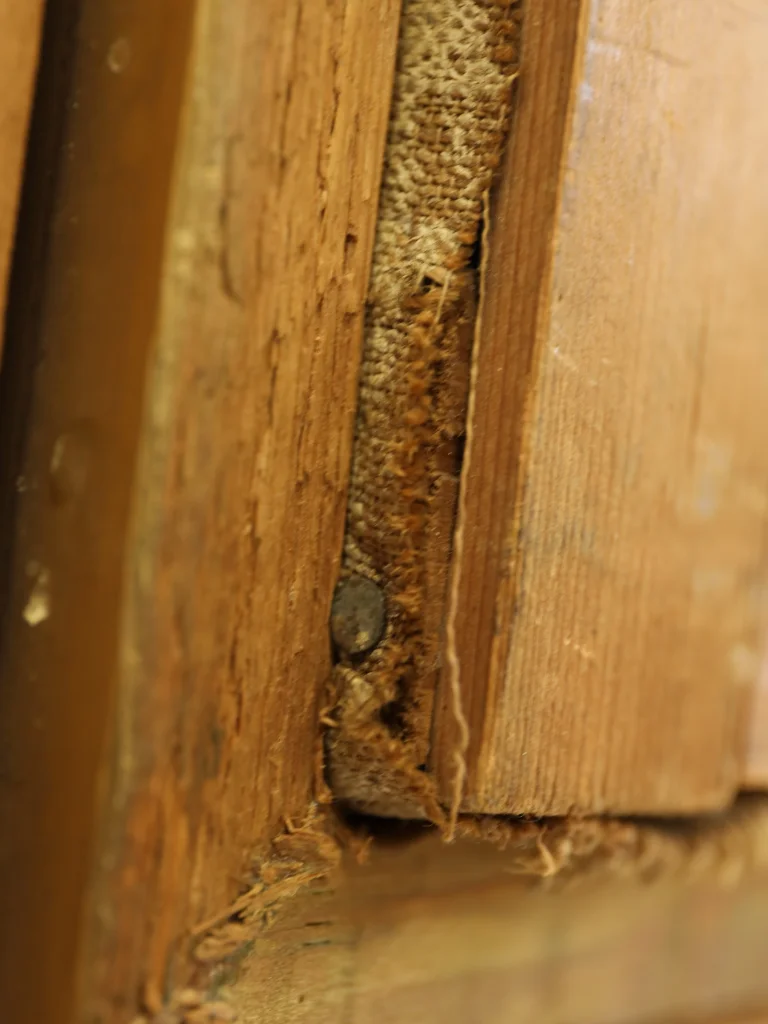
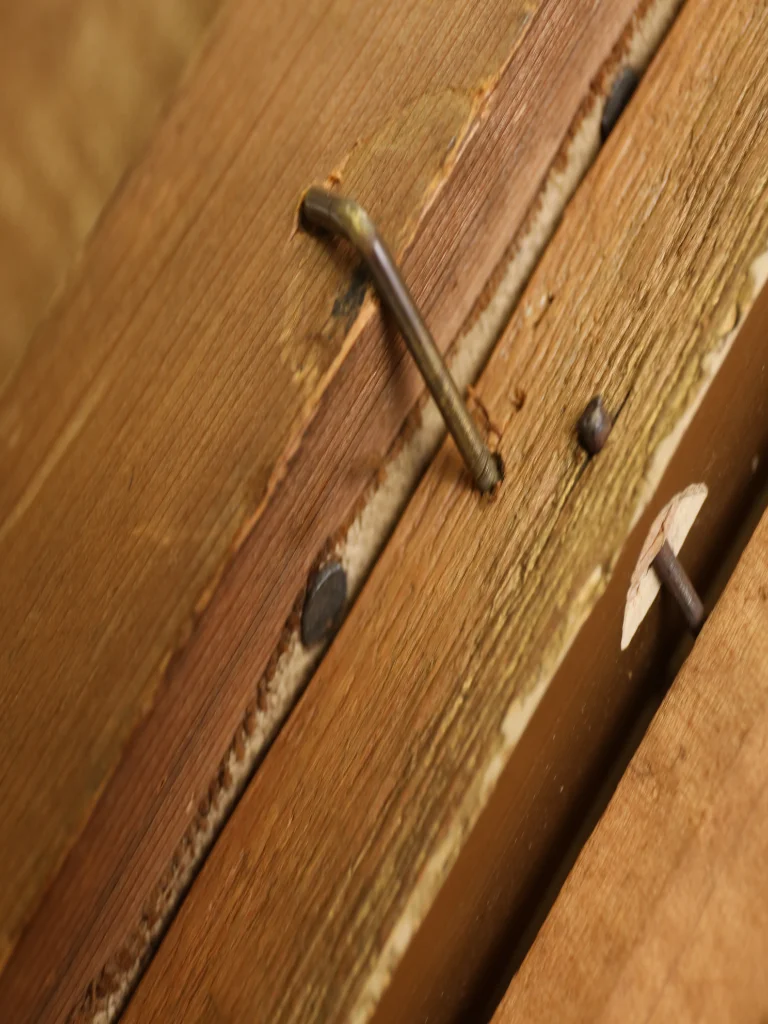
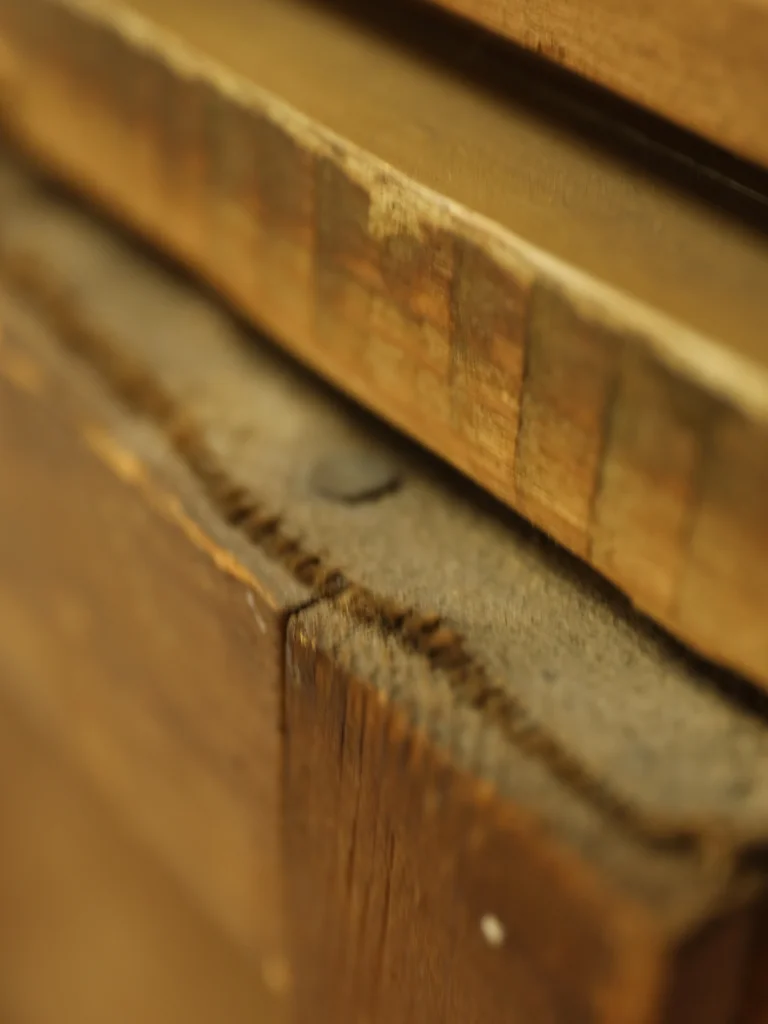
The painting displays age-related craquelure consistent with its late nineteenth-century date, with no obvious signs of significant restoration visible under normal inspection. Housed within a quality period oak frame with gilt slip.
Height: 43 cm / 16.9 inches
Width: 37 cm / 14.6 inches
Depth: 6 cm / 2.4 inches
Weight: 1.5 kg / 3.3 lbs
Every item offered by Shackleton Fox is carefully inspected, prepared, and where necessary conserved within our workshop prior to sale.
As heritage craftsmen and antique specialists, we believe in preserving the authenticity and integrity of each piece. Original finishes, patina, wear, and signs of age are retained wherever possible, as these elements contribute to both character and historical significance.
When restoration, rewiring, repairs, or conservation work is required, it is undertaken sympathetically using traditional techniques and materials appropriate to the period of the piece. Our philosophy is one of careful stewardship rather than unnecessary restoration, ensuring antiques remain both functional and historically respectful.
The result is a collection of pieces that have been thoughtfully prepared, allowing future owners to enjoy them with confidence while preserving their unique story and character.