
£500.00
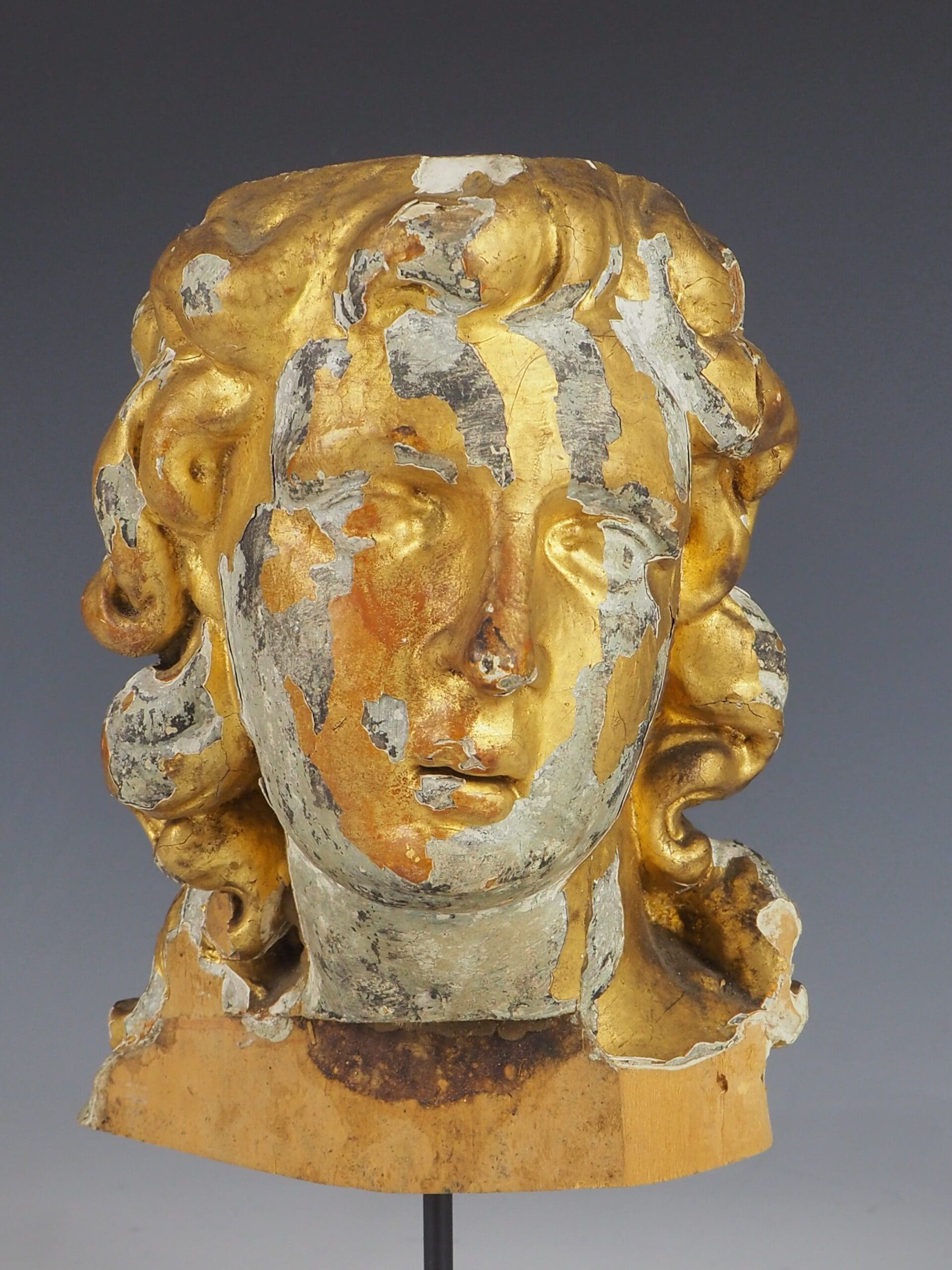
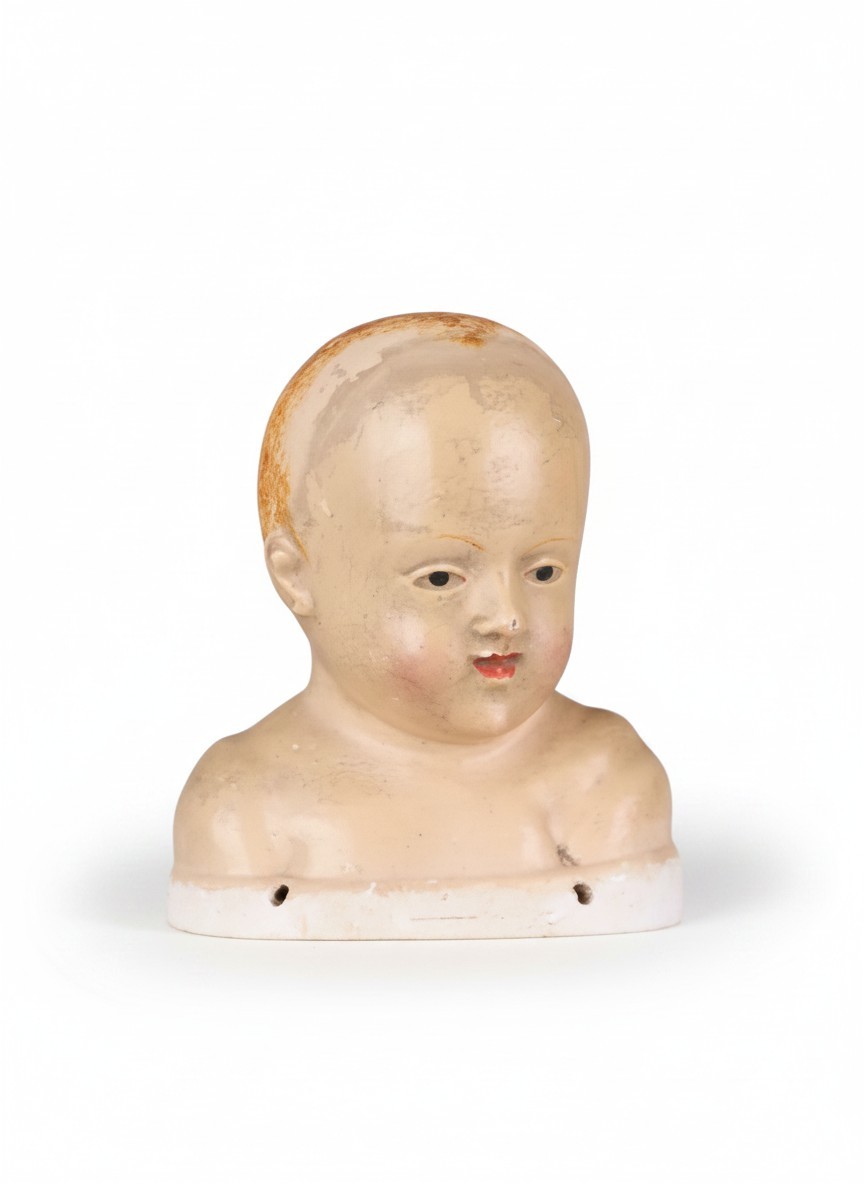
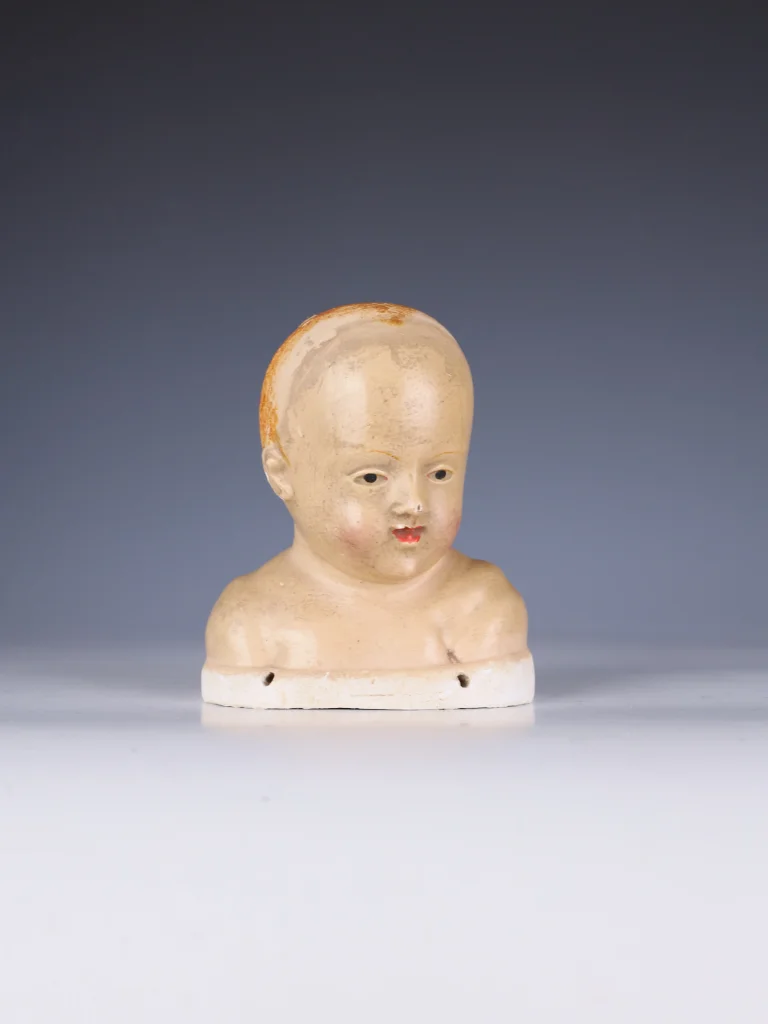
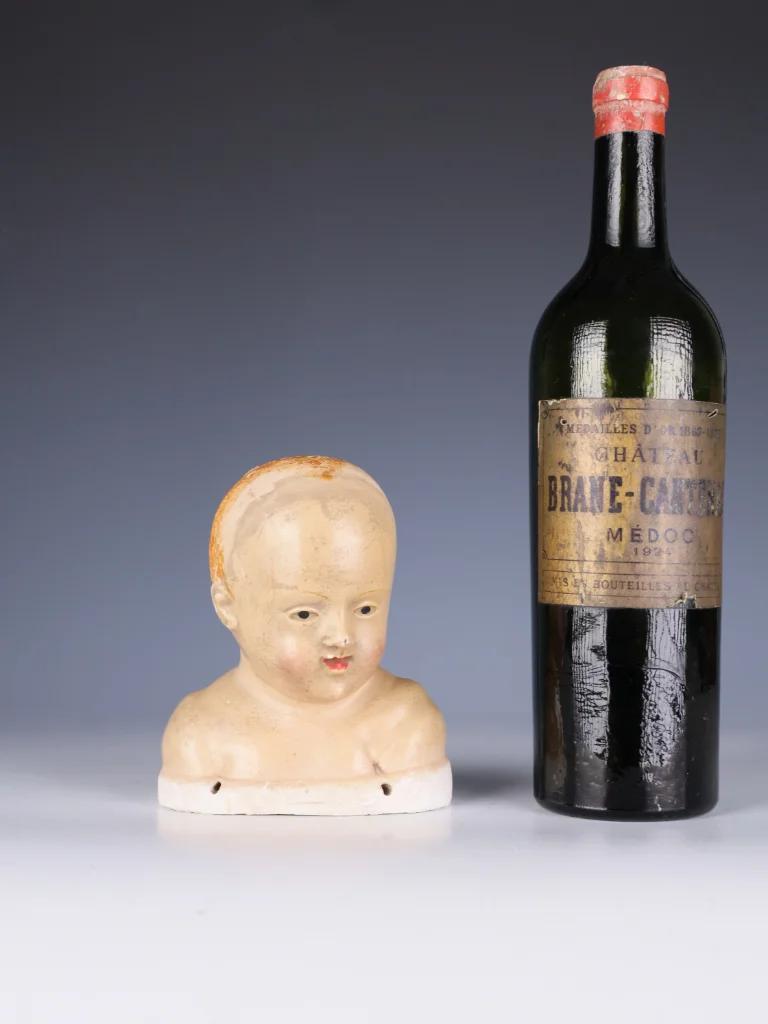
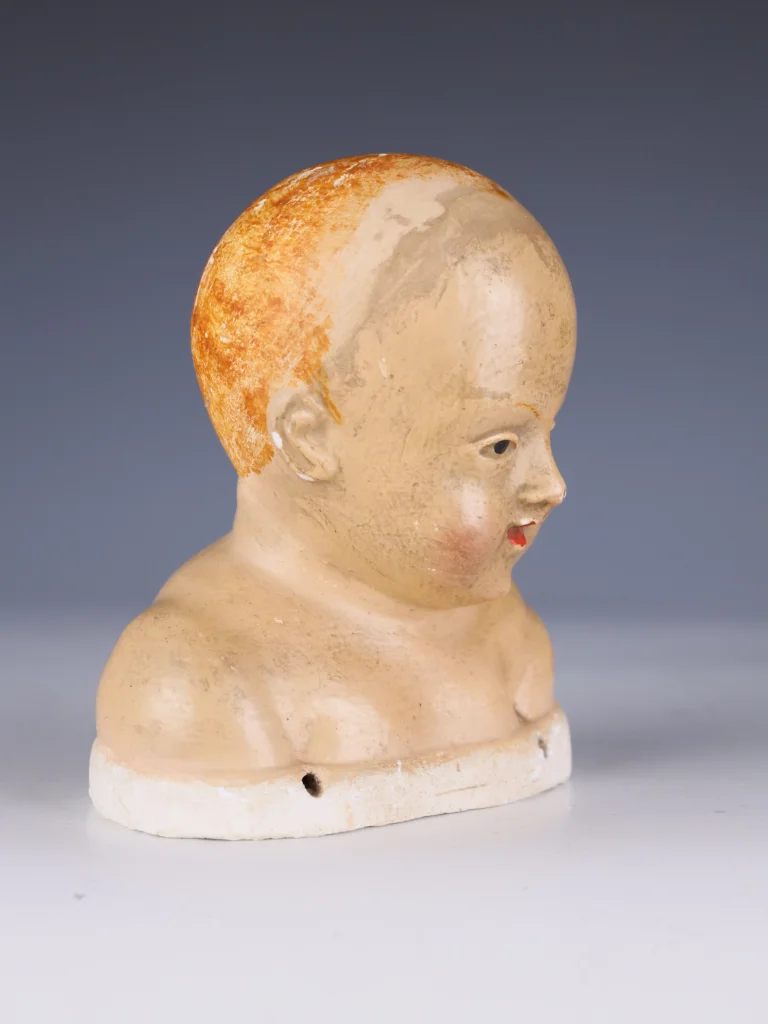
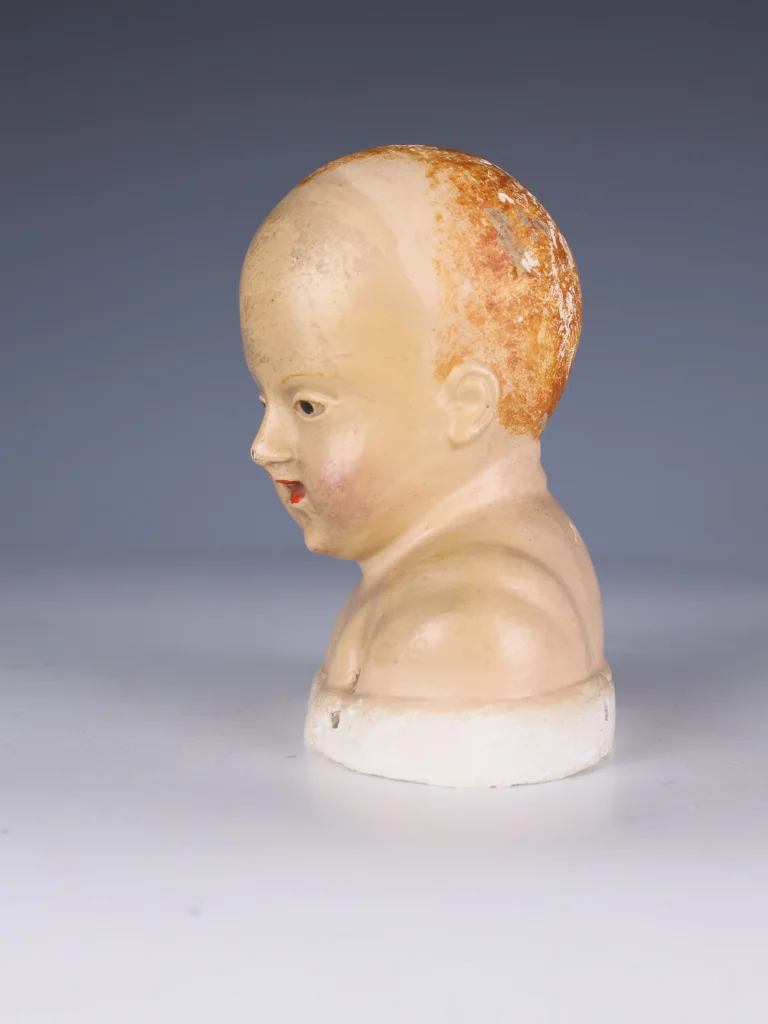
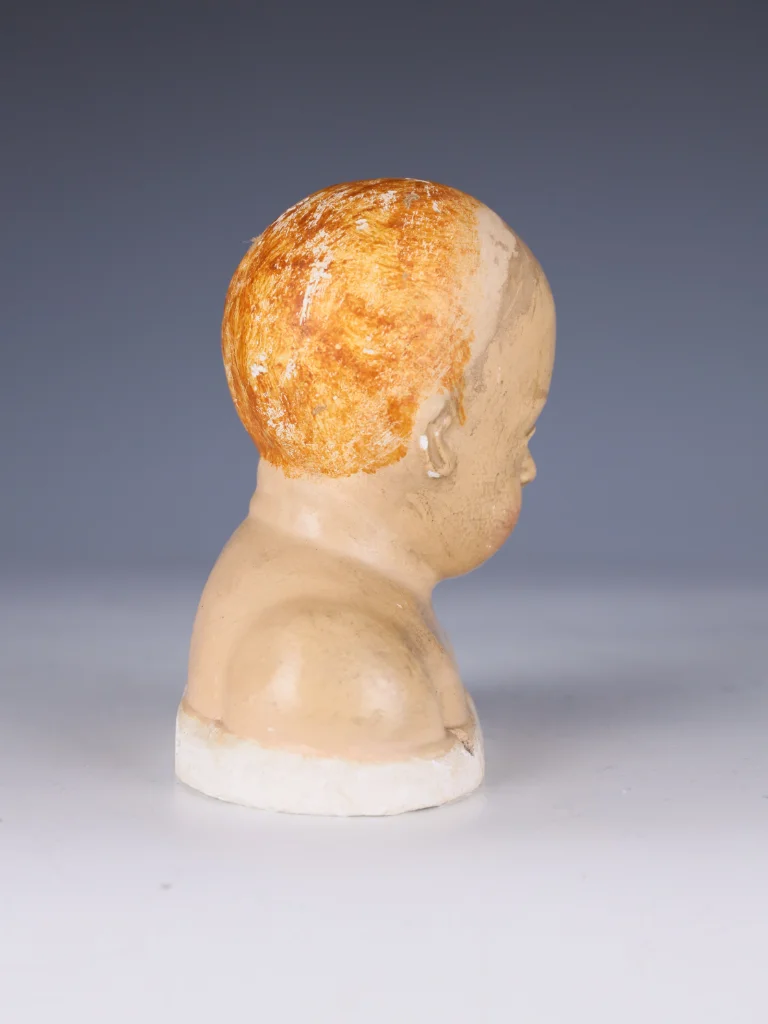
A deeply evocative 18th-century Tuscan polychrome stucco head of the Infant Jesus, retaining its original hand-painted decoration and exceptional devotional presence.
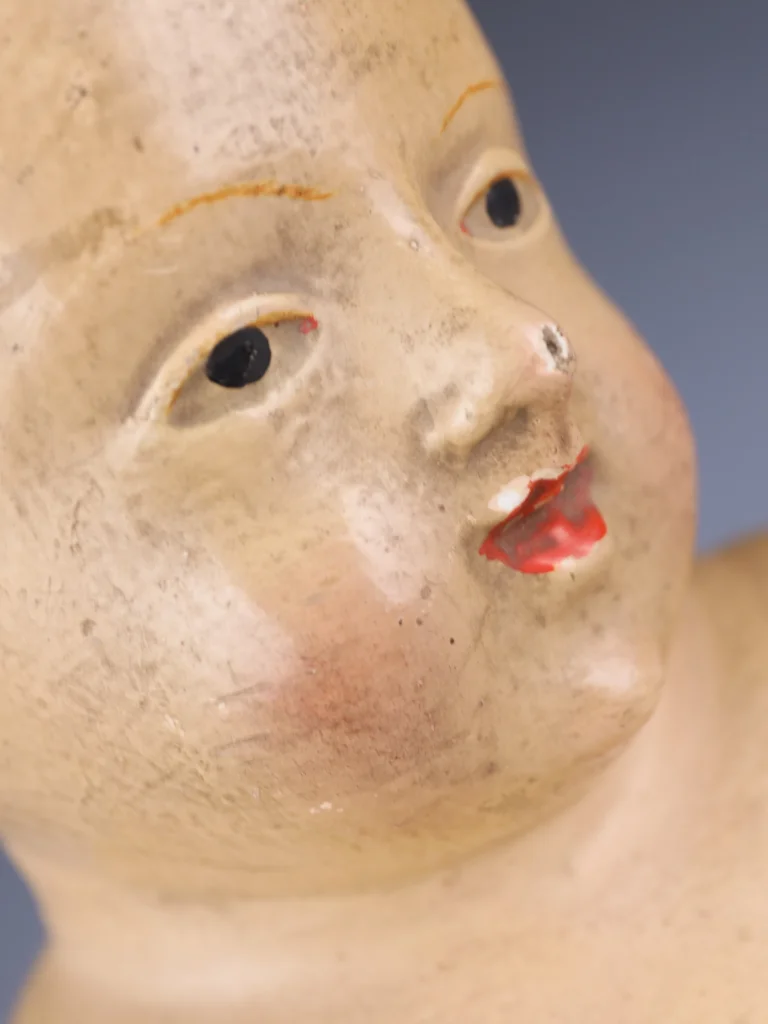
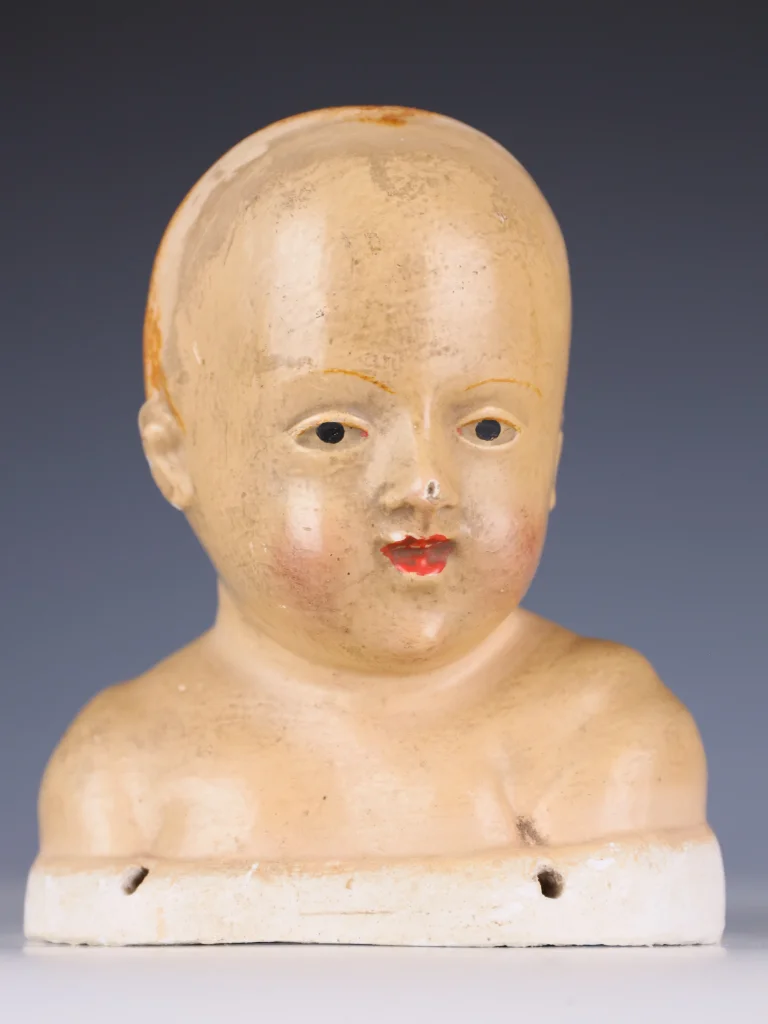
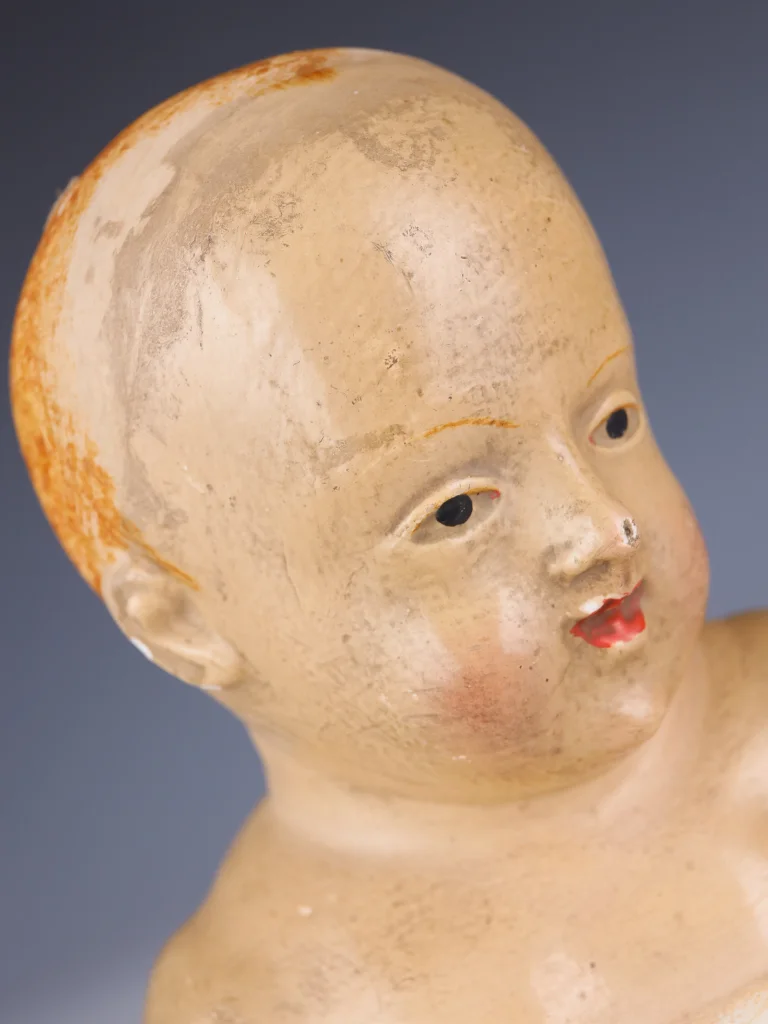
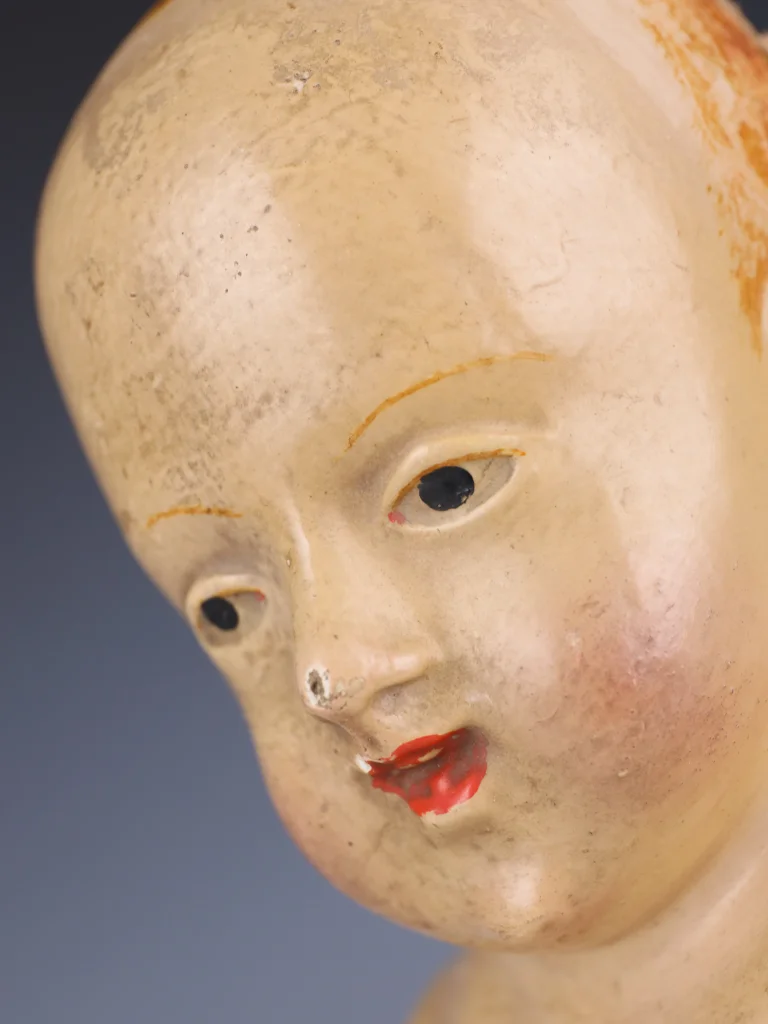
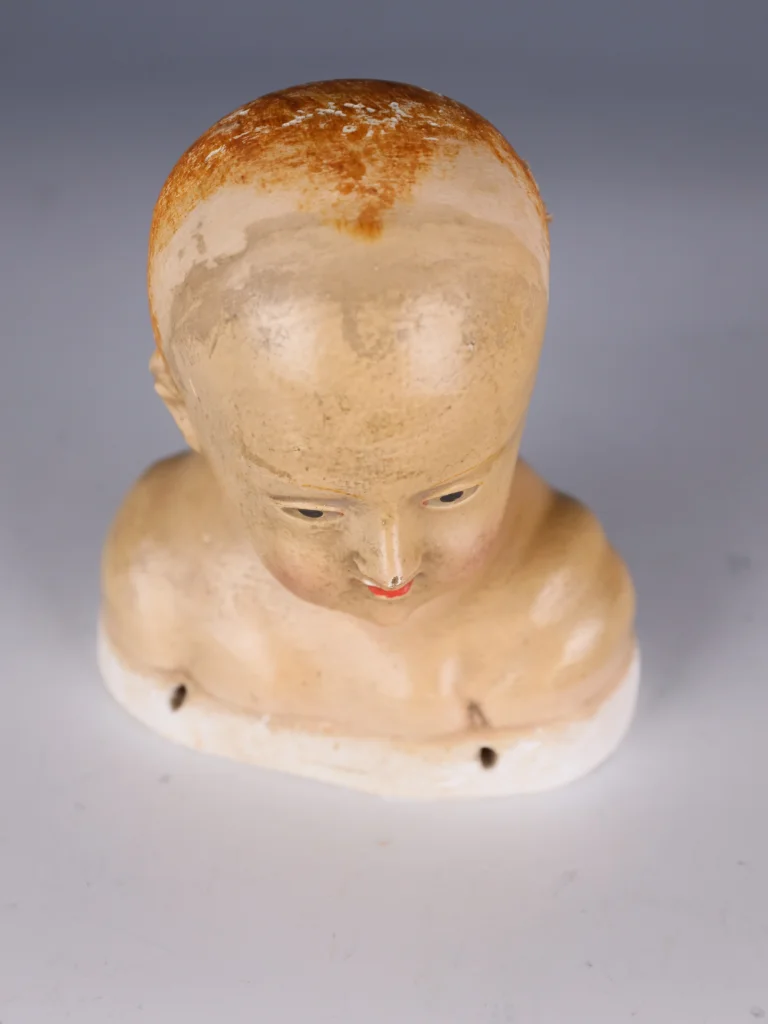
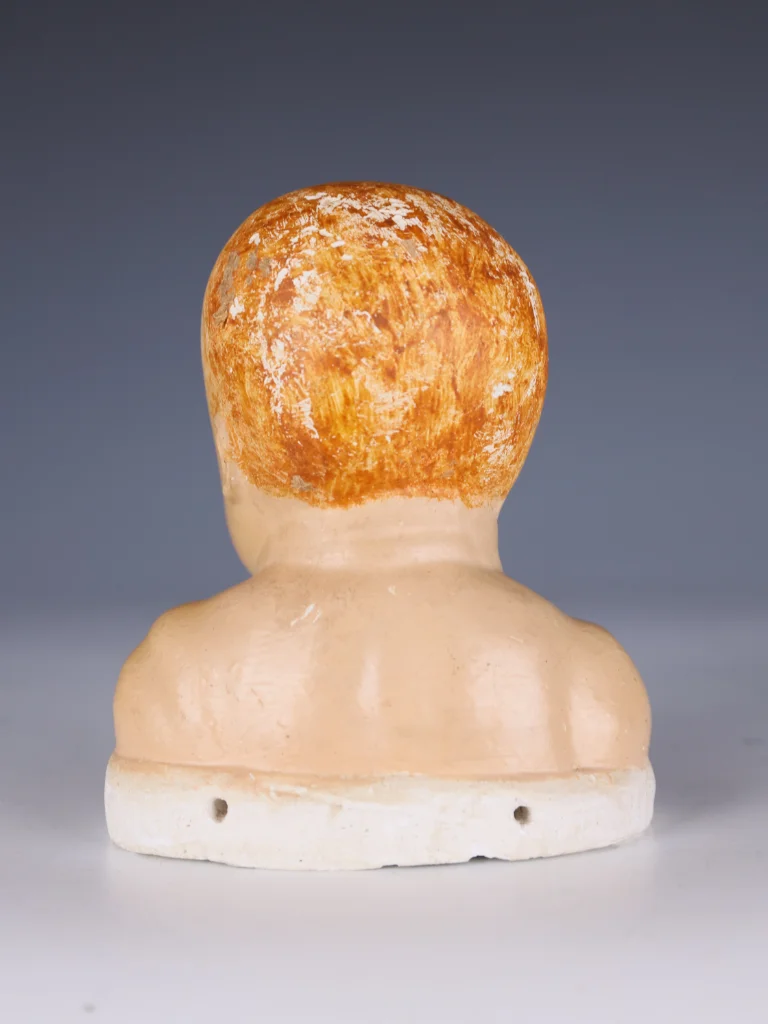
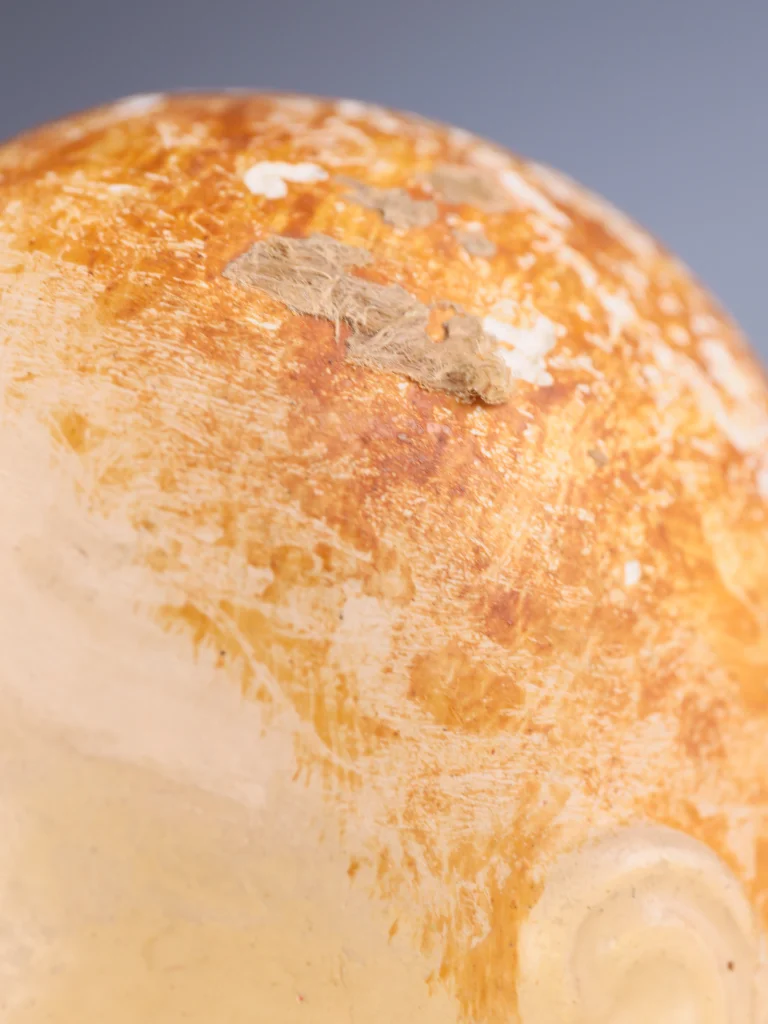
Beautifully modelled with softly rounded cheeks, delicately painted eyebrows, expressive dark eyes and gently parted vermillion lips, this finely sculpted head captures the innocence and serenity synonymous with representations of the Christ Child during the Baroque period. Delicate traces of the original auburn painted hair remain visible around the crown, while subtle flesh tones and surviving polychrome decoration have mellowed gracefully through more than two centuries.



A deeply evocative 18th-century Tuscan polychrome stucco head of the Infant Jesus, retaining its original hand-painted decoration and exceptional devotional presence.
Beautifully modelled with softly rounded cheeks, delicately painted eyebrows, expressive dark eyes and gently parted vermillion lips, this finely sculpted head captures the innocence and serenity synonymous with representations of the Christ Child during the Baroque period. Delicate traces of the original auburn painted hair remain visible around the crown, while subtle flesh tones and surviving polychrome decoration have mellowed gracefully through more than two centuries.
During the eighteenth century, devotional sculptures such as this were commissioned for churches, monasteries and private chapels throughout Tuscany. Figures of the Christ Child, or Bambino Gesù, played an important role in domestic and ecclesiastical worship, particularly during Christmas celebrations and feast days. The exceptional craftsmanship seen here reflects the highly skilled Tuscan workshops renowned for their expressive modelling and lifelike polychrome finishes.
Originally created as the head of a larger devotional sculpture, the surviving shoulder section and original fixing holes indicate that it would once have been attached to a substantial body, either sculpted or constructed from wood and textile. Separated from its original figure over time, the head has become a compelling sculptural fragment in its own right.
For ease of display, a discreet later mounting base has been added, allowing the sculpture to be appreciated as an independent work of art while preserving its historical integrity.
The surface has developed a remarkable patina, displaying gentle craquelure, areas of paint wear and natural discolouration that bear witness to centuries of devotional use. These untouched surfaces greatly enhance its authenticity and character.
Today this remarkable piece appeals equally to collectors of Italian religious art, Grand Tour objects, cabinet curiosities and early sculpture. Whether displayed within a classical interior, a study or a carefully curated collection, it possesses an undeniable presence and quiet spirituality.
A rare surviving fragment of eighteenth-century Tuscan devotional sculpture with exceptional decorative and historical appeal.
Good antique condition.
Retaining its original polychrome decoration with expected age-related wear throughout. Areas of surface rubbing, craquelure, minor paint losses and natural discolouration are entirely consistent with its age. There are small losses around the nose and lips together with general surface wear acquired through centuries of devotional use.
The sculpture is presented on a later display base for stability and ease of presentation.
Please refer to the photographs as they form part of the condition report.
Height: 15 cm / 5.9 inches
Width: 12 cm / 4.7 inches
Depth: 9 cm / 3.5 inches
Weight: 0.5 kg / 1.1 lbs
Every item offered by Shackleton Fox is carefully inspected, prepared, and where necessary conserved within our workshop prior to sale.
As heritage craftsmen and antique specialists, we believe in preserving the authenticity and integrity of each piece. Original finishes, patina, wear, and signs of age are retained wherever possible, as these elements contribute to both character and historical significance.
When restoration, rewiring, repairs, or conservation work is required, it is undertaken sympathetically using traditional techniques and materials appropriate to the period of the piece. Our philosophy is one of careful stewardship rather than unnecessary restoration, ensuring antiques remain both functional and historically respectful.
The result is a collection of pieces that have been thoughtfully prepared, allowing future owners to enjoy them with confidence while preserving their unique story and character.