
£850.00
A striking and highly individual Spanish Raku lidded vase by the celebrated ceramicist and sculptor Marciano Pérez Buendía, dating to circa 2000.



A striking and highly individual Spanish Raku lidded vase by the celebrated ceramicist and sculptor Marciano Pérez Buendía, dating to circa 2000.
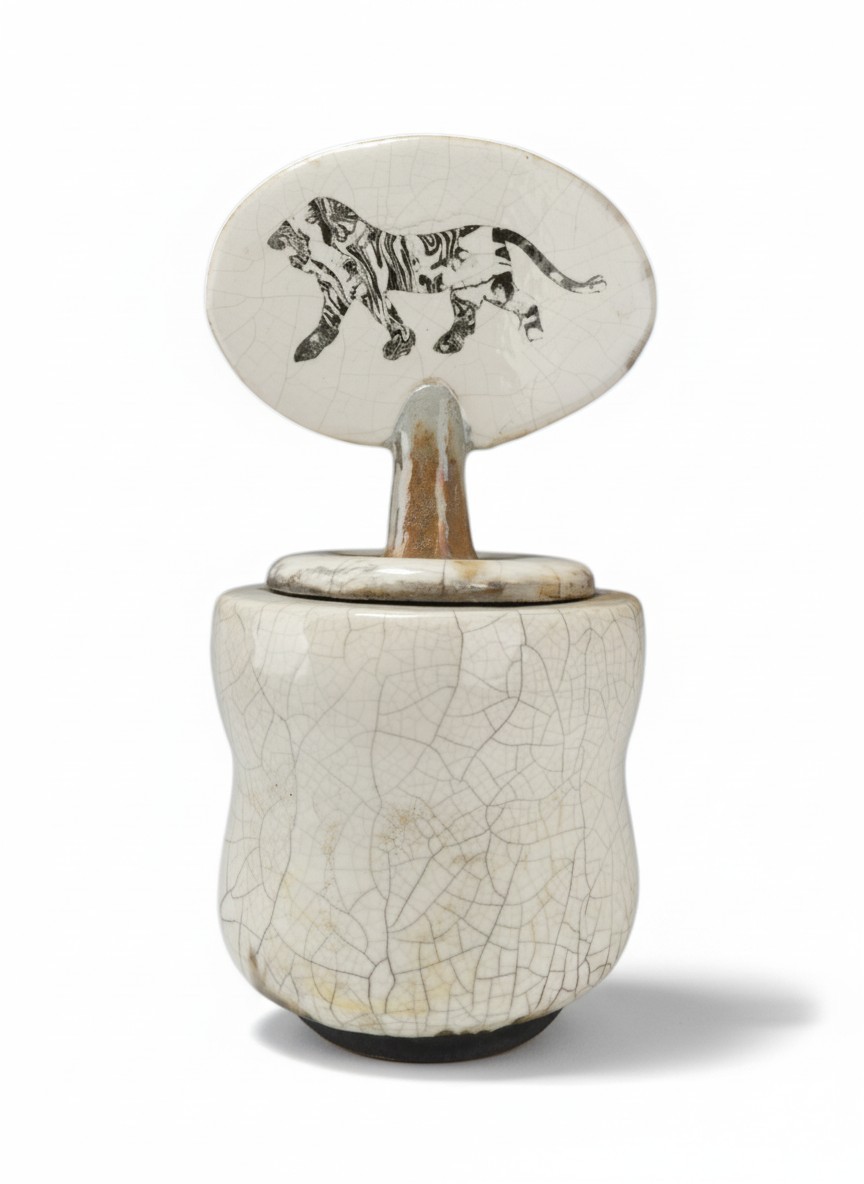
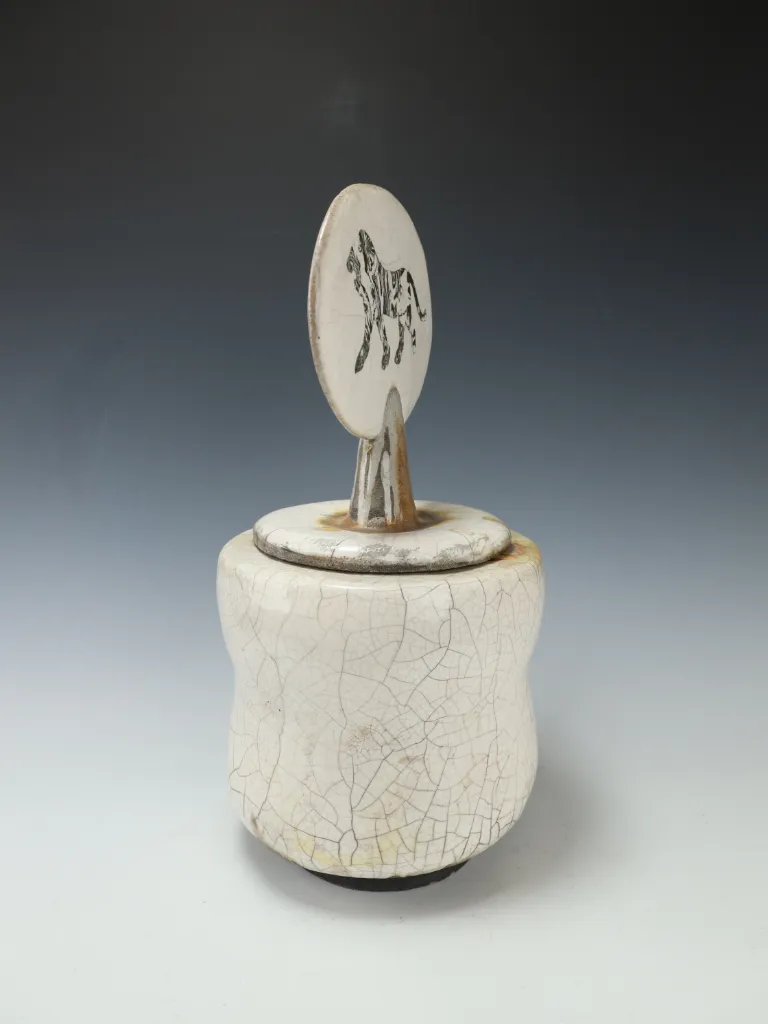
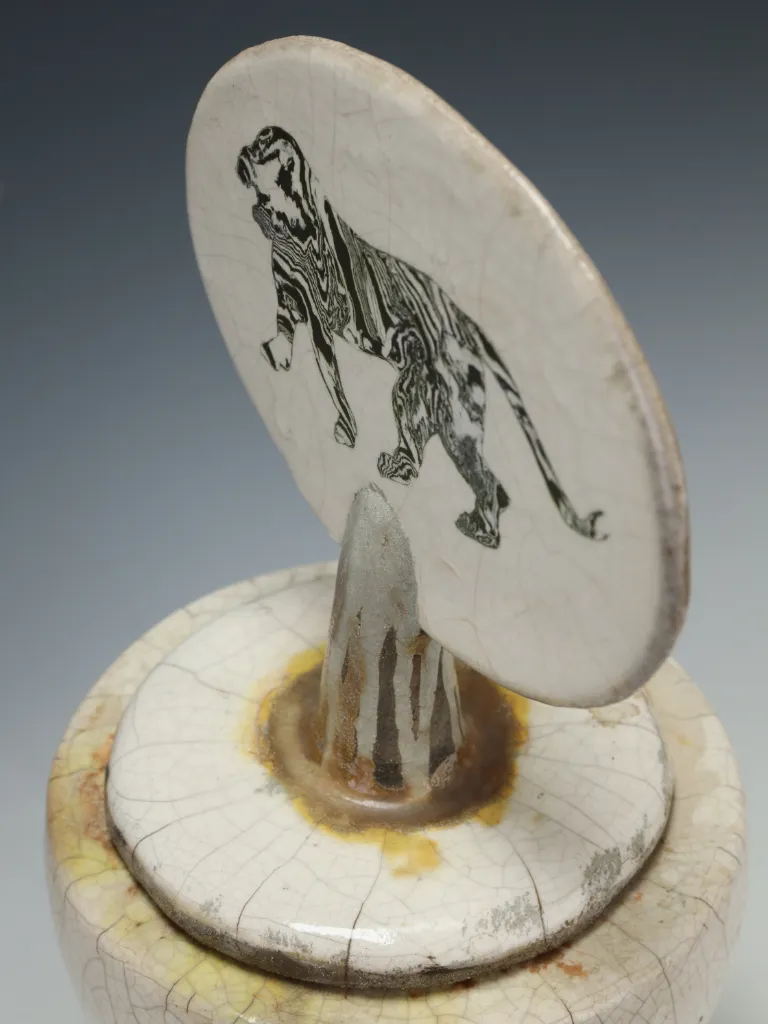
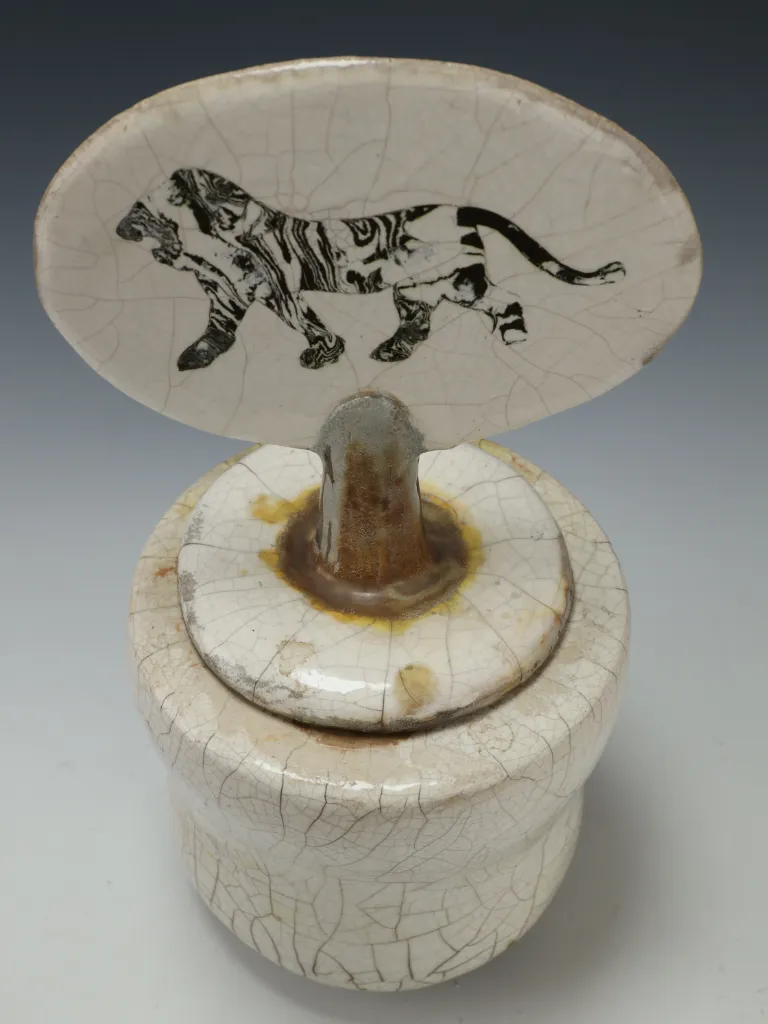
Sculptural in form and wonderfully tactile, the piece combines Buendía's distinctive use of the traditional Japanese Raku firing technique with a wonderfully graphic depiction of a tiger. The combination of the heavily crackled ivory glaze, smoke-blackened ceramic and almost monochromatic animal decoration gives the vase an extraordinary surface quality that is characteristic of his approach to ceramics.
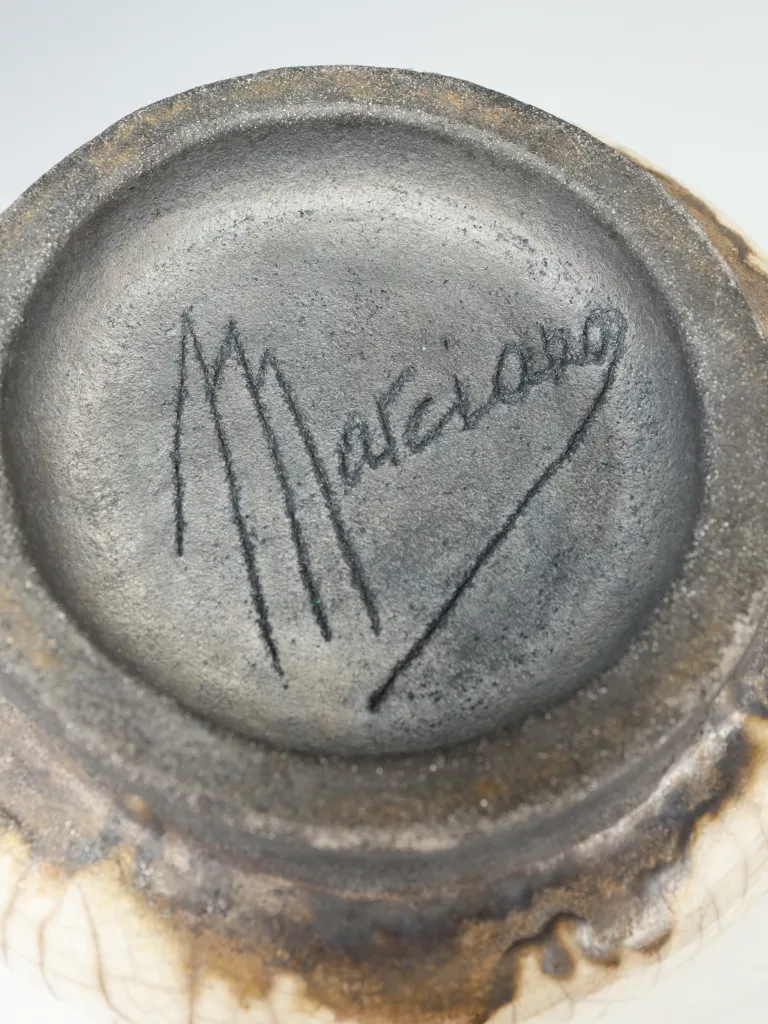
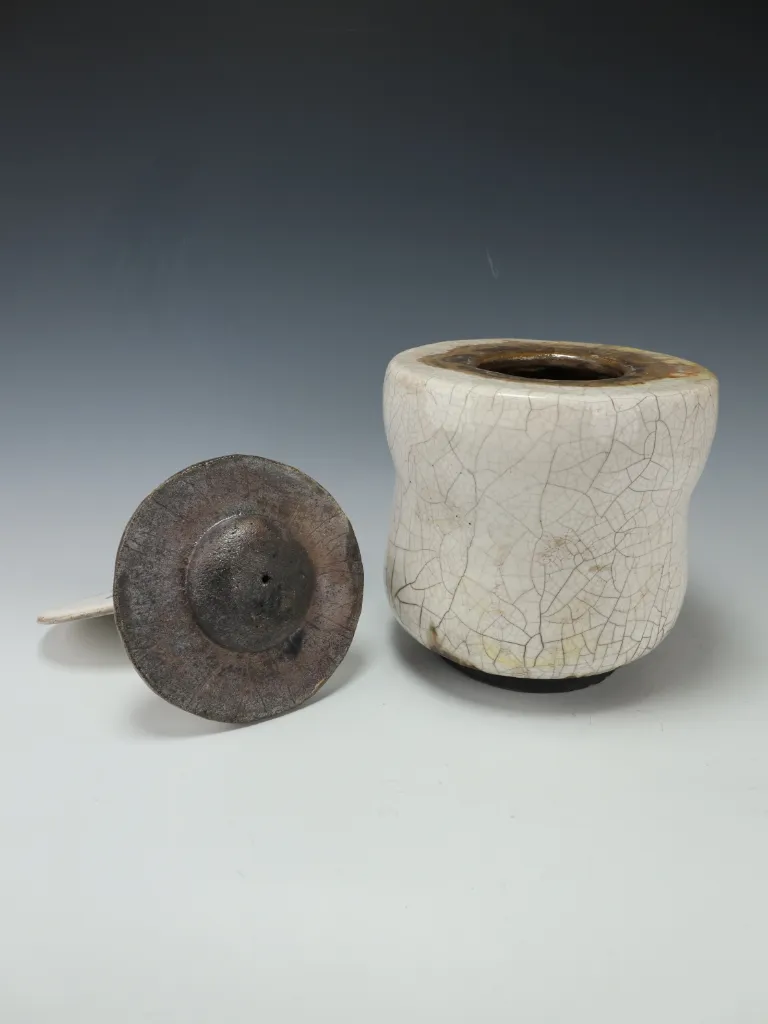
The removable lid is signed “Marciano” to the underside, providing an important direct attribution to the artist.
Marciano Pérez Buendía is a respected Spanish ceramicist and sculptor with roots in both Toledo and Madrid. His career has encompassed ceramics and sculpture, with Raku becoming particularly important to his artistic vocabulary.
Official documentation from Spain's National Crafts Awards describes Buendía's work as characterised by his use of the traditional Japanese Raku technique and specifically identifies boxes, jars, vessels and bowls among his Raku works. He was also a finalist for Spain's National Crafts Award in 2006.
His connection with Raku developed through the TAI, the Taller de Artes Imaginativas, where he encountered the work of Swedish potter Bárbara Forsberg. The Castilla-La Mancha tourism authority records this encounter as an important influence in the development of his ceramic practice.
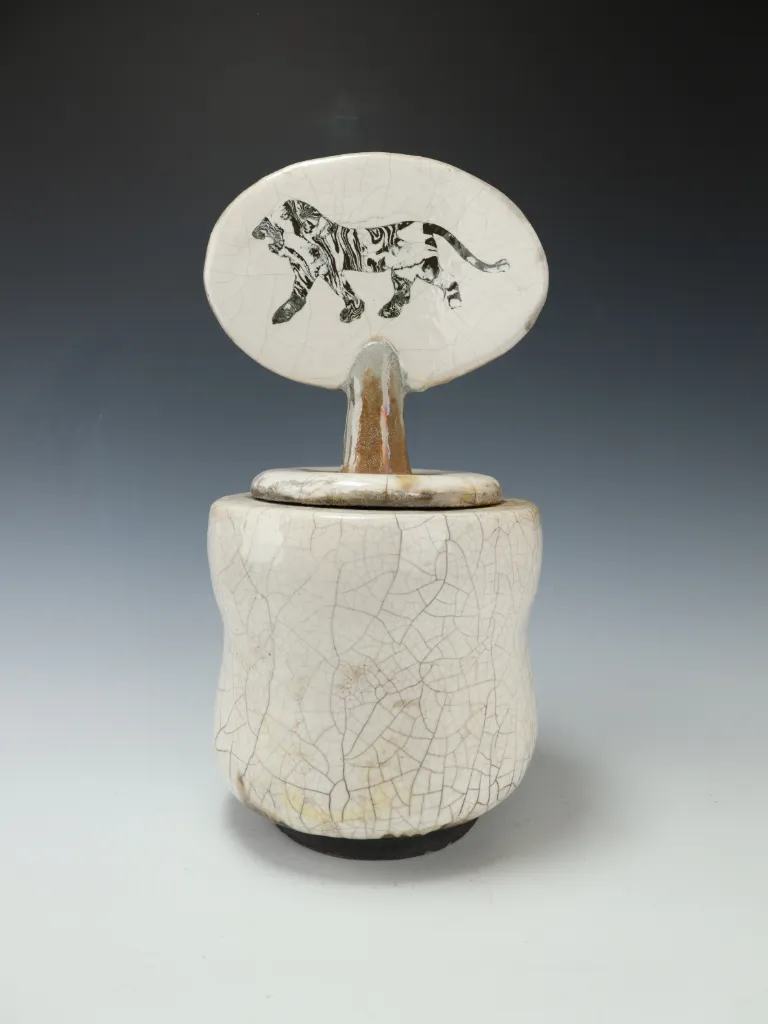
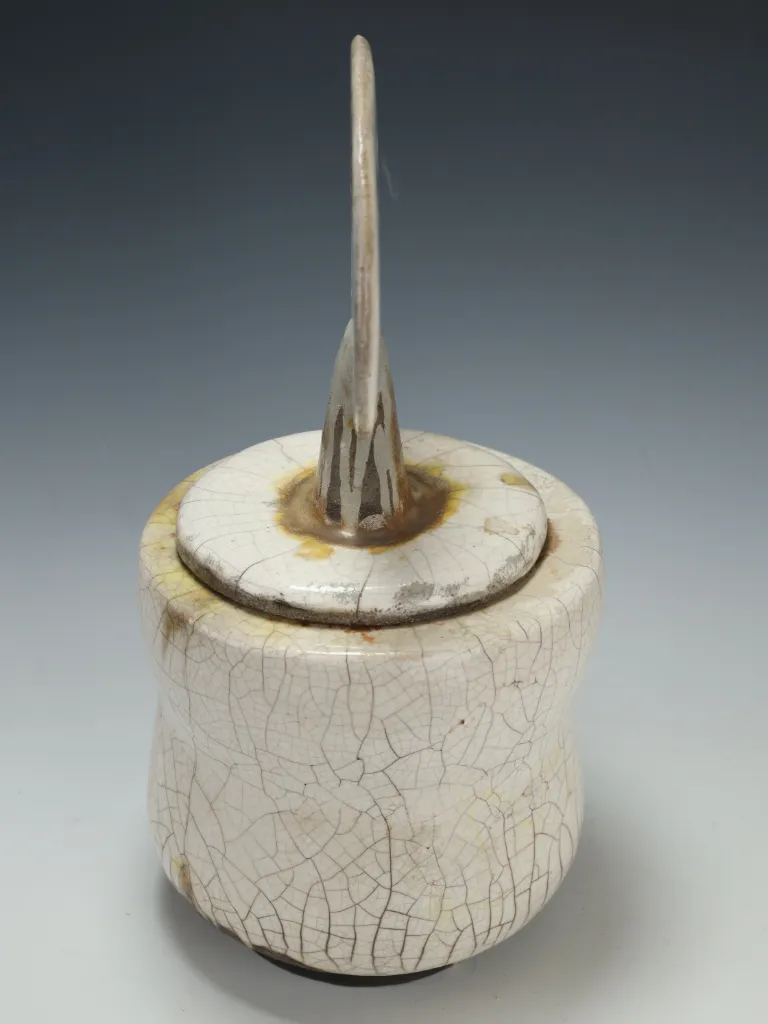
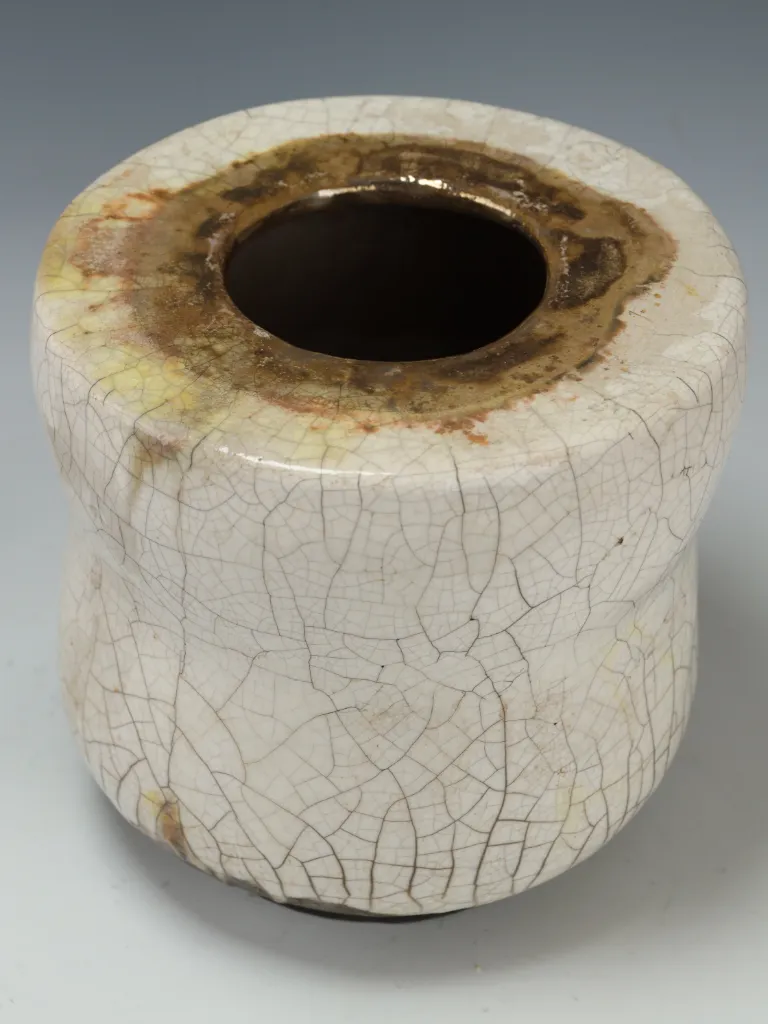
The vase has a substantial cylindrical body with softly waisted sides, rounded shoulders and a dark foot.
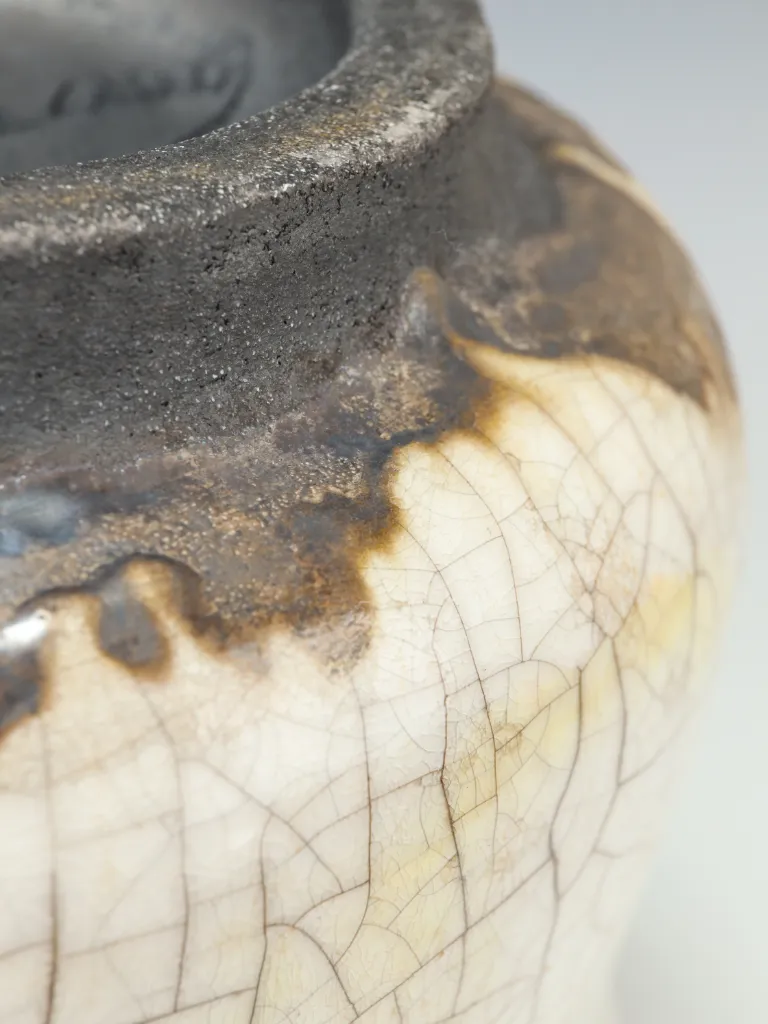
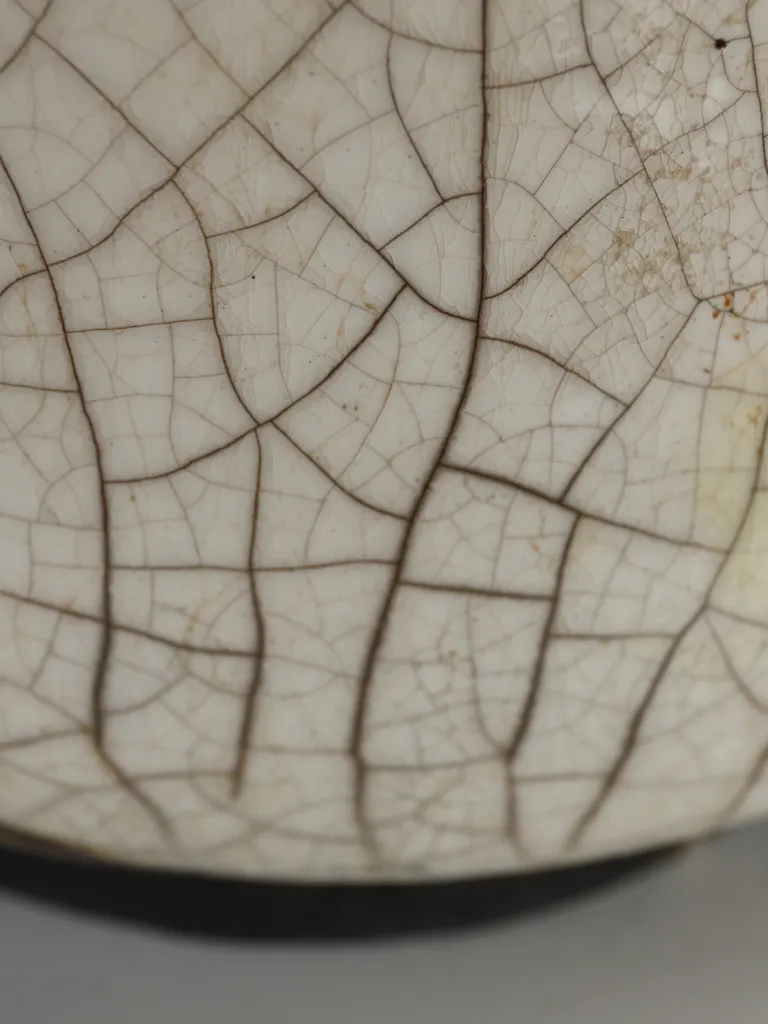
Its restrained silhouette is contrasted by the highly expressive surface. An ivory-white glaze covers the exterior, broken throughout by an intricate network of dark crackling produced during the Raku process.
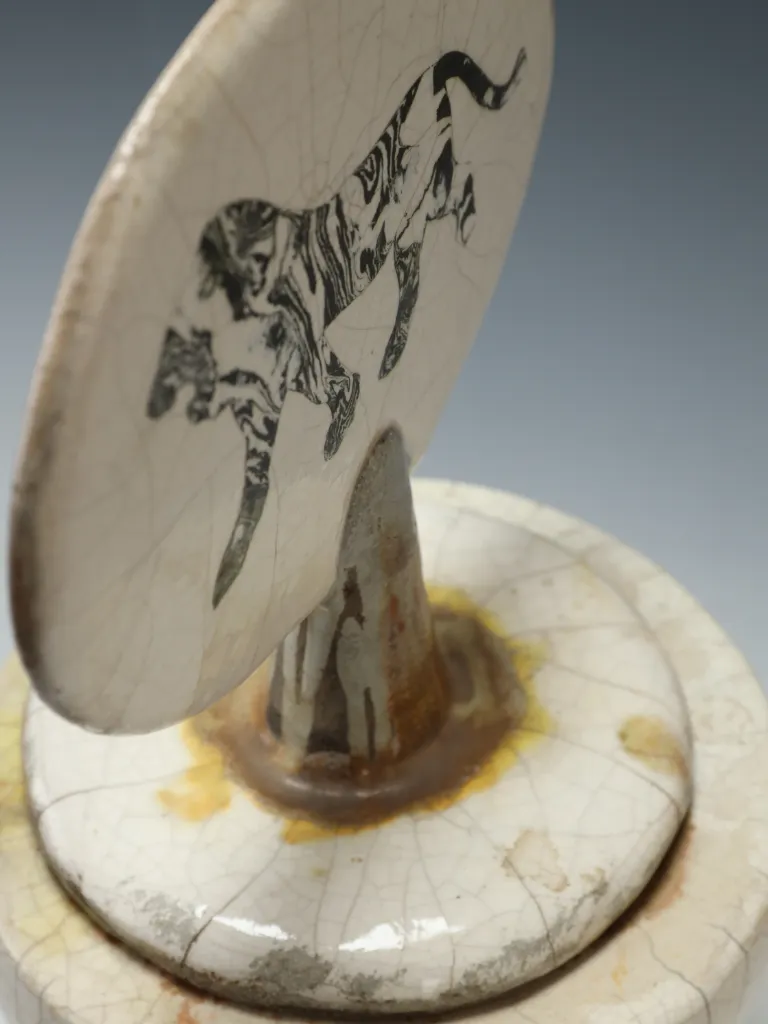
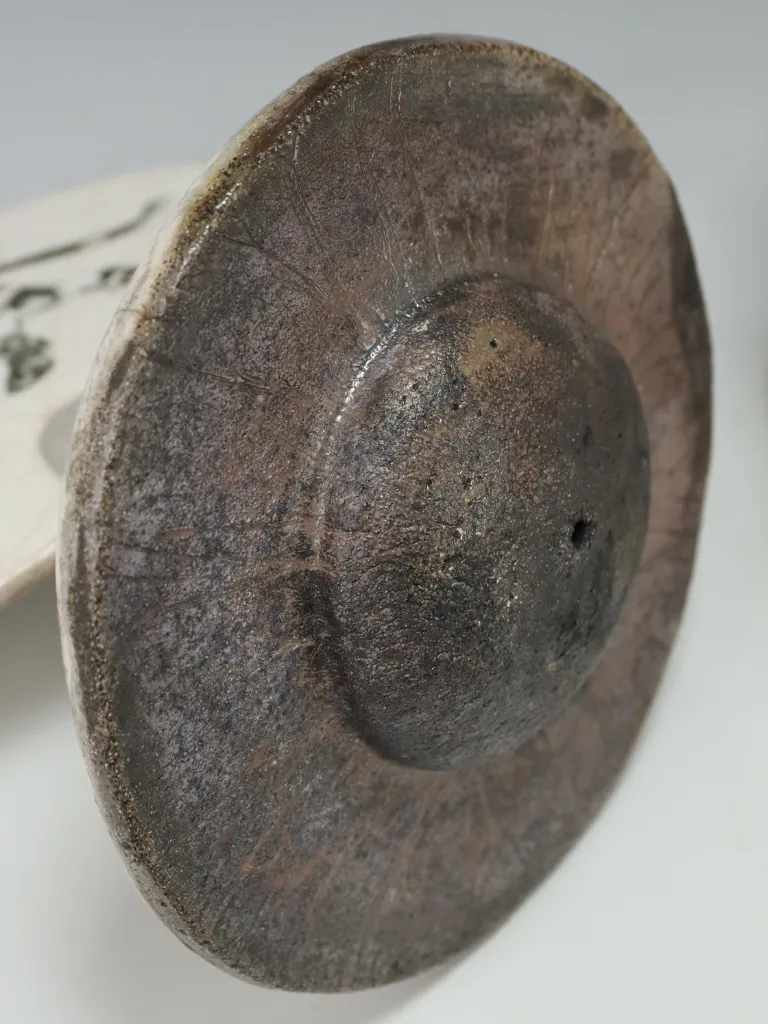
The removable circular lid is surmounted by an unusual upright oval finial, creating an almost sculptural or totemic silhouette.
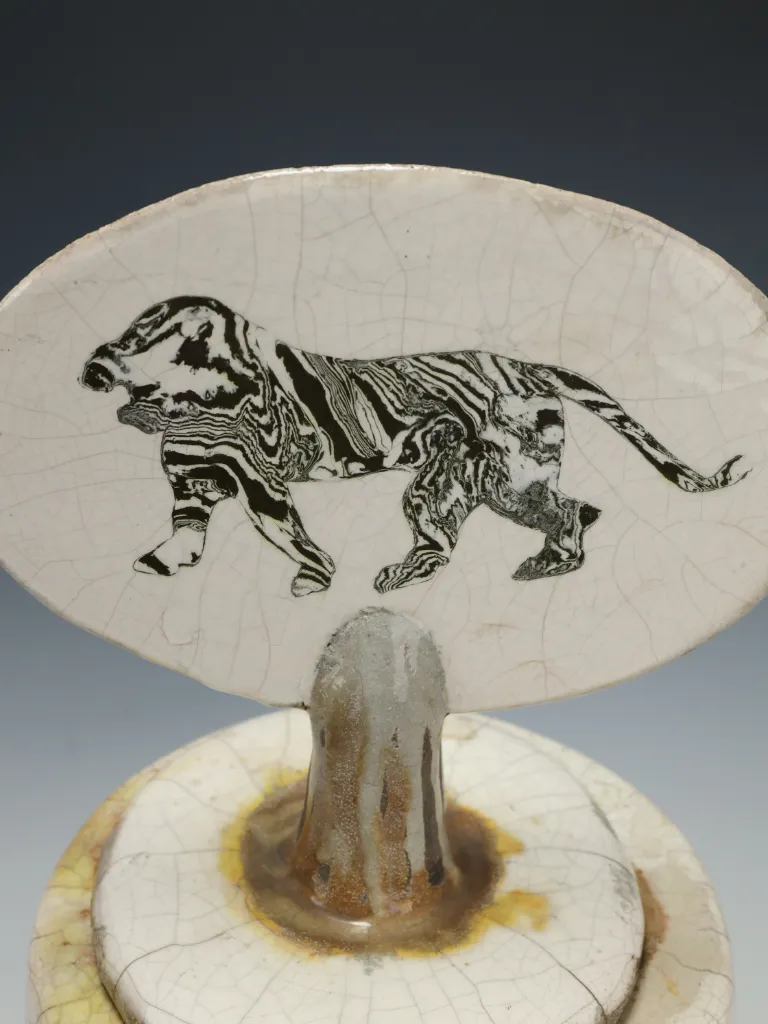
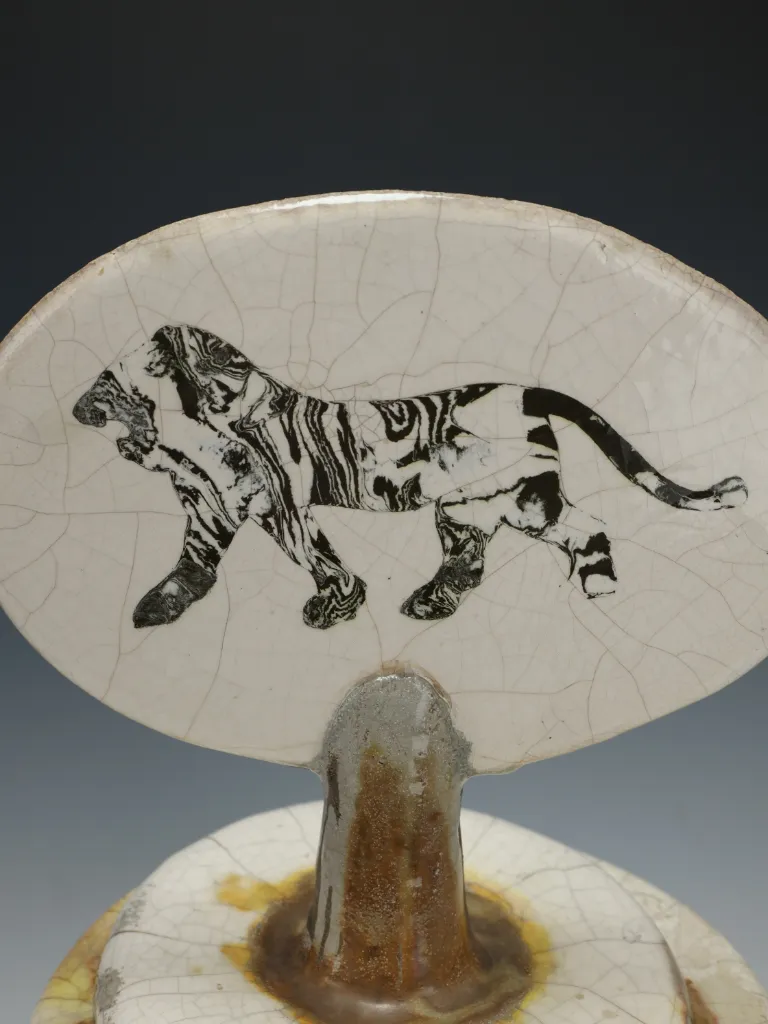
Across the face of the finial is a wonderfully expressive stylised tiger, rendered predominantly in black against the pale crackled ground. The tiger's body is constructed from irregular stripes and almost abstract linear markings, giving the decoration a distinctly graphic quality.
The monochrome treatment works particularly well against the irregular Raku surface, allowing the animal to appear almost like a print or drawing transferred directly onto the ceramic.
The extensive crackling, darkened areas and smoky tonal variations seen throughout this vase are particularly important because they are intrinsic to the way the piece was made rather than simply the result of age.
In Raku firing, a piece is removed from the kiln while extremely hot and subjected to rapid cooling and, in Western practice, commonly exposed to combustible materials. Smoke and carbon penetrate unglazed and porous areas and settle within the cracks of the glaze.
The official National Crafts Awards account of Buendía's work specifically describes this process and explains how smoke accentuates the network of cracks within the glaze.
This explains the extraordinary appearance of the present vase: its dense dark craquelure, areas of smoky brown and black, irregular glaze edges and exposed dark ceramic are all integral to the visual language of the piece.
The result is intentionally unpredictable. No two Raku-fired pieces develop precisely the same surface, giving works such as this a genuinely individual character.
The vase is signed “Marciano” to the underside of the base, providing an important direct attribution to Spanish ceramicist Marciano Pérez Buendía.
The signature is applied by hand to the dark, unglazed underside and is clearly visible in the detailed photographs.
Presented in good condition, with the considerable surface variation associated with the Raku firing process.
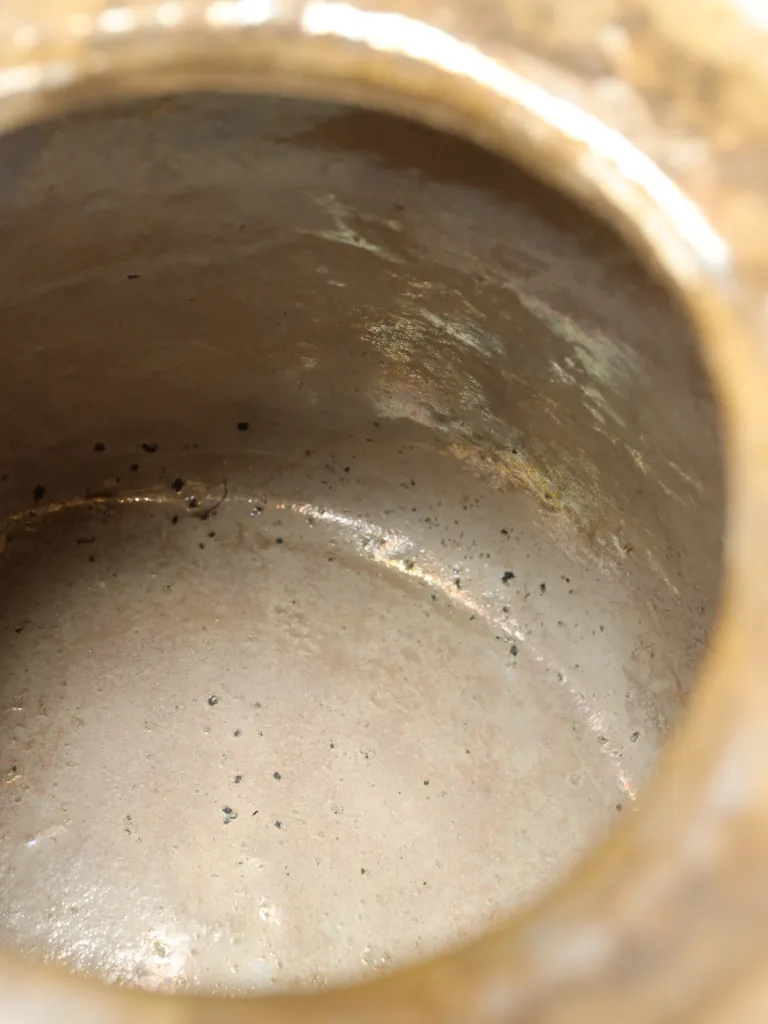
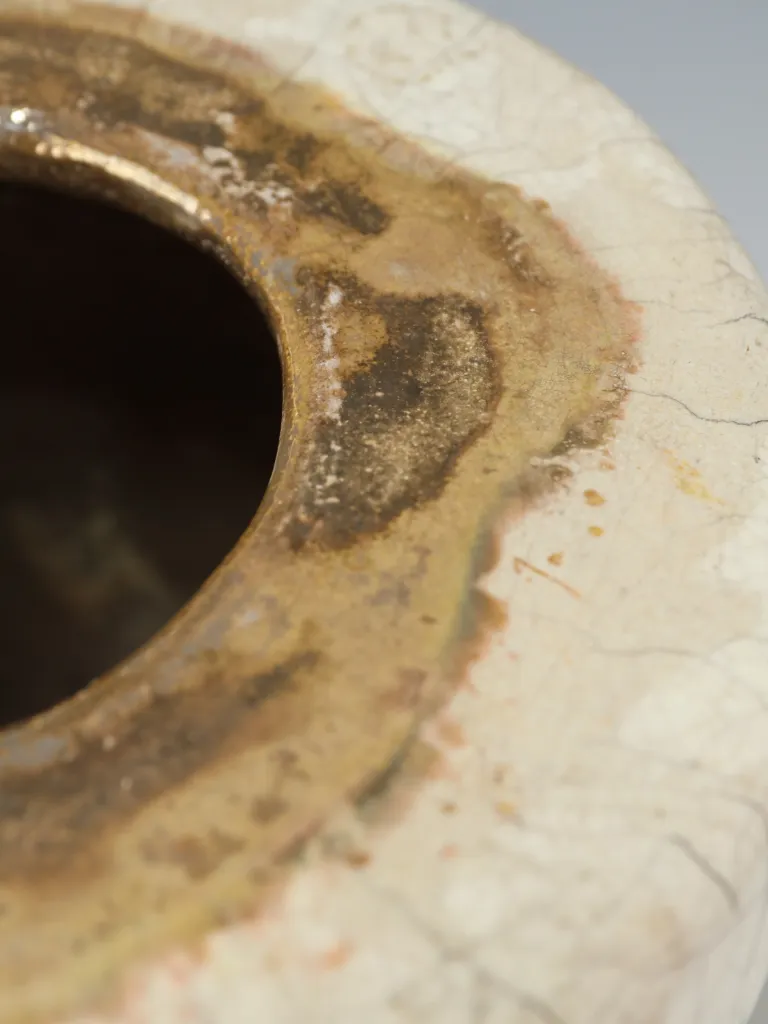
There is extensive craquelure throughout the ivory glaze, together with areas of smoke-darkening, brown and ochre discolouration, irregular glaze coverage and exposed ceramic. Particularly pronounced tonal variation can be seen around the mouth of the vase, the lid and the junction between the finial and lid.
These should not be interpreted simply as conventional damage or later deterioration. Much of this irregularity is inherent to the Raku technique and forms an important part of the aesthetic intended by the artist.
There are nevertheless minor signs of handling and age consistent with a ceramic decorative object dating from around the turn of the 21st century.
Please refer closely to the detailed photographs, which form an important part of the condition report.
This is an especially strong piece of late 20th/early 21st-century Spanish studio ceramics, sitting somewhere between a functional vessel and a piece of sculpture.
The neutral ivory, black and earthy palette makes it particularly easy to place, while the graphic tiger introduces an unexpected decorative element.
It would display beautifully as a standalone object on a console or pedestal, within a collection of studio ceramics, or amongst antique and contemporary objects in a layered country-house interior.
The combination of a recognised Spanish ceramicist, signed authorship, Raku technique and distinctive animal imagery makes it considerably more interesting than an anonymous decorative pottery vase.
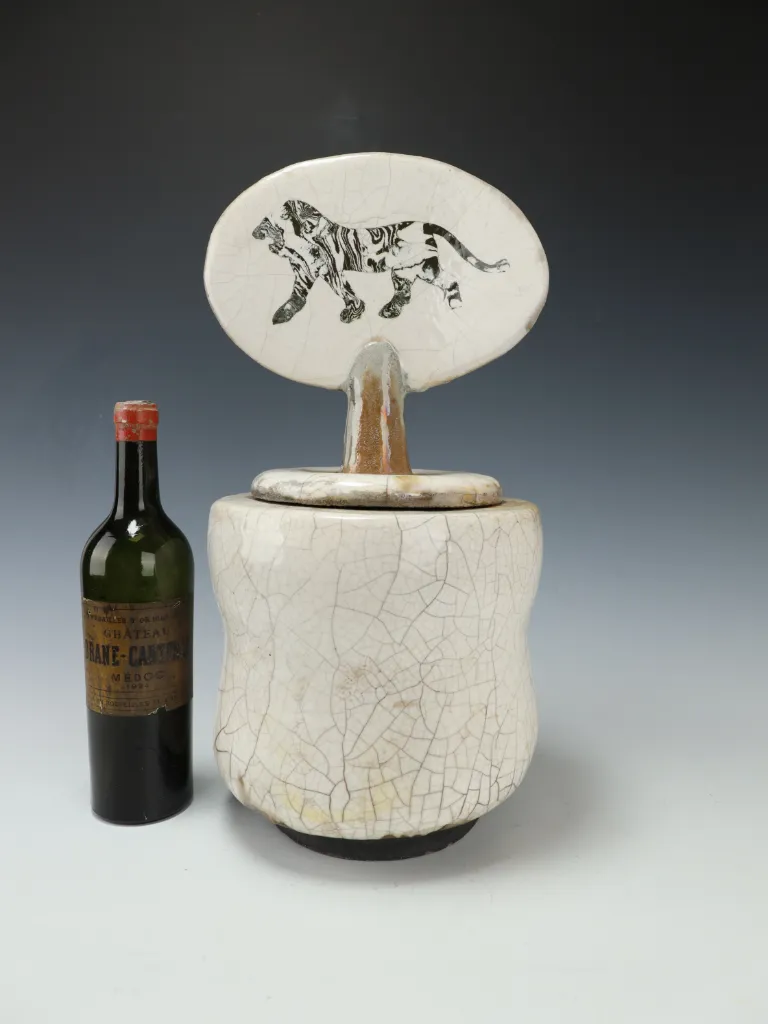
Height: 48 cm / 18.9 inches
Width: 25 cm / 9.8 inches
Depth: 23 cm / 9.1 inches
Weight: 7.3 kg / 16.1 lbs
Every item offered by Shackleton Fox is carefully inspected, prepared, and where necessary conserved within our workshop prior to sale.
As heritage craftsmen and antique specialists, we believe in preserving the authenticity and integrity of each piece. Original finishes, patina, wear, and signs of age are retained wherever possible, as these elements contribute to both character and historical significance.
When restoration, rewiring, repairs, or conservation work is required, it is undertaken sympathetically using traditional techniques and materials appropriate to the period of the piece. Our philosophy is one of careful stewardship rather than unnecessary restoration, ensuring antiques remain both functional and historically respectful.
The result is a collection of pieces that have been thoughtfully prepared, allowing future owners to enjoy them with confidence while preserving their unique story and character.