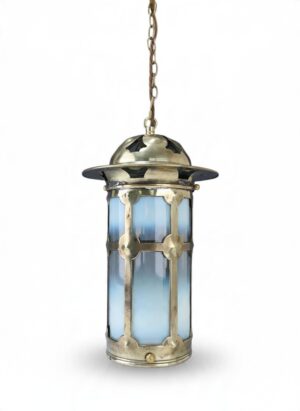
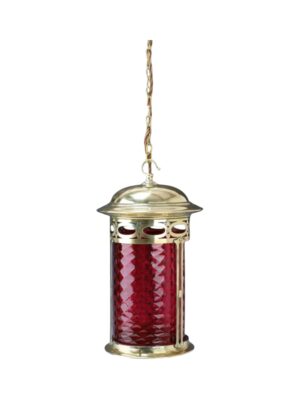
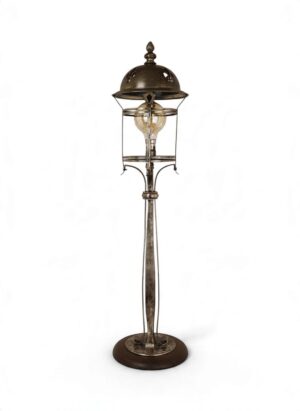
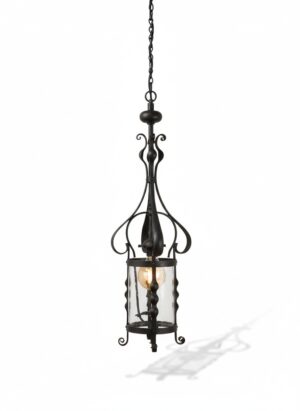
A lantern is a light fitting in which the light source is enclosed within a protective case, usually of glass panes set in a metal or wooden frame. Originally designed to shield a candle or oil flame from draughts, lanterns were carried by hand, hung from ceilings or mounted on walls, and they remain one of the most characterful forms of antique lighting.
Early lanterns used horn, mica or pierced tin before glass became widely available. In grand houses, large hall lanterns of gilt brass, bronze or giltwood with glazed panels lit entrance halls and staircases from the eighteenth century onwards, while simpler brass, copper and iron lanterns served porches, stables, ships and streets. The Victorian period produced lanterns in Gothic, Regency and Neoclassical styles, often adapted later for gas or electricity. Popular forms include hexagonal and octagonal hall lanterns, bell-shaped lanterns and hanging storm lanterns. Antique lanterns are valued for their craftsmanship and presence, and professionally rewired examples make striking fittings for halls, kitchens and outdoor spaces.