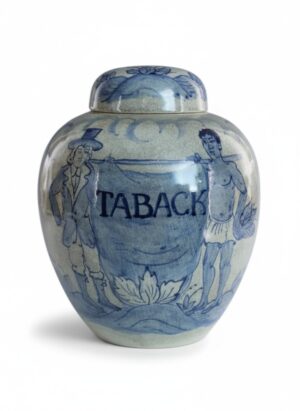
Hard-paste porcelain, often called true porcelain, is a ceramic made principally from kaolin, a fine white china clay, and petuntse, or china stone, fired at a very high temperature. The result is a hard, white, vitrified body that is non-porous, often translucent and rings clearly when gently tapped.
Hard-paste porcelain was first perfected in China, and Chinese porcelain exported to Europe was so highly prized that European rulers sponsored efforts to discover the secret of its manufacture. The breakthrough came in Saxony in the early eighteenth century, leading to the foundation of the Meissen factory in 1710. Other German and Austrian factories followed, and the discovery of kaolin near Limoges allowed Sèvres to begin hard-paste production in the 1770s. In England, true porcelain was made only briefly, notably at Plymouth and Bristol and later at New Hall, before bone china became the dominant English body. Hard-paste has a cold, glassy appearance, its glaze fused closely with the body, and chips reveal a shell-like, glassy fracture. Enamel colours tend to sit on the surface rather than sinking into the glaze. Distinguishing hard-paste from soft-paste is a key skill for collectors, helping to identify the origin and date of a piece.