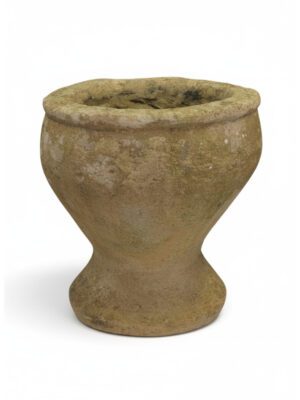
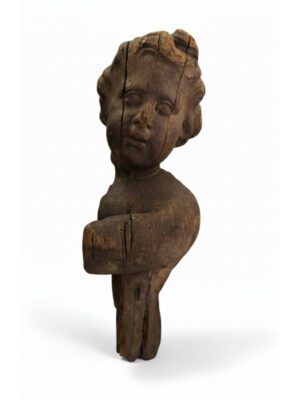
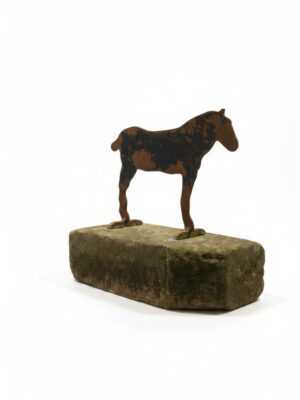
Stone carving is the craft of shaping stone by cutting, chiselling, drilling and abrading it to produce sculpture, architectural ornament, memorials and decorative objects. Masons and carvers work materials such as limestone, sandstone, marble, granite and alabaster, each of which behaves differently under the chisel and suits different kinds of detail.
In Britain the tradition runs from Romanesque capitals and Gothic tracery through Renaissance chimneypieces and Georgian keystones to the elaborate Victorian revival work found on churches, banks and country houses. Carving was usually roughed out with a point and claw chisel before being refined with flat chisels, rasps and abrasives, and much architectural work was produced from drawings by teams of specialist carvers. Antique carved stone reaches the market as finials, corbels, capitals, urns, figures, fountain masks and fragments salvaged from demolished buildings. Buyers look for crisp tooling, a convincing weathered surface, honest losses rather than heavy filling, and stone that is sound rather than delaminating or frost-damaged. Pieces with a documented architectural origin carry added interest, and good fragments are now displayed indoors as sculpture as well as in gardens.