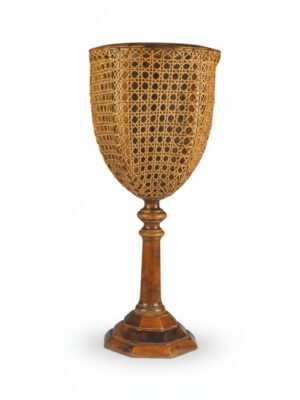
Canework is the technique of weaving split strips of rattan cane into a lattice to form the seats, backs and side panels of chairs, settees and other furniture. The cane is threaded through holes drilled around the frame and woven in a pattern, most commonly the traditional six-way standard, creating a light, strong and flexible surface.
Cane was imported into England from the East Indies and became fashionable after the Restoration of 1660, when tall carved walnut and beech chairs with caned seats and backs appeared in fashionable houses. Its popularity faded in the mid-eighteenth century but returned in the Regency period, when caned bergere chairs, library chairs and settees were made in mahogany and simulated rosewood. The Victorian and Edwardian periods produced caned bedroom chairs, bentwood chairs and Indian colonial furniture in large numbers. Old canework eventually becomes brittle and breaks, so replacement is common and generally accepted, though original cane is of interest on early pieces. Buyers should examine the frame around the holes for splits and woodworm. Fine, close-woven patterns indicate quality, and pressed sheet cane set into a groove is a later, cheaper alternative to hand weaving.