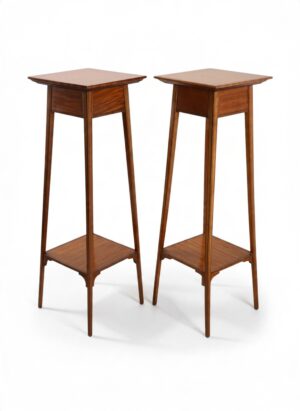
Dining room furniture is the furniture specifically designed to equip a dining room, usually conceived as a coordinated scheme of table, chairs, sideboard and serving pieces. It reflects the development of the dining room as a distinct room for formal entertaining, which became established in English houses during the Georgian period.
Robert Adam and his contemporaries designed dining rooms as unified compositions in which the sideboard, flanked by pedestals and urns, formed a dramatic display of silver and glass. Regency households added extending tables, sets of sabre-legged chairs, cellarettes and dumb waiters, while Victorian dining rooms became heavier and darker, with massive mahogany or oak sideboards, upholstered chairs and extending tables wound out with a screw mechanism. Edwardian makers revived lighter Sheraton and Hepplewhite designs. Buyers should consider the proportions of the room, since antique sideboards and tables can be large, and check that chairs are comfortable and sound for regular use. Matching suites are less common than assembled groups, and an attractive mix of periods is entirely in keeping with the country house tradition. Good antique dining room furniture continues to serve family life well.