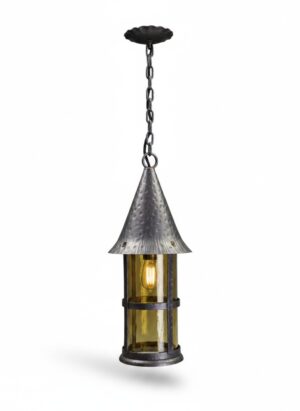
A Flemish chandelier is a brass chandelier in the style developed in Flanders and the Low Countries, characterised by a central baluster stem ending in a large polished brass ball, from which tiers of curving S-shaped or scrolling arms radiate to support candle sockets and drip pans. The term is often used interchangeably with Dutch chandelier.
The form has deep roots in the brass-working traditions of the region, and brass chandeliers appear in Flemish paintings as early as the fifteenth century, most famously in Jan van Eyck's Arnolfini Portrait of 1434. By the seventeenth century the classic globe and branching arm design had become standard in Dutch and Flemish churches, guildhalls and merchants' houses, and it was adopted in England, particularly for churches. The style was revived on a large scale in the nineteenth and twentieth centuries, and most examples on the market today date from this later period, often electrified. Early chandeliers show hand-turned and cast components with signs of age, while later versions tend to be lighter and more mechanical. Collectors look for good proportions, weight of metal and well-cast arms, and a mellow, unlacquered finish is often preferred.