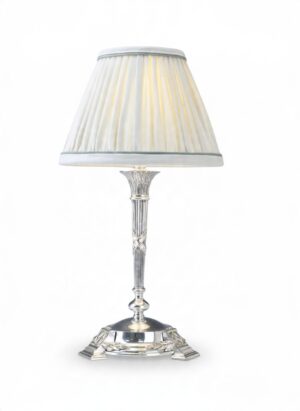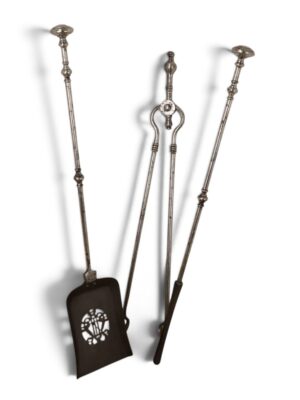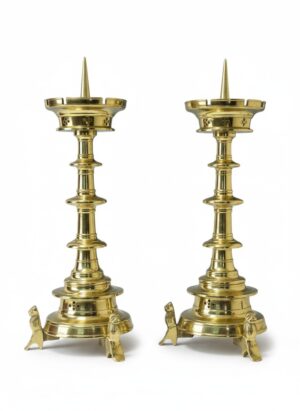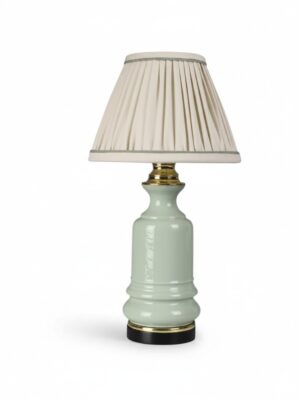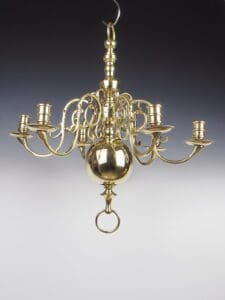
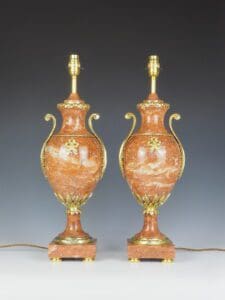








A baluster is a short vertical post or column, turned or moulded, used in rows to support the handrail of a staircase, balcony, terrace or parapet; a run of balusters is called a balustrade. The characteristic baluster shape swells into a bulbous, vase-like profile and narrows at the neck, and the term is used for this profile wherever it appears.
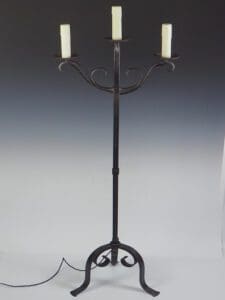
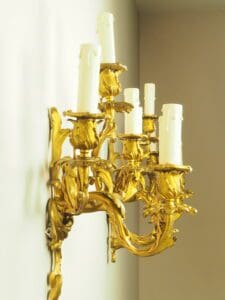
The form became established in Italian Renaissance architecture and spread across Europe, appearing in carved stone on country-house terraces and garden steps and in turned timber on Georgian and Victorian staircases. In the decorative arts, baluster describes the vase-shaped profile found on candlesticks, lamp bases, table and chair legs, tazzas, coffee pots and jugs, and the heavy knopped stems of early eighteenth-century English wine glasses are known as baluster stems. Stone balusters and lengths of balustrade are sought after for gardens, where weathering and lichen add to their appeal, while salvaged timber balusters are reused in restoration work or adapted as lamp bases. Collectors judge baluster forms by the crispness of their turning or carving, the elegance of their proportions and whether a set has survived together.