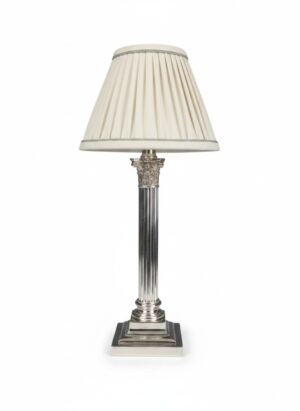
Classical design is the body of architectural and decorative forms derived from the art of ancient Greece and Rome, based on proportion, symmetry and a recognised vocabulary of ornament. Its core elements include the classical orders of columns, pediments, entablatures and mouldings, together with motifs such as the acanthus leaf, anthemion, key pattern, egg-and-dart, swags and urns.
Classical design was revived in the Italian Renaissance and has returned repeatedly in Western taste ever since. In Britain it shaped the Palladian architecture promoted by Lord Burlington and William Kent in the early eighteenth century, the lighter neoclassicism of Robert Adam from the 1760s, and the more archaeological Greek and Egyptian taste of the Regency. Furniture, silver, ceramics, lighting and textiles all absorbed classical forms, from urn-shaped tea urns and fluted columns to lyre-backed chairs and Wedgwood jasperware. Victorian and Edwardian makers continued to draw on the classical repertoire, often combining elements freely. Classical design remains the foundation of the country house look, and pieces with good proportions and restrained, well-executed ornament sit comfortably in both period and contemporary interiors.