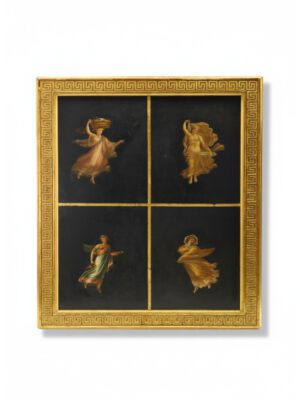
Classical Revival is a broad term for the repeated returns of Western architecture and decorative arts to the forms of ancient Greece and Rome. It encompasses several distinct movements, including Palladianism in the early eighteenth century, Neo-Classicism from the 1760s, the Greek Revival of the early nineteenth century, and later classical styles in the Victorian, Edwardian and inter-war periods.
The vocabulary of the Classical Revival is drawn from ancient buildings and objects: columns and pilasters of the classical orders, pediments, entablatures, urns, swags, paterae, acanthus, key patterns and anthemion. Archaeological discoveries at Herculaneum and Pompeii, and the publication of measured drawings of ancient buildings, encouraged increasingly accurate use of classical sources. In Britain, Robert Adam's Neo-Classical interiors set a new fashion for delicate ornament across walls, ceilings, furniture and fireplaces, while the Greek Revival was taken up by architects such as Robert Smirke and William Wilkins and in Regency furniture. Classical forms also shaped silver, ceramics, notably Wedgwood's jasperware, lighting and garden ornament. Because classical design has been revived so many times, dating a piece depends on construction, materials and details as well as style. Classical pieces bring order and proportion to formal and contemporary rooms alike.