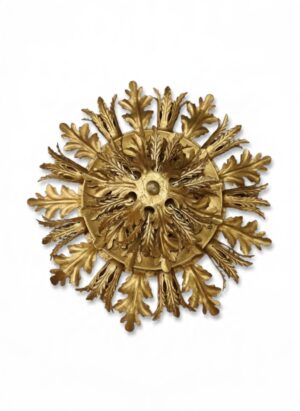
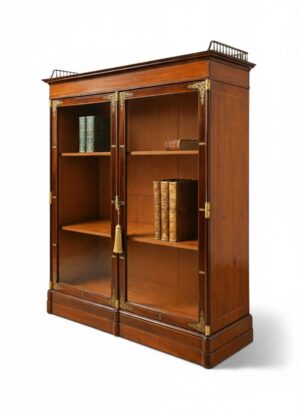
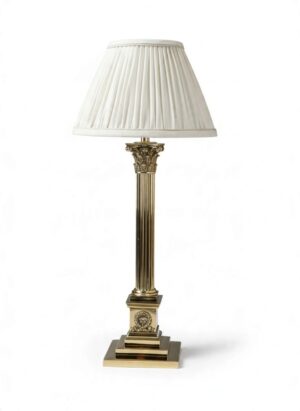
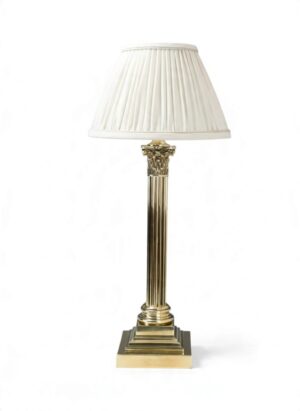
Acanthus is a stylised leaf ornament based on the deeply lobed, scalloped leaves of the acanthus plant, a Mediterranean perennial. It is one of the most widely used motifs in Western decorative art and architecture, appearing in carved wood and stone, cast metal, plasterwork, silver, textiles and printed patterns.
The motif was used by the ancient Greeks and Romans, most famously on the Corinthian capital, where tiers of acanthus leaves curl beneath scrolled volutes. It was revived in the Renaissance and remained a staple of classical ornament thereafter. On English furniture, acanthus carving decorates the knees of cabriole legs, the arms and backs of chairs, the friezes of side tables and the frames of mirrors, while silversmiths applied acanthus leaves to candlesticks, cups and salvers. In the Baroque period the leaves are fleshy and exuberant; in neoclassical work of the late eighteenth century they are typically flatter and more disciplined; Victorian versions can be dense and heavily undercut. Well-executed acanthus is crisp, with clearly defined veins and lively, sculptural edges. Its treatment often helps to date a piece and gives a strong indication of the skill of the carver or chaser.