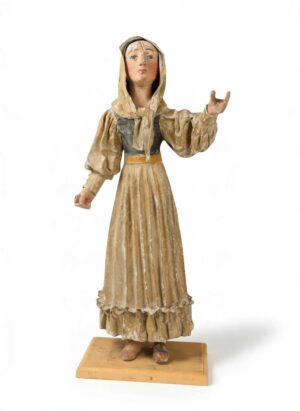
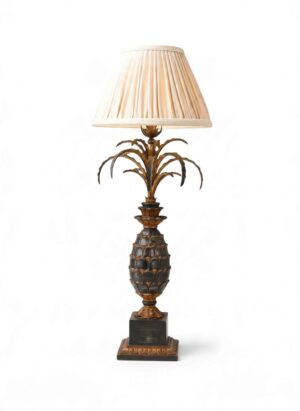
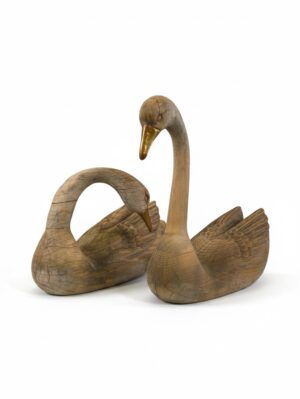
Carved wood refers to any wooden object or surface that has been shaped and decorated by cutting away material with chisels, gouges and knives. It encompasses furniture ornament, architectural carving, sculpture, panels, frames, figures and small treen objects, and it ranges from simple chip carving to deeply undercut, virtuoso work.
Wood carving is among the oldest of the decorative arts, and different periods and regions have favoured distinct timbers and styles. Medieval English carvers worked in oak for church screens, bench ends and misericords, while seventeenth-century carvers such as Grinling Gibbons achieved extraordinary naturalism in limewood, depicting fruit, flowers and foliage in high relief. Eighteenth-century carvers enriched mahogany furniture with acanthus, shells and cabochons, and Rococo giltwood mirrors and console tables demanded great skill. The nineteenth century brought Swiss and Black Forest carving, Victorian Gothic oak and Indian and Far Eastern carved furniture to wide markets. When assessing carved wood, collectors consider the crispness and depth of the work, whether it is hand or machine carved, the quality of undercutting and the survival of original surfaces. Old carving should not be over-cleaned, as the dark recesses and worn highlights are part of its character and age.