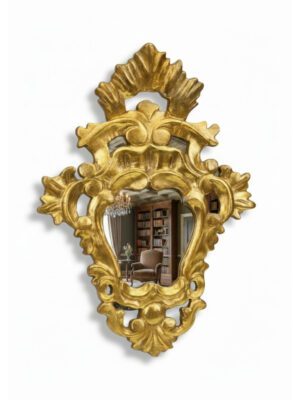
Wood carving is the art of shaping wood with chisels, gouges and knives to create sculpture, ornament and decorative detail on furniture, panelling and architecture. It ranges from shallow chip carving and relief work to fully three-dimensional figures, and it has been central to European furniture making since the Middle Ages.
Carvers favour close-grained timbers such as limewood, oak, walnut, boxwood and pear, choosing each according to the detail required. English examples include Gothic church screens and bench ends, Tudor and Jacobean strapwork and linenfold panels, and the virtuoso naturalistic limewood carving of Grinling Gibbons in the later seventeenth century. Georgian carvers produced elaborate mirror frames, console tables and chair splats, while the Victorian period saw a revival of Gothic and Renaissance carving alongside popular Black Forest and Swiss work. When judging carving, look for sharp, confident tool marks, undercutting that gives depth, and a natural build-up of wear and patina on high points. Later carving on earlier plain furniture is a common alteration, often revealed by flat, crisp surfaces that lack the softness of age.