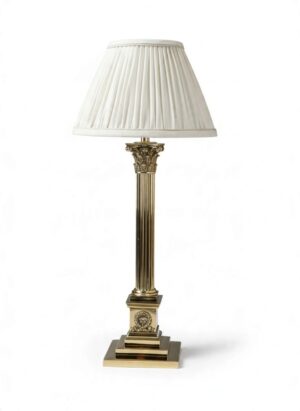
A pedestal is a supporting base or plinth on which a column, statue, vase, bust or other object is raised for display. The term comes from classical architecture, where a pedestal forms the lowest part of a column, consisting of a base, a die or dado and a cornice, and it has been used in furniture and the decorative arts ever since.
In furniture, the word describes several forms. Freestanding display pedestals in marble, scagliola, mahogany or giltwood were made to support busts, lamps and sculpture, particularly in Neoclassical and Victorian interiors. A pedestal table is supported on a single central column rather than legs, often with splayed feet, and a pedestal desk stands on two banks of drawers. Pedestal sideboards, popular in the late Georgian period, had cupboards at each end, sometimes surmounted by urns. Antique pedestals are useful today for presenting sculpture, plants and lighting at eye level, and their architectural form adds height and formality to a room.