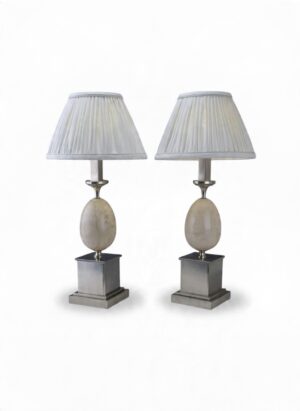
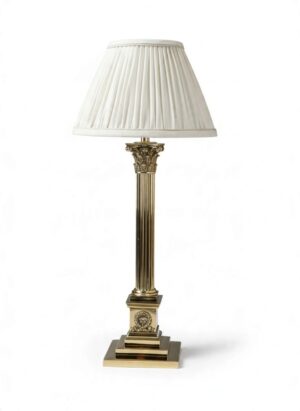
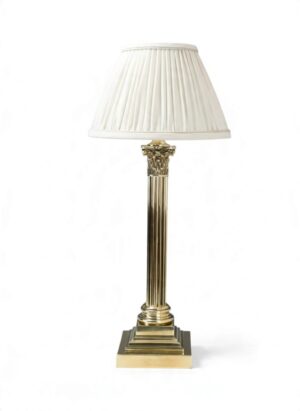
A plinth is the base on which something stands, whether the lowest block of a column, the pedestal beneath a statue or urn, or the solid base of a piece of furniture. In classical architecture it is the square slab beneath the base mouldings of a column, and on a building the term is also used for the projecting base course at the foot of a wall.
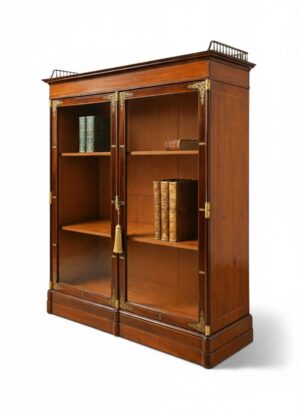
In furniture, a plinth base is a continuous, box-like foundation that runs around the bottom of a cabinet, bookcase, chest or sideboard in place of separate feet. It gives a solid, architectural appearance and was favoured in Regency, Biedermeier and William IV designs, as well as on large library bookcases and later Victorian furniture. Sculpture and garden ornament were often supplied with plinths of marble, stone, scagliola or ebonised wood, and many statues and busts have been reunited with plinths that did not start life with them. Collectors should check whether a plinth is original, as it was common to replace damaged bracket feet with a plinth or vice versa, and such alterations affect value. In interiors, plinths and pedestals remain useful for raising sculpture, busts and urns to eye level and giving them presence.