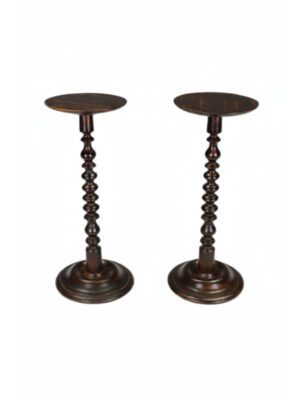
A pedestal table is a table whose top is supported on a single central column or pedestal rather than on legs at each corner. The column usually rests on a tripod or four-legged base of splayed legs, or on a solid platform plinth, and the arrangement allows people to sit around the table without legs getting in the way.
The form became popular in Britain in the second half of the eighteenth century, when small tripod tea and wine tables were joined by larger breakfast and dining tables. Regency makers produced circular and rectangular breakfast tables on turned or reeded columns with sabre legs ending in brass cappings and castors, and many had tilt-top mechanisms so they could stand against a wall when not in use. Large dining tables were often made on two or more pedestals with extra leaves. Victorian examples tend to be heavier, with carved columns and bun or scroll feet, in mahogany, walnut or rosewood. Buyers should check that the top and base belong together, that the column joint is sound, and that castors and catches are original. Pedestal tables work particularly well in kitchens and breakfast rooms, where space is tight.