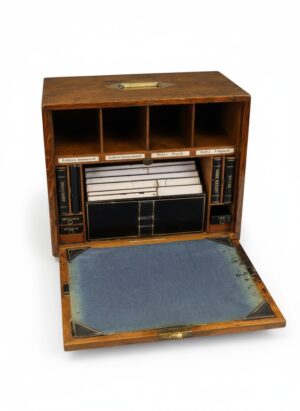
Navigation is the science of determining position and directing the course of a ship, and later an aircraft, from one place to another. In the antiques world the term describes the instruments, charts, globes, books and related objects that record how mariners found their way across the seas before electronic aids.
Early navigators relied on the magnetic compass, the lead line, dead reckoning and observations of the sun and stars made with the astrolabe, cross-staff and backstaff. The eighteenth century brought decisive advances with the reflecting octant and sextant for measuring angles, and the marine chronometer, which allowed longitude to be calculated accurately at sea. Antique navigation material includes these instruments together with station pointers, parallel rules, dividers, ship's logs, celestial and terrestrial globes, sea charts and printed nautical almanacs. Collectors prize instruments signed by recognised makers and those in original fitted cases, while charts and globes are judged on rarity, colouring and condition. Beyond their technical interest, such pieces suit studies, libraries and coastal homes, where they speak of exploration and seafaring history.