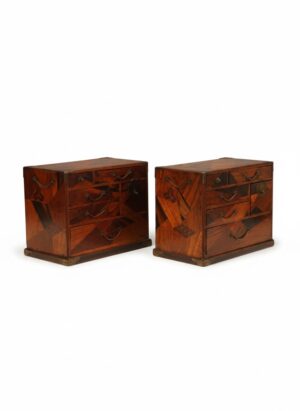
A tool chest is a sturdy box or cabinet used by a craftsman to store and transport the tools of his trade. Antique examples were often made by cabinetmakers, joiners and carpenters themselves during or at the end of their apprenticeship, and range from plain pine boxes to elaborately fitted chests with sliding trays, small drawers and lids veneered inside with fine woods.
From the eighteenth to the early twentieth century, a woodworker's tools represented a considerable investment, and the chest protected them from damage and theft as he moved between workshops and jobs. Exteriors were usually painted pine for durability, while interiors could display a craftsman's skill with mahogany, rosewood and satinwood veneers, marquetry, inlaid stringing, brass fittings and secret compartments, acting as an advertisement of his ability. Engineers', machinists' and watchmakers' chests in oak or mahogany with numerous shallow drawers were also made. Collectors look for complete interiors, original paint and fittings, good-quality decoration and, where possible, contemporary tools, and value chests with names, dates or trade associations. Today tool chests are used as characterful storage in studies, kitchens and dressing rooms, or simply displayed as fine examples of craftsmanship.