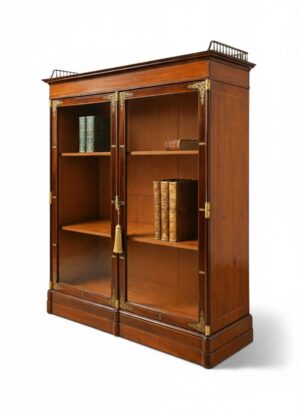
Brass inlay is decoration in which thin strips, sheets or cut shapes of brass are set into a wooden surface, usually flush, to create lines, scrolls, stars, foliage or more elaborate patterns. It is especially associated with fine Regency furniture in rosewood and mahogany and with Boulle work.
The technique was developed to great effect in France by André-Charles Boulle in the late seventeenth century, who combined brass with tortoiseshell in intricate marquetry. In England brass inlay became fashionable around 1800, during the Regency, when cabinetmakers such as those working in the manner of George Bullock and John McLean set brass stringing, cut-brass panels and stylised motifs into rosewood and mahogany tables, cabinets and chiffoniers. The fashion revived in the Victorian period, and Anglo-Indian and campaign furniture also used brass decoration. Brass inlay can lift or become loose as the timber moves with changes in humidity, so collectors should check for missing or raised sections and clumsy repairs. Skilled restoration can re-lay loose brass, and well-preserved original inlay greatly enhances both the beauty and value of a piece.