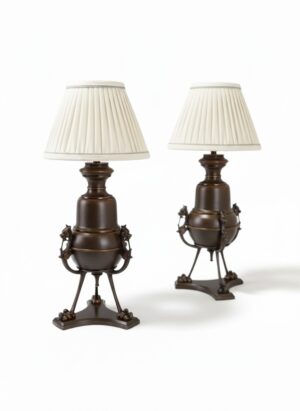
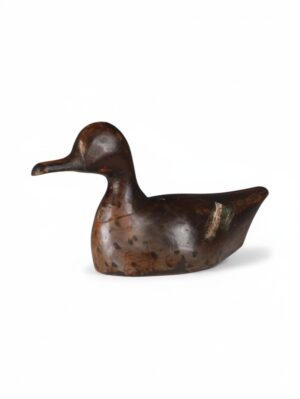
Japanese influence describes the impact of Japanese art and design on Western decorative arts, architecture and painting, particularly from the 1860s onwards, after Japan opened its ports to international trade. The fascination with Japanese forms, often called Japonisme, transformed taste in Britain, France and America during the later nineteenth century.
Japanese goods shown at the London International Exhibition of 1862 and the Paris Exposition Universelle of 1867 inspired designers to adopt asymmetry, flat patterning, stylised natural motifs and simple, rectilinear construction. In Britain, the Anglo-Japanese style was led by E. W. Godwin, whose ebonised furniture drew on Japanese architecture, and by Christopher Dresser, who travelled in Japan and designed metalwork and ceramics with strongly Japanese character. Firms such as Liberty sold Japanese and Japanese-inspired goods. Motifs including fans, cranes, bamboo, prunus blossom and mon-like roundels appear on wallpapers, textiles, silver, ceramics and furniture. Japanese influence underpinned the Aesthetic movement and contributed to Art Nouveau. Collectors look for strong design, quality construction and documented attribution, since the style was widely imitated by commercial manufacturers using cheaper materials.