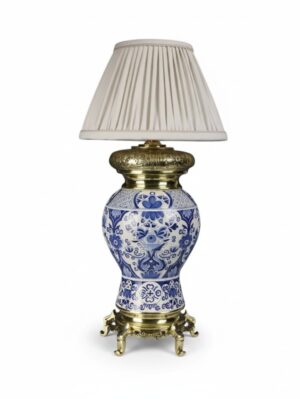
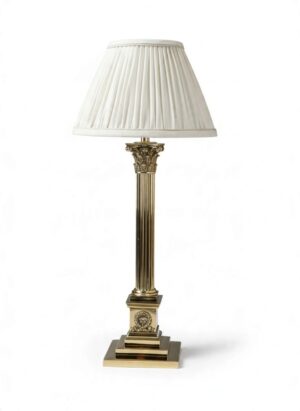
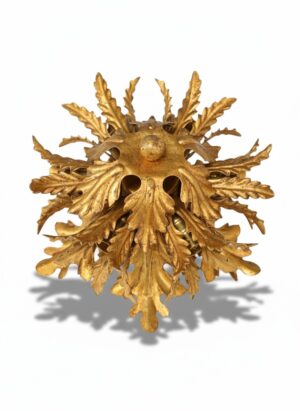
Neo-Classical lighting is the name given to chandeliers, wall lights, candelabra, lanterns and lamps made in the Neoclassical style, inspired by the architecture and ornament of ancient Greece and Rome. The style arose in the mid-eighteenth century and dominated fashionable European lighting until the early nineteenth century, with many later revivals.
Typical motifs include urns, columns, swags, rams' heads, anthemion, acanthus, laurel wreaths and lion masks, combined with symmetrical forms and restrained elegance. In Britain, the influence of Robert Adam encouraged delicate cut-glass chandeliers and gilt-wood and gilt-metal wall lights, while the Regency period produced bronze and gilt-bronze hanging lamps, colza lamps and the Argand lamp, an improved oil lamp with a tubular wick. In France, the Louis XVI and Empire styles introduced rich ormolu chandeliers and candelabra with winged figures, torches and classical maidens. The Neoclassical vocabulary continued throughout the Victorian and Edwardian periods and remains popular in reproduction. Collectors look for fine casting and chasing, good original gilding or patination, complete glass elements and careful, sympathetic electrical conversions. Neo-Classical lighting suits both period and modern rooms, bringing order, symmetry and a sense of permanence to a scheme.