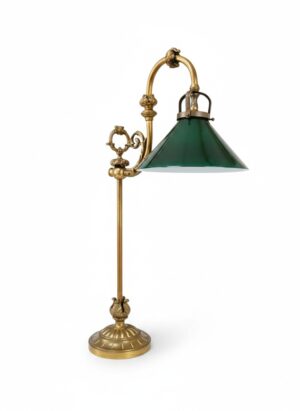
A wick mechanism is the part of an oil or paraffin lamp burner that holds the wick and allows it to be raised or lowered to control the size of the flame. It usually consists of a small toothed wheel, or pinion, turned by an external knob, which grips the wick and moves it up or down within its tube.
Wick-winding mechanisms became standard on lamps during the nineteenth century as burners grew more sophisticated. The Argand burner, with its hollow circular wick, often used a rack or a rotating gallery to adjust the wick, while the duplex burner, associated with the Birmingham firm of Hinks, used two parallel flat wicks, each with its own winder. Many burners bear the maker's name or a patent mark stamped on the winder knobs or gallery. A smoothly working mechanism allows precise flame control, preventing smoking and soot. When restoring an antique lamp, worn or seized wick mechanisms can often be freed, cleaned and repaired, but the wick must be of the correct width and type. Original burners in good order add to the appeal of a lamp intended for use rather than conversion.