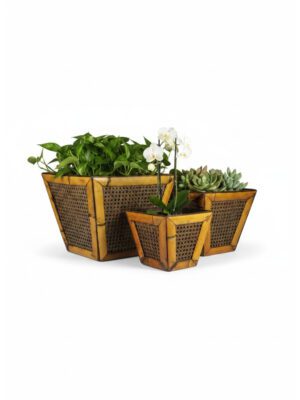
Wicker furniture is furniture woven from pliable natural materials such as willow, rattan, cane or reed, worked around a supporting frame. The term describes the weaving technique rather than any one material, and wicker has been used for seating, tables, baskets and cradles since antiquity.
Wicker furniture became especially fashionable in the Victorian and Edwardian periods, when it suited the new conservatories, garden rooms, verandas and seaside houses. Rattan imported from Asia allowed elaborate scrolled and curlicued designs, and firms in Britain, America and continental Europe produced chairs, settees, plant stands and tea tables. In 1917 the American Marshall Burns Lloyd patented a woven fibre made from twisted paper wrapped around wire, sold in Britain as Lloyd Loom, most notably by W. Lusty and Sons, which became a popular alternative to natural wicker. Collectors look for sound frames, unbroken weave and original painted or natural finishes. Antique wicker is vulnerable to damp, drying out and splitting, and repairs require a specialist. Good pieces bring texture and lightness to conservatories, bedrooms and garden rooms, and suit both period and relaxed modern interiors.