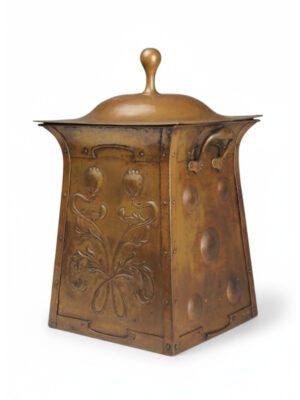
The École de Nancy was a group of French Art Nouveau artists, designers and manufacturers based in the city of Nancy in Lorraine, formally organised in 1901 as the Alliance provinciale des industries d'art. Its founding president was the glassmaker and furniture designer Émile Gallé, and its members shared a deep commitment to nature as the source of decorative form.
Leading figures included Gallé, the furniture maker Louis Majorelle, the glassworks of the Daum brothers, the cabinetmaker Eugène Vallin, the painter and designer Victor Prouvé and the stained glass artist Jacques Gruber. Their work drew on plants, flowers, insects and landscapes of the region, influenced by botany, Symbolist poetry and Japanese art. Gallé and Daum became famous for cameo and acid-etched glass vases and lamps, while Majorelle produced richly carved and inlaid furniture, often with gilt-bronze mounts in the form of water lilies or orchids. The Musée de l'École de Nancy preserves an important collection. Signed glass and furniture are highly valued, but signatures, particularly on glass, have been widely faked. Collectors look for quality of carving, etching and colour, and for documented provenance.