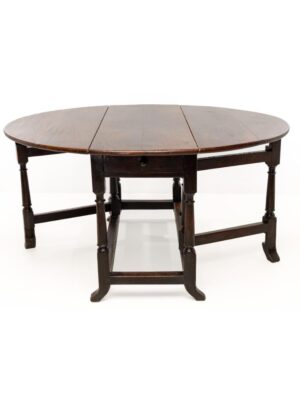
Turned furniture is furniture whose main components are shaped on a lathe, so that legs, rails, stretchers, spindles and sometimes entire frames are made from round, rotating timber cut into profiles. The term can refer both to the decorative turned parts of an otherwise conventional piece and to a distinct class of furniture built almost entirely of turned members.
Turning is one of the oldest woodworking crafts, and medieval and Tudor turners made distinctive chairs constructed from many turned spindles, often described today as thrown or turned chairs. In the seventeenth century bobbin, ball and baluster turning became fashionable on stools, tables and chairs, followed by the spiral barley twist of the Restoration and William and Mary periods. Windsor and other country chairs relied heavily on turned legs and spindles made by bodgers working in woodland. Victorian makers used mechanised lathes to produce turned components in quantity. Collectors value crisp, well-proportioned turning that shows slight irregularities from hand work and wear, as well as consistent patina across all components, which helps distinguish original pieces from later replacements.