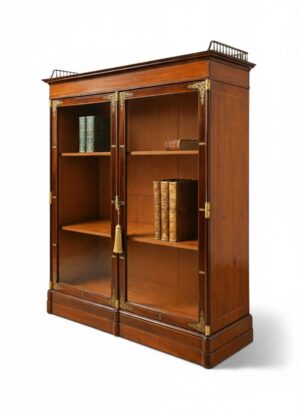
Furniture is the collective term for the movable objects that make a room usable for living, working, eating, sleeping and storage, including chairs, tables, cabinets, chests, beds, desks, sofas and bookcases. It is one of the most important categories of antiques, reflecting changing tastes, technologies and ways of life over many centuries.
English furniture history is often described in terms of its dominant timbers: the Age of Oak until the late seventeenth century, followed by walnut and then mahogany from the 1720s. Successive styles include Jacobean, William and Mary, Queen Anne, Georgian, Regency, Victorian, Arts and Crafts and Edwardian, each with characteristic forms and decoration. The trade evolved from joiners and turners to specialist cabinetmakers, carvers, chairmakers and upholsterers, and later to large manufacturing firms. When assessing antique furniture, consider design, proportion, timber, construction, colour and patina, originality and condition. Good antique furniture is often better made and more sustainable than modern equivalents, and it can be enjoyed and used for generations.