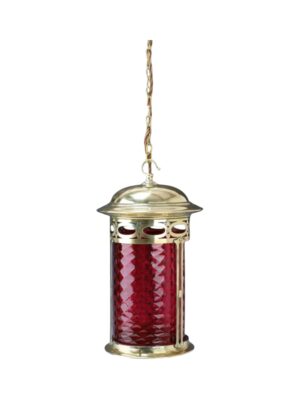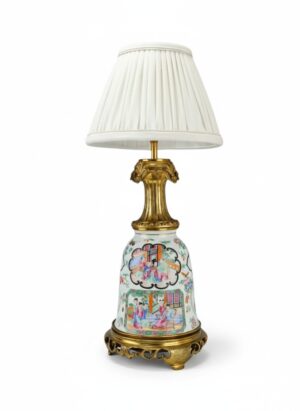
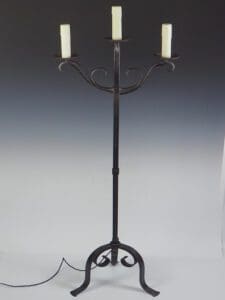
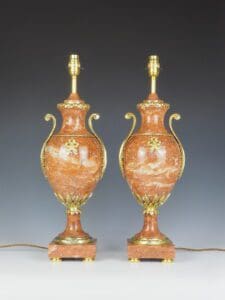



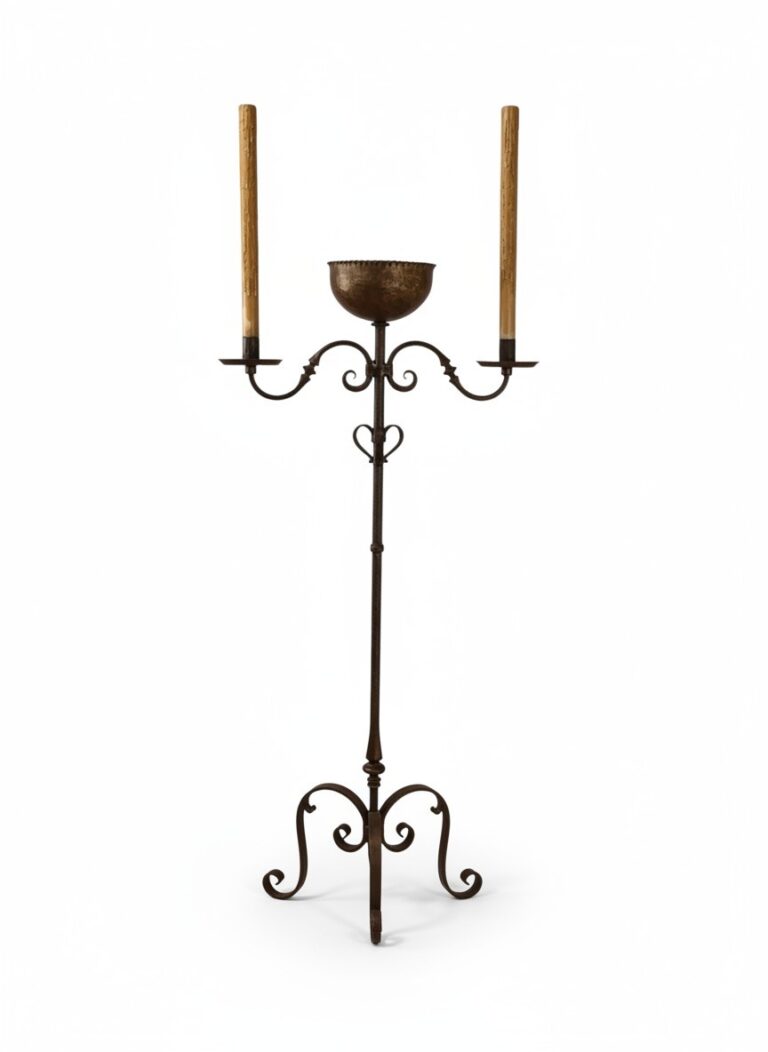






A banquet lamp is a tall, decorative oil lamp of the later nineteenth century, consisting of an oil reservoir, or font, raised on a tall column or stem above a weighted base, with the burner set on top of the font and a glass chimney and shade above. Its height allowed it to cast light over a dining table or room without obstructing views across it.
Banquet lamps were especially popular in Britain and America in the late Victorian and Edwardian periods, following the spread of paraffin, or kerosene, as a cheap and reliable lamp fuel. The columns were made in brass, gilt metal, bronze, silver plate, cast iron and porcelain, often in classical or Corinthian forms, while the fonts were of glass, metal or ceramic, sometimes etched, cut, coloured or hand-painted. They were fitted with duplex or central-draught burners and globe or tulip-shaped glass shades. Many fonts, burners and shades have been replaced over time, so collectors look for original or appropriate period glass, a good-quality burner and a column in sound condition without heavy wear to plating. Numerous banquet lamps have been converted to electricity, ideally in a way that leaves the original fittings intact. They remain elegant lights for sitting rooms, halls and dining rooms.