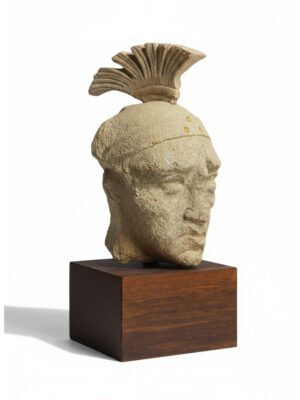
Basalt is a hard, dark, fine-grained volcanic rock formed from rapidly cooled lava. In the antiques world the term has two meanings: the natural stone itself, used since antiquity for sculpture, building and grinding stones, and the black stoneware known as basalt or black basaltes developed by English potters in the eighteenth century.
As a stone, basalt was carved by the ancient Egyptians for statues and vessels because of its durability and ability to take a polish, and it appears in later architecture and paving in volcanic regions. The ceramic version was perfected by Josiah Wedgwood around 1768, who named it after the stone it resembled. This dense, unglazed stoneware could be polished or engine-turned and was ideal for busts, vases, medallions, tea wares and classical figures in the fashionable Neoclassical taste. Many other Staffordshire potteries, including Turner and Neale, produced similar wares. When assessing basalt pieces, collectors look for crisp modelling, sharp detail, a smooth even surface and clear impressed marks, and chips and rubbing to high points should be noted.