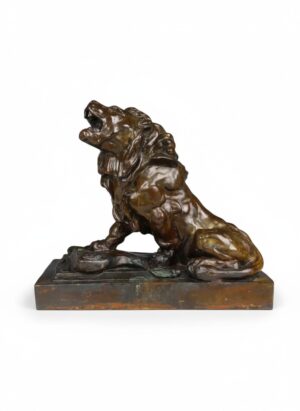
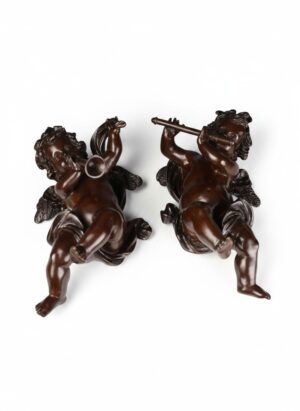
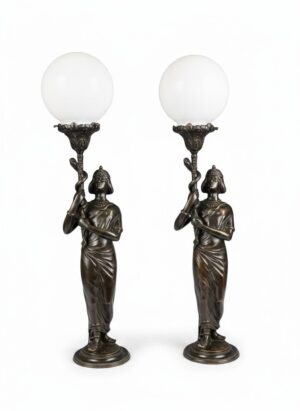
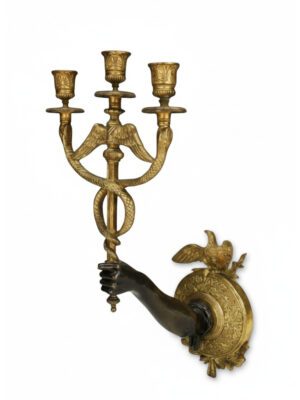
Cast bronze is bronze shaped by pouring the molten alloy of copper and tin into a mould, where it cools and solidifies into the form required. Casting allows complex shapes and fine surface detail to be reproduced, and once cast the piece is usually cleaned up, chased with tools to sharpen detail, and patinated or gilded.
Two methods dominate. In lost-wax casting, a model in wax is encased in a heat-resistant mould and melted out, leaving a cavity into which bronze is poured; the technique is thousands of years old and remains favoured for sculpture of the highest quality. Sand casting, in which the mould is made from packed fine sand around a model, was widely used in the nineteenth century, particularly in the French foundries that produced editions of animalier and figurative bronzes. Cast bronze has been used for statuary, busts, candlesticks, door furniture, furniture mounts, clock cases and lighting. Collectors look for crisp, well-chased detail, a good original patina and the weight and sharpness of a fine casting; foundry marks and signatures help identify a piece. Later casts taken from existing bronzes tend to show softer, blurred detail and are often slightly smaller than the original, as metal shrinks a little each time it cools.