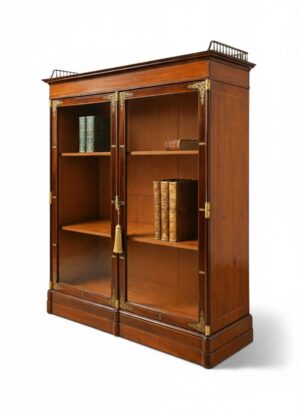
A cocktail cabinet is a piece of furniture designed for storing and mixing drinks, fitted with compartments for bottles and glasses and usually a work surface. Many open to reveal mirrored interiors, internal lighting, sliding trays and fitted racks, turning the cabinet into a small bar when opened.
The cocktail cabinet is closely associated with the 1920s and 1930s, when cocktail parties became fashionable in Britain and America and furniture makers responded with stylish new pieces in the Art Deco manner. Burr walnut veneers, sweeping curved fronts, chrome or bakelite handles and peach or bronze-tinted mirror glass are typical features, and some cabinets incorporate cleverly mechanised openings that raise the glassware as the lid is lifted. Production continued after the Second World War, with mid-century designs in teak and other woods, and many cocktail cabinets were mass-produced. Collectors look for good-quality veneers, intact mirrors and fittings, original glassware and working mechanisms, as well as named makers. Condition of the finish is important, since alcohol spills and heat can damage polished surfaces. A cocktail cabinet makes a sociable focal point in a drawing room or dining room.