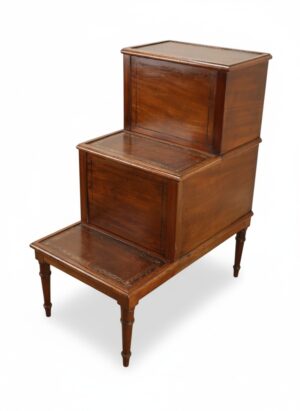
A court cupboard is an open, tiered side cupboard of the late sixteenth and seventeenth centuries, used for displaying plate, pewter and other valuables in the hall or parlour of a prosperous household. The name is generally thought to derive from the French court, meaning short, as these pieces are relatively low compared with later tall cupboards.
A classic Elizabethan or Jacobean court cupboard has two or three open shelves supported at the front by bulbous cup-and-cover or baluster supports, with a carved frieze beneath each tier. Some examples include a small enclosed section in the upper stage, and the term is often extended to related forms with closed lower doors, more correctly described as press cupboards. They were made of oak, sometimes with inlay of holly, bog oak or fruitwood, and carved with lunettes, guilloche, strapwork and foliage. Genuine early court cupboards are rare and command strong prices. Many pieces were heavily embellished with additional carving in the nineteenth century, and outright Victorian copies are numerous, so collectors look for honest construction, consistent wear and colour, and carving that sits naturally on the surfaces.