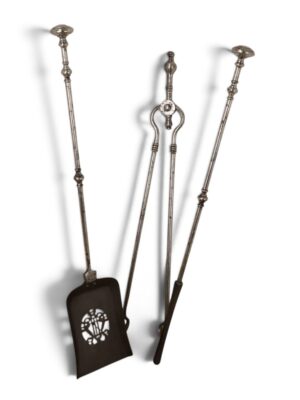
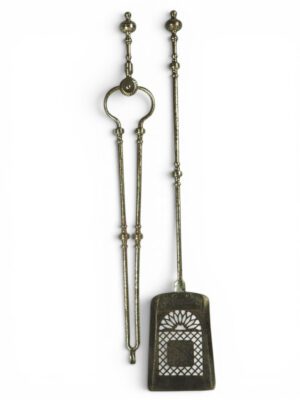
A dust pan is a shallow, flat-bottomed scoop with a handle, used with a brush to gather up dust, crumbs, ash and sweepings from a floor or hearth. Antique examples were made in brass, copper, japanned or painted tinplate and sheet iron, often with a turned wooden or metal handle and a lip or flange that lies flat against the floor.
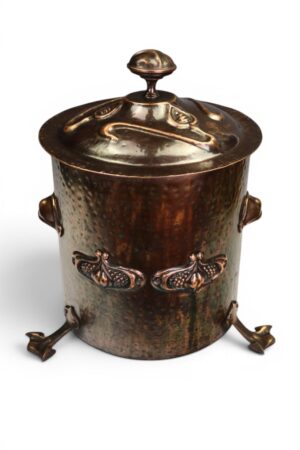
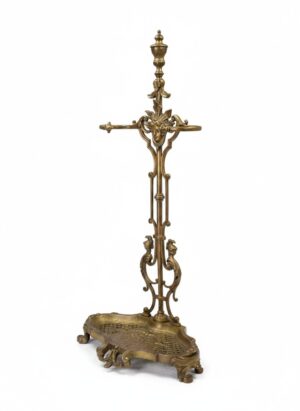
In the Victorian and Edwardian household, when coal fires were universal, the dust pan was an everyday tool of the housemaid and an important part of the fireside set. Hearth versions were often made to match companion sets of tongs, poker and shovel, or sold with a brush that hung from the same stand, while larger tinplate pans were used throughout the house. Brass and copper examples could be quite decorative, with embossed or pierced patterns, shaped edges and handles ending in a ring or knop for hanging. Japanned and painted tinware was the cheaper alternative and survives less often in good condition, because the thin metal rusted easily and the paint wore with use. Collectors look for a well-made original handle, sound seams and a pleasing worn surface. A good brass or copper dust pan still sits naturally beside a working fireplace or on a kitchen range.