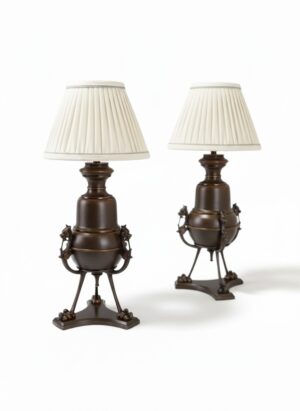
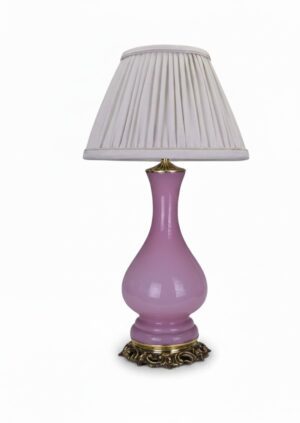
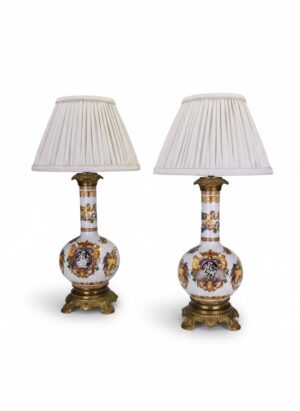
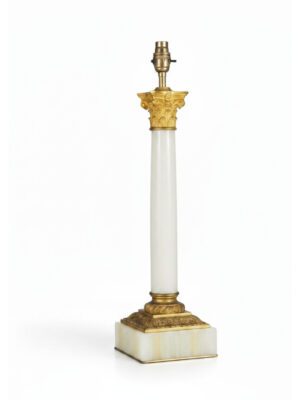
An etched glass shade is a glass lampshade decorated by etching, in which parts of the glass surface are treated with acid, usually hydrofluoric acid, to produce a frosted or matt finish. Clear areas are protected by a resist, so a pattern appears as a contrast between frosted and clear glass. Similar effects were also achieved by sandblasting and, for finer work, by wheel engraving, although these are distinct techniques.
Etched shades became widely popular in the Victorian and Edwardian periods, as oil lamps, gas fittings and early electric lights all required shades to diffuse light and reduce glare. Typical forms include tulip, globe, ball, bell and gallery shades, decorated with flowers, ferns, foliage, Greek key, scrolling or geometric patterns, sometimes combined with clear cut or coloured glass. They were often supplied in sets for gasoliers, wall lights and ceiling pendants, and were used on oil lamps with a matching reservoir. Collectors look for crisp, well-defined decoration, an undamaged rim, and shades that are correctly sized for the fitting. Chips, cracks and replacement shades of a different period are common, and many reproductions exist. Etched glass shades cast a soft, even light and remain popular in period halls, landings, kitchens and bathrooms.