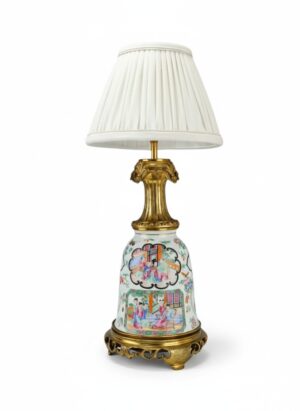
Famille rose is the name given to porcelain decorated in a palette of overglaze enamels in which a distinctive opaque pink, ranging from soft rose to rich ruby, is the leading colour, combined with greens, yellows, blues and an opaque white that allows subtle shading and blending. The term is most closely associated with Chinese porcelain of the Qing dynasty, but it is also applied to European porcelain and pottery painted in the same palette.
The pink enamel, derived from colloidal gold, came to China from Europe, and famille rose decoration was established in the early eighteenth century, at the end of the Kangxi reign, reaching great refinement under the Yongzheng and Qianlong emperors. The term, together with famille verte, was coined in the nineteenth century by the French writer Albert Jacquemart. Famille rose became one of the most successful styles for export to Europe, used on dinner services, armorial wares, vases and figures, many painted in the workshops of Canton. European factories, including Meissen, Chelsea and Worcester, imitated the palette, and later the Paris firm of Samson made close copies. Collectors consider the painting quality, potting, condition and period. Famille rose pieces remain a classic choice for country-house interiors, displayed on mantelpieces, in cabinets and as garnitures.