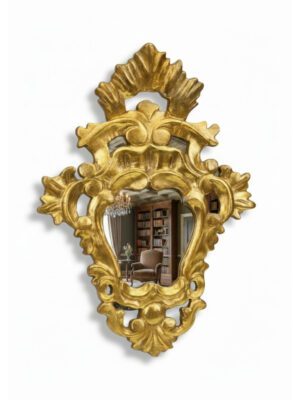
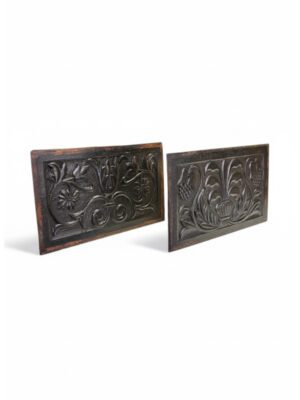
Foliate carving is carved decoration based on leaves, stems, vines, flowers and other plant forms. It is one of the oldest and most widespread forms of ornament, found on furniture, picture and mirror frames, chimneypieces, panelling, architectural stonework, church woodwork and many other objects, and it can range from a shallow, stylised band of leaves to deeply undercut sprays that appear almost free of their background.
Each period has its own vocabulary of foliage. Classical architecture gave the acanthus leaf, the laurel and the anthemion, which recur throughout European design from the Renaissance to the Regency. Medieval and Gothic carvers favoured oak leaves, vine trails and naturalistic foliage on bosses and capitals, a tradition revived by Victorian Gothic Revival architects and furniture makers. The late seventeenth century produced the extraordinary limewood carving associated with Grinling Gibbons, while Rococo carvers of the mid eighteenth century combined C-scrolls with asymmetrical leaves and flowers. When assessing antique foliate carving, look at the crispness of the detail, the depth of undercutting and the way tool marks follow the form. Worn high points on an otherwise sharp surface usually suggest age, whereas uniformly soft or machine-regular detail can indicate later or mass-produced work.