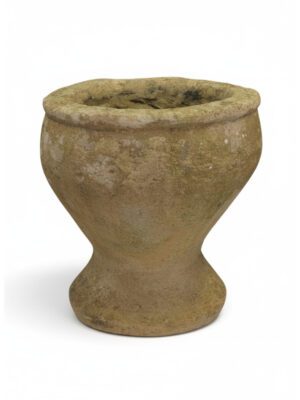
A fountain basin is the bowl, pool or vessel that receives the water of a fountain. It may be a raised bowl on a pedestal, a tiered arrangement of shallow dishes, or a large ground-level pool with a moulded kerb, and it often holds a central figure, jet or spout. In recirculating fountains the basin also acts as the reservoir from which the water is pumped back up.
Fountain basins have been made in carved stone and marble since antiquity, and the great gardens of Renaissance Italy and seventeenth-century France set the pattern for elaborate basins with lobed or scalloped edges, gadrooned undersides and carved masks. In Britain, Portland and other limestones, sandstone and lead were traditional materials, while the nineteenth century brought cast iron basins from foundries such as Coalbrookdale and composition stone versions from makers including Austin and Seeley. Victorian and Edwardian public parks and private gardens used tiered cast iron fountains in large numbers. When buying, check for frost damage, cracks and old repairs, and whether the basin will still hold water. Weathering, lichen and a soft surface are valued in stone, but a basin that leaks can be costly to repair. Basins are also widely reused as planters.