
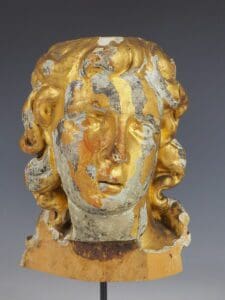
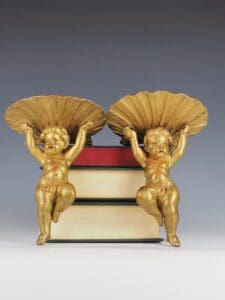
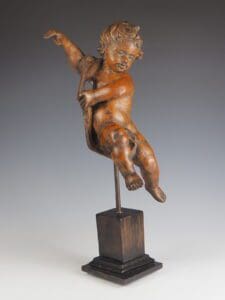







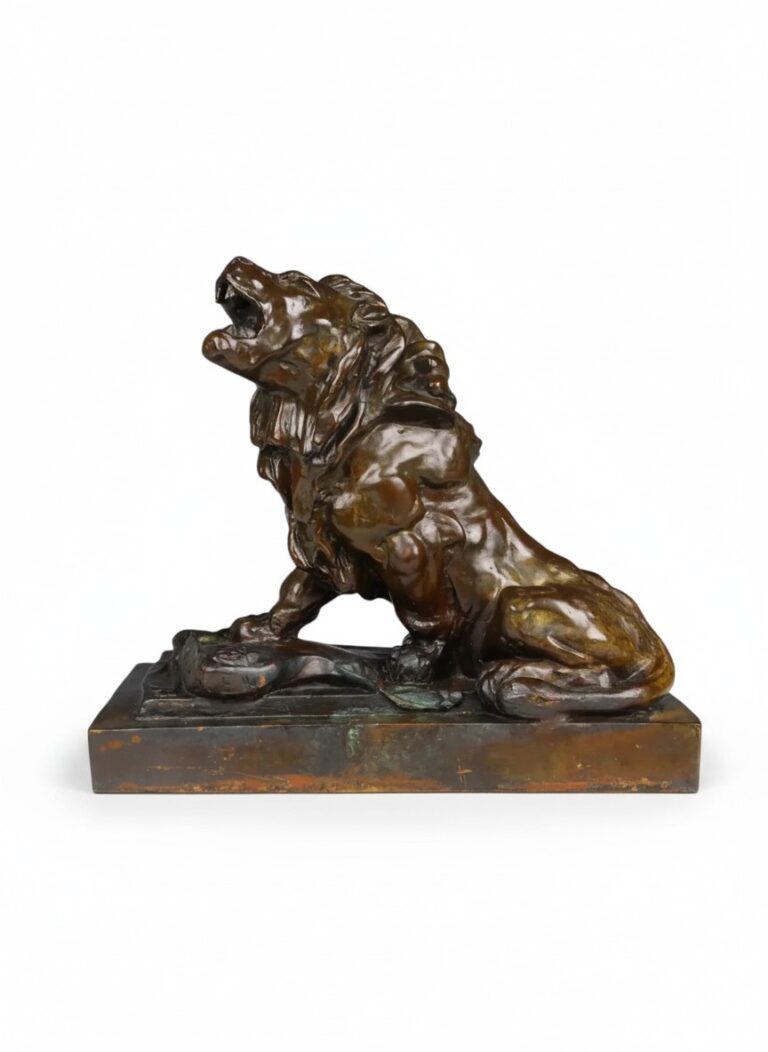
A garden statue is a freestanding sculpture made to stand outdoors in a garden, park or courtyard. Antique examples were carved in stone and marble, cast in lead, bronze or iron, or modelled in terracotta and artificial stone, and commonly depict classical gods and goddesses, allegorical figures of the Seasons or the Elements, putti, shepherds and shepherdesses, animals and mythological creatures.
Statuary has been central to European garden design since the Renaissance, and in Britain it became widespread from the late seventeenth century. Lead figures, many made in London workshops in the early eighteenth century, were a popular and economical alternative to marble, and copies of famous antique sculptures were in great demand. Coade stone, a durable ceramic artificial stone produced in Lambeth from the later eighteenth century, allowed fine detail at lower cost, and Victorian manufacturers offered cast-stone, terracotta and iron statuary in large catalogue ranges. Collectors look for quality of modelling, an attractive weathered surface with natural lichen, and an absence of heavy restoration or cement repairs. Signs of genuine age are important, as reproductions are widely made and artificially aged. Garden statues are also increasingly used indoors, where a weathered figure brings sculptural presence to a hall, stair or conservatory.