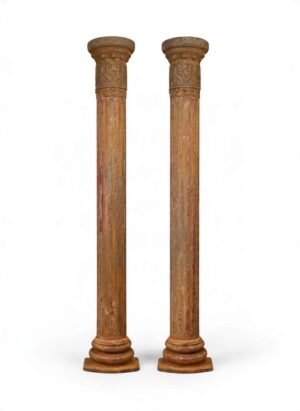
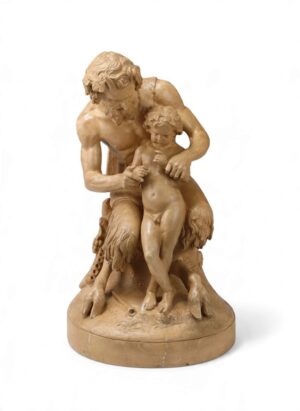
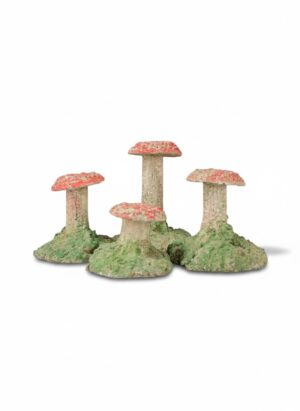
Terracotta is a type of fired clay earthenware, usually unglazed, with a characteristic warm reddish-brown colour derived from the iron in the clay. The name comes from the Italian for baked earth, and the material has been used since antiquity for pots, figures, roof tiles, bricks, architectural ornament and sculpture.
The ancient Greeks, Etruscans and Romans made terracotta figures, vessels and building ornament, and in Renaissance Italy sculptors used it both for finished works and for preparatory models. The della Robbia workshop in Florence became famous for glazed terracotta reliefs. Eighteenth-century sculptors continued to model in terracotta, and their sketch models are collected today. In Victorian Britain, terracotta became hugely popular as a durable architectural facing and for decorative panels, while potteries supplied garden urns, rope-edged pots, edging tiles, chimney pots and statuary. Antique terracotta garden pots, often hand-thrown and stamped with a maker's mark, are widely sought for their soft, weathered surfaces. Because it is porous, terracotta can crack or flake when frozen while wet, so buyers should check for frost damage and old repairs. Good pieces give gardens and conservatories immediate warmth and an established, timeworn look.