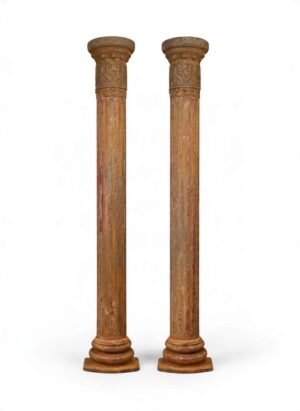
Architectural ceramics are fired clay products made for use in buildings, either as structural elements or as decoration. They include bricks, roof tiles, floor and wall tiles, terracotta and faience facing blocks, chimney pots, ridge tiles, finials, balustrades, columns and ornamental panels.
Glazed and decorated tiles have a long history in Islamic, Spanish, Portuguese and Dutch architecture, while medieval English churches and abbeys used inlaid floor tiles. In Victorian Britain architectural ceramics flourished as never before. Minton revived the encaustic floor tile, and firms such as Maw & Co., Doulton, Burmantofts and Craven Dunnill supplied tiles, terracotta and glazed faience for churches, public buildings, railway stations, public houses and homes. Terracotta was valued because it could be moulded into intricate ornament, resisted city pollution and was cheaper than carved stone, and buildings such as the Natural History Museum in London demonstrate its possibilities. Collectors look for maker's marks on the backs of tiles, crisp moulding, good glaze colour and an absence of frost damage. Salvaged architectural ceramics are widely reused in restoration projects, and individual tiles and panels are framed or set into fireplaces, kitchens and conservatories.