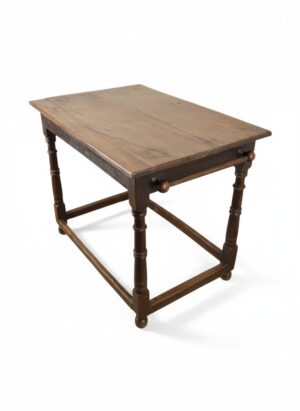
A Georgian library table is a substantial freestanding table made between 1714 and 1837 for reading, writing and consulting books in a library or study. Usually of mahogany, it typically has a leather-lined top and drawers, cupboards or both, often arranged so that the table can be used from either side and placed in the middle of the room.
Library tables became established as the country house library developed in the eighteenth century. Thomas Chippendale's Director of 1754 included designs for them, and large pedestal library tables with kneehole fronts are among the most impressive pieces of Georgian cabinet-making. Other forms include the drum or rent table with a circular revolving top and drawers around the frieze, and the late Georgian writing table on end supports. Collectors look for fine figured mahogany, original surface and patina, good quality locks and brass handles, and pedestals and tops that belong together, as later marriages are not unusual. Replacement of the leather is normal and acceptable, but the timber top should be original. A Georgian library table makes a commanding desk today and works well as a centre table in a large hall or drawing room.