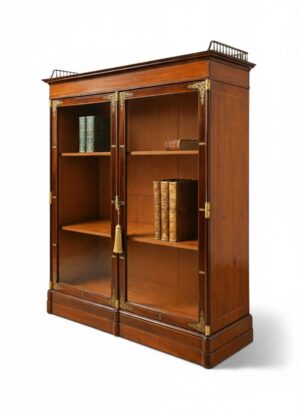
German furniture is furniture made in the German-speaking lands of central Europe, a region that for most of its history was divided into many separate states, each with its own courts, guilds and regional traditions. It is noted for solid construction, accomplished marquetry and carving, and a succession of influential styles.
Renaissance cabinetmakers in Augsburg and Nuremberg produced elaborate inlaid cabinets and collector's chests that were exported across Europe. The Baroque and Rococo periods brought grand court furniture, often in walnut with gilded carving, and fine marquetry commodes and bureaux from workshops serving princely palaces. David Roentgen of Neuwied became one of the most celebrated cabinetmakers of the late eighteenth century, famous for pictorial marquetry and ingenious mechanical fittings. In the early nineteenth century the Biedermeier style offered simple, elegant furniture in pale fruitwoods and birch for middle-class homes. Later movements included Black Forest carved furniture, Jugendstil and, in the twentieth century, the Bauhaus. Collectors look for quality of veneers and marquetry, original locks and fittings and sound construction. Biedermeier pieces are particularly appreciated today for their clean lines, which suit contemporary interiors.