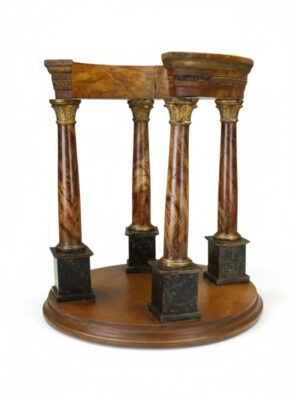
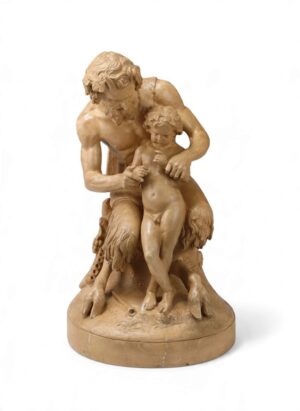
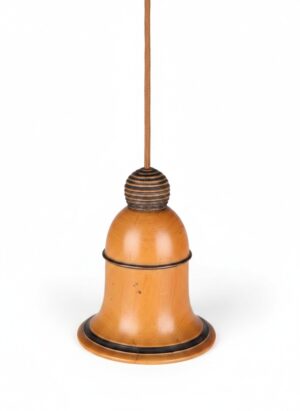
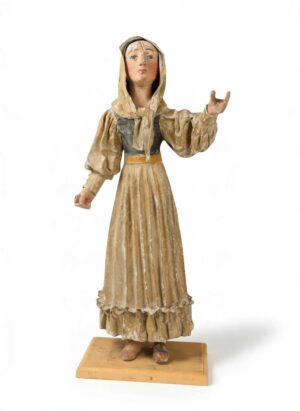
A glass dome is a clear glass cover, round or oval in plan, made to fit over a base and protect a decorative object from dust and handling while keeping it fully visible. Domes were usually blown or cast in a single piece and rest in a grooved base of ebonised or polished wood, sometimes trimmed with velvet or fitted with turned feet.
Glass domes, sometimes called shades or cloches, are particularly associated with the Victorian parlour, where they covered arrangements of wax or shell flowers, stuffed birds and animals, mantel clocks, figures, models and natural history specimens. They were produced in large numbers in a wide range of sizes, from small domes for a single object to tall cases for elaborate taxidermy displays. Original domes are fragile and many have been broken or replaced over the years, so a large old dome in good condition, without chips, cracks or scratches, is increasingly hard to find. Look for slight irregularities and bubbles in the glass, a snug fit with its base and, where present, the original contents. Today glass domes are used to display everything from collections of shells, minerals and curiosities to small sculptures and botanical arrangements, adding a pleasing sense of the cabinet of curiosities to modern interiors.