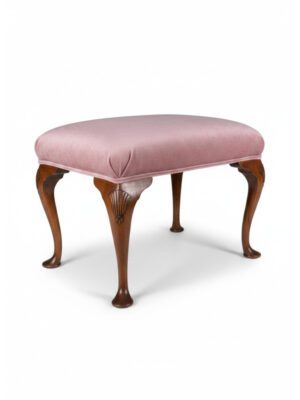
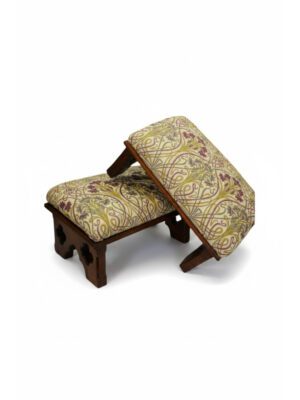
A gout stool is a low footstool designed to support the swollen foot and leg of a gout sufferer, raising it in comfort while the patient sat. Typical examples have an upholstered top that is sloped, curved or adjustable, often by a ratchet so that the angle can be raised or lowered, and stand on short legs, sometimes fitted with castors.
Gout was a familiar complaint among the well-fed, port-drinking gentry of Georgian England, and stools for its relief were made by good cabinetmakers. George Hepplewhite's Cabinet-Maker and Upholsterer's Guide of 1788 illustrates a gouty stool with an adjustable top. Most surviving examples date from the late eighteenth and nineteenth centuries and are in mahogany, with square tapering or turned legs, while Victorian versions became heavier and more elaborately upholstered. Collectors look for an original adjusting mechanism in working order, good colour and patina to the timber, and well-made joints, and accept that the upholstery will usually have been renewed. Because many low stools are optimistically described as gout stools, a genuine adjustable example is more interesting than an ordinary footstool. Today they make charming footrests beside a library chair or by the fire, and smaller ones are useful as occasional seats or for a stack of books.