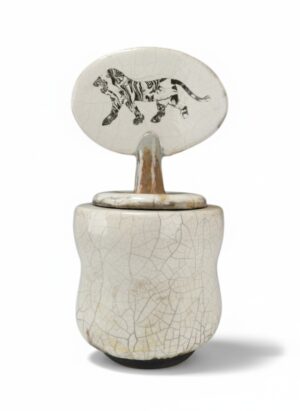
Greek pottery is the pottery of ancient Greece, made from the Bronze Age through to the Hellenistic period, and particularly the painted vases of the Archaic and Classical periods. These vessels, used for storing, mixing, drinking and pouring wine, oil and water, as well as for funerary and ritual purposes, are among the most important sources of knowledge about Greek art and daily life.
Greek vases are classified by shape, such as the amphora, krater, hydria, lekythos and kylix, and by decorative technique. In black-figure painting, developed in Corinth and perfected in Athens, figures were painted in a glossy black slip on the red clay, with details incised. Around the late sixth century BC Athenian painters introduced red-figure, leaving figures in the colour of the clay against a black background. Many vases were found in Etruscan tombs in Italy, which is why they were long misnamed Etruscan. The publication of collections such as that of Sir William Hamilton inspired Neoclassical designers and manufacturers, including Josiah Wedgwood. Genuine ancient pottery requires careful checking of provenance and legal title, while later reproductions and revival pieces are widely collected for their decorative appeal.