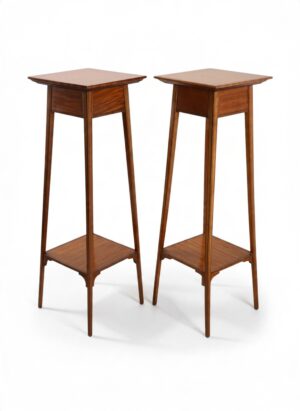
A hall stand is a piece of entrance hall furniture designed to hold hats, coats, umbrellas and walking sticks, typically combining hooks or pegs, a central mirror, a stand for umbrellas with a drip tray and sometimes a small drawer or box for gloves and brushes. It is one of the most characteristic pieces of Victorian domestic furniture.
Hall stands became common in the nineteenth century, as growing middle-class households and the fashion for formal calling encouraged a well-organised entrance hall. They were made in oak, mahogany, walnut, ash and bamboo, and many fine examples were cast in iron by foundries such as Coalbrookdale, with ornate foliage, Gothic tracery or naturalistic ferns and branches. Designers including Christopher Dresser created hall stands, and Gothic Revival, Aesthetic Movement and Arts and Crafts versions all survive. Collectors look for strong design, quality of carving or casting, original mirror plates, hooks and drip trays, and a sound structure, as stands were often heavily used and knocked. Cast-iron examples should be checked for cracks and old welds. Today a good hall stand remains a practical and striking introduction to a house, adding period character to hallways, boot rooms and cloakrooms.