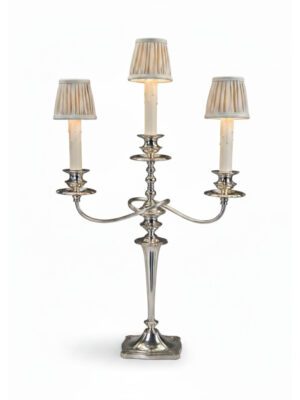
A hand-painted lampshade is a lampshade decorated with designs painted by hand rather than printed, applied to a ground such as parchment, vellum, card, paper, silk or linen. Typical subjects include flowers and botanical studies, birds, landscapes, chinoiserie scenes, hunting and sporting motifs, heraldry and simple painted bands or lines.
Painted shades became fashionable in the early twentieth century, when electric light encouraged a new range of table and standard lamps, and decorators in the 1920s and 1930s produced parchment shades painted with flowers, ships and maps, sometimes with a varnished finish that glows warmly when lit. Silk shades were occasionally painted or stencilled too. Because shades are fragile and suffer from heat, light and handling, genuinely old painted examples are scarce, and most seen today are later or newly commissioned work. Contemporary painters often adapt designs from historic textiles, wallpapers and porcelain to suit a particular lamp or room. When choosing a painted shade, consider how the design will look both lit and unlit, since light passing through translucent grounds changes colours considerably. Hand-painted lampshades are a good way to add individuality to antique lamp bases and to tie a lamp into a decorative scheme of fabrics, ceramics or pictures.