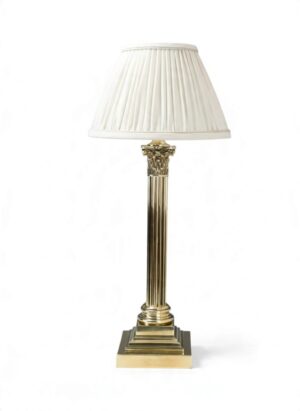
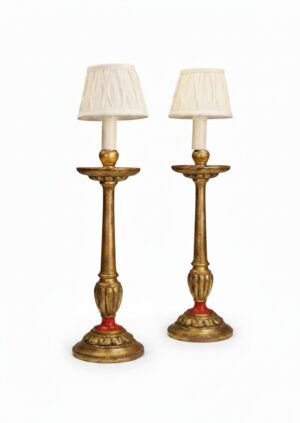
A handmade lampshade is a shade constructed by hand on a wire frame, rather than mass produced from pre-cut laminated panels. In the traditional method the frame struts and rings are first bound with cotton tape, then fabric is cut, stretched and hand stitched to the frame, and a separate lining is sewn inside to hide the struts and reflect the light, with trims or bindings finishing the edges.
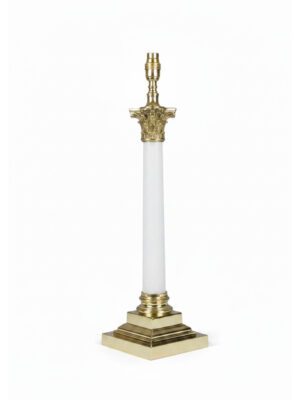
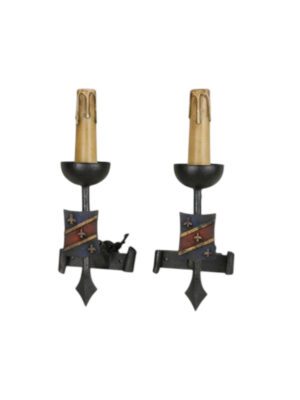
Hand construction allows almost any shape and fabric to be used, from drum, empire, bowed, scalloped and coolie shapes to pleated and gathered shades, in silk, linen, cotton or wool. A tight-back shade has fabric stretched smoothly over the frame, while a balloon lining gives an especially clean interior. Laminated shades, in which fabric is bonded to a stiff plastic backing, are quicker to make and can still be of good quality, but hand-sewn shades generally last longer and can be recovered on the same frame. For antique lamps, the shade should suit the period, scale and colour of the base, and the frame must have the correct fitting, whether a ring, a duplex or a candle carrier. Antique frames can often be rescued and re-covered, giving a historically appropriate shape and a new lease of life.